

Journal
Padar Island: Green Hills or Golden Hills?
The transition isn't a single switch date — it moves gradually across a few weeks at each end of the wet season. Rain typically begins building through November, and by December the…
Padar Island Editorial Desk · Last updated August 2026
When do Padar’s hills actually change color?
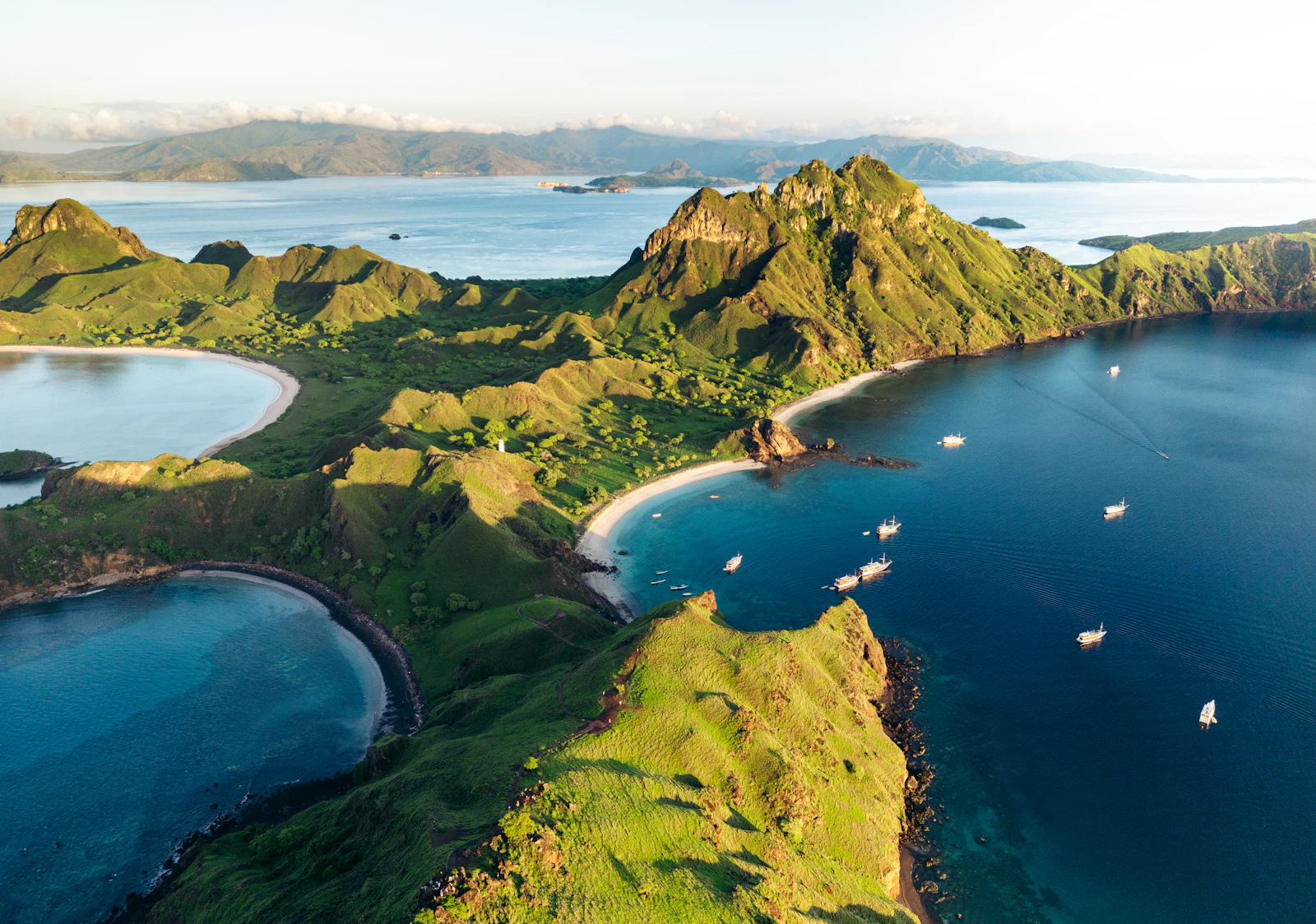
The transition isn’t a single switch date — it moves gradually across a few weeks at each end of the wet season. Rain typically begins building through November, and by December the savanna grass covering Padar’s ridgelines has usually greened up noticeably. That green tone generally holds through January, February, and into March, before the drying trend begins again around April and the hills progressively turn golden-brown through the middle of the year, peaking in visual “dry gold” from roughly June through September. October and November sit in a transitional zone where either look is possible depending on how early or late the rains start in a given year — this is genuinely variable year to year, not a fixed calendar event.
What does each season actually look like from the summit?
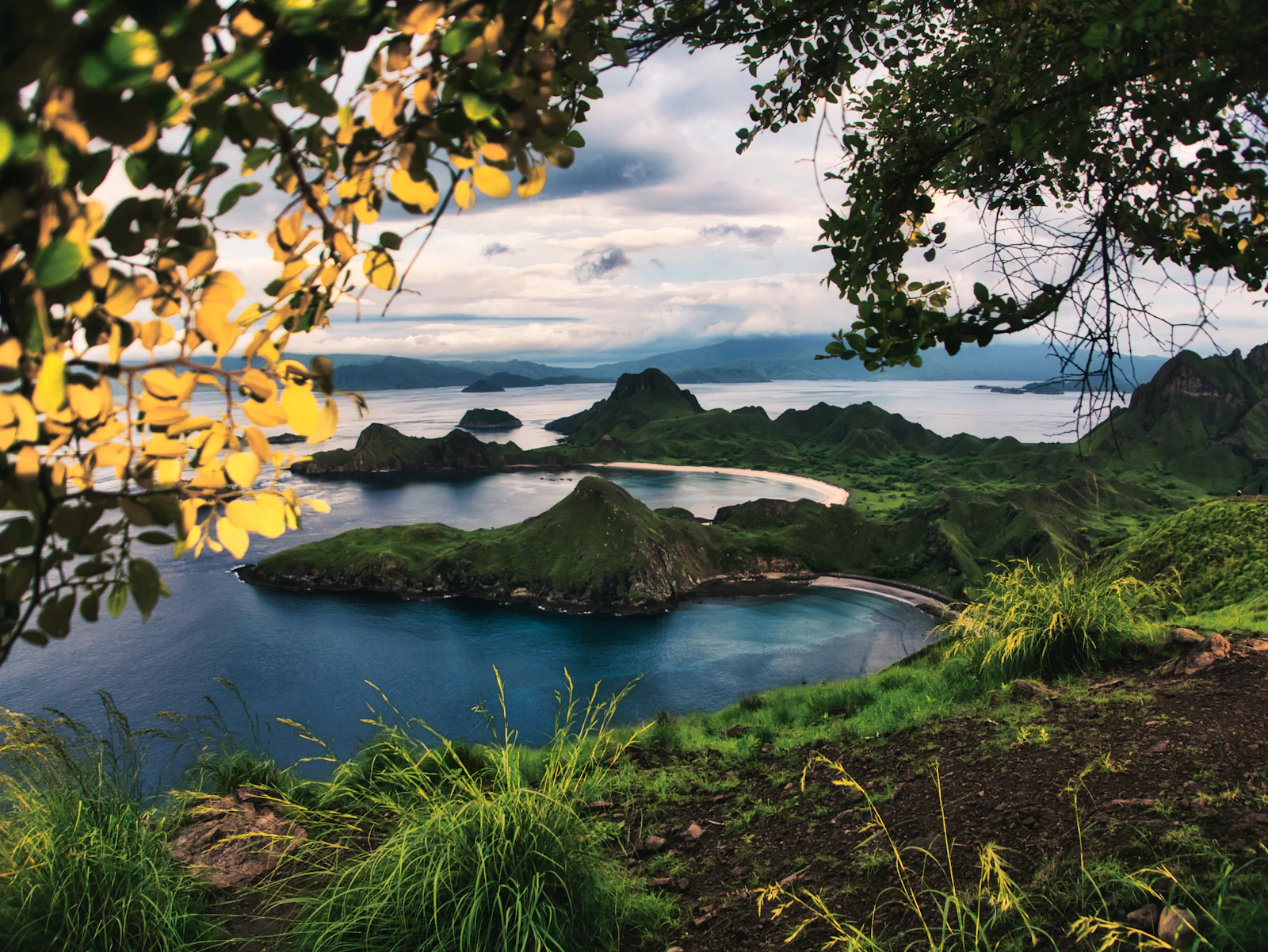
Green season (roughly December–March): the ridgelines take on a deep emerald tone that contrasts sharply against the white, pink, and black sand of the three bays below — arguably a more visually striking color pairing than the dry-season version, since green and the beach colors sit further apart on the color wheel than brown and the same beaches. The trade-off is weather reliability: rain showers are more frequent, occasionally heavy enough to delay or reroute a boat crossing, and overcast skies can mute or entirely block a planned sunrise shot on any given morning.
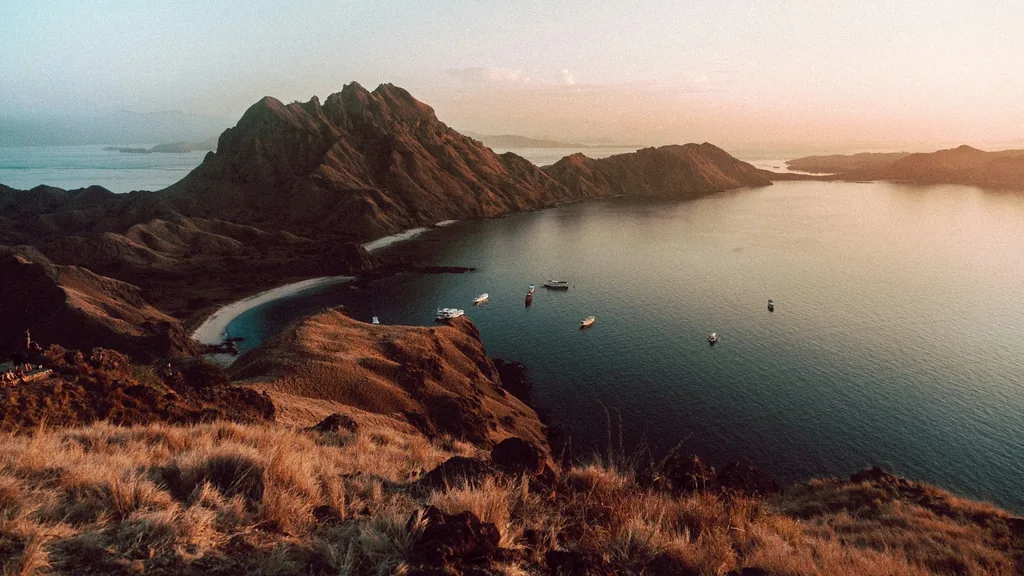
Dry season (roughly April–November, peaking June–September): the grass dries to a golden-brown savanna color, which is the look behind the majority of widely circulated Padar photographs. Skies are more reliably clear, boat crossings are generally smoother, and sunrise conditions are more predictable — but visitor numbers at the summit are also considerably higher, especially during the July–August peak, which changes the actual experience of standing at the viewpoint even if the color itself photographs well.
Which season should you actually choose?
This comes down to what you’re optimizing for, not which season is more beautiful in the abstract:
- Choose dry season if reliable weather and a predictable sunrise matter more to you than crowd size, or if you specifically want the classic golden-hill look that matches most reference photos you’ve seen.
- Choose green season if you’d rather see a less common version of the view with a real chance of having more of the summit to yourself, and you’re comfortable accepting some risk of rain disrupting your planned morning.
- Choose the October–November shoulder window if you want a reasonable compromise — often still relatively dry with the first hints of green beginning to appear, and typically lighter crowds than peak dry season.
For the fuller seasonal breakdown beyond just hill color — including marine conditions and general weather patterns — see our Padar Island best time to visit guide.
Month-by-month color guide
| Months | Typical hill color | Weather reliability |
|---|---|---|
| December–February | Deep green | Lower — frequent rain showers |
| March | Green, beginning to fade | Improving |
| April–May | Transitional green-to-gold | Good, improving |
| June–September | Peak golden-brown | Highest — driest in July–August |
| October–November | Gold, beginning to green | Good, declining toward late November |
Exact timing shifts year to year with the broader monsoon pattern — treat these as typical ranges rather than fixed dates for any specific year.
Does the color affect photography difficulty?
Somewhat. Green-season shots tend to have more inherent color contrast built in, which can make a good photo slightly easier to achieve even in flatter light, since the green-versus-beach-color separation does some of the visual work on its own. Dry-season gold-on-blue shots rely more heavily on shooting near sunrise or sunset for the same effect, since the golden and blue tones sit closer together in flat midday light than green and blue do. Either way, timing your visit within an hour of sunrise remains the single biggest lever for photo quality regardless of season — see our Padar Island photography guide for spot-by-spot and lighting detail.
How does this interact with a honeymoon or couple’s trip?
For couples specifically weighing season against crowd size and privacy, the same trade-off applies with an extra lever: a private charter largely neutralizes the crowd downside of dry season, since you control your own arrival timing regardless of how many shared boats are running that week. That makes dry season a more attractive choice for couples who want reliable weather and don’t mind paying for a private boat to manage the crowd side of the equation — covered in more depth in our Padar Island honeymoon guide.
What if your trip dates are already fixed?
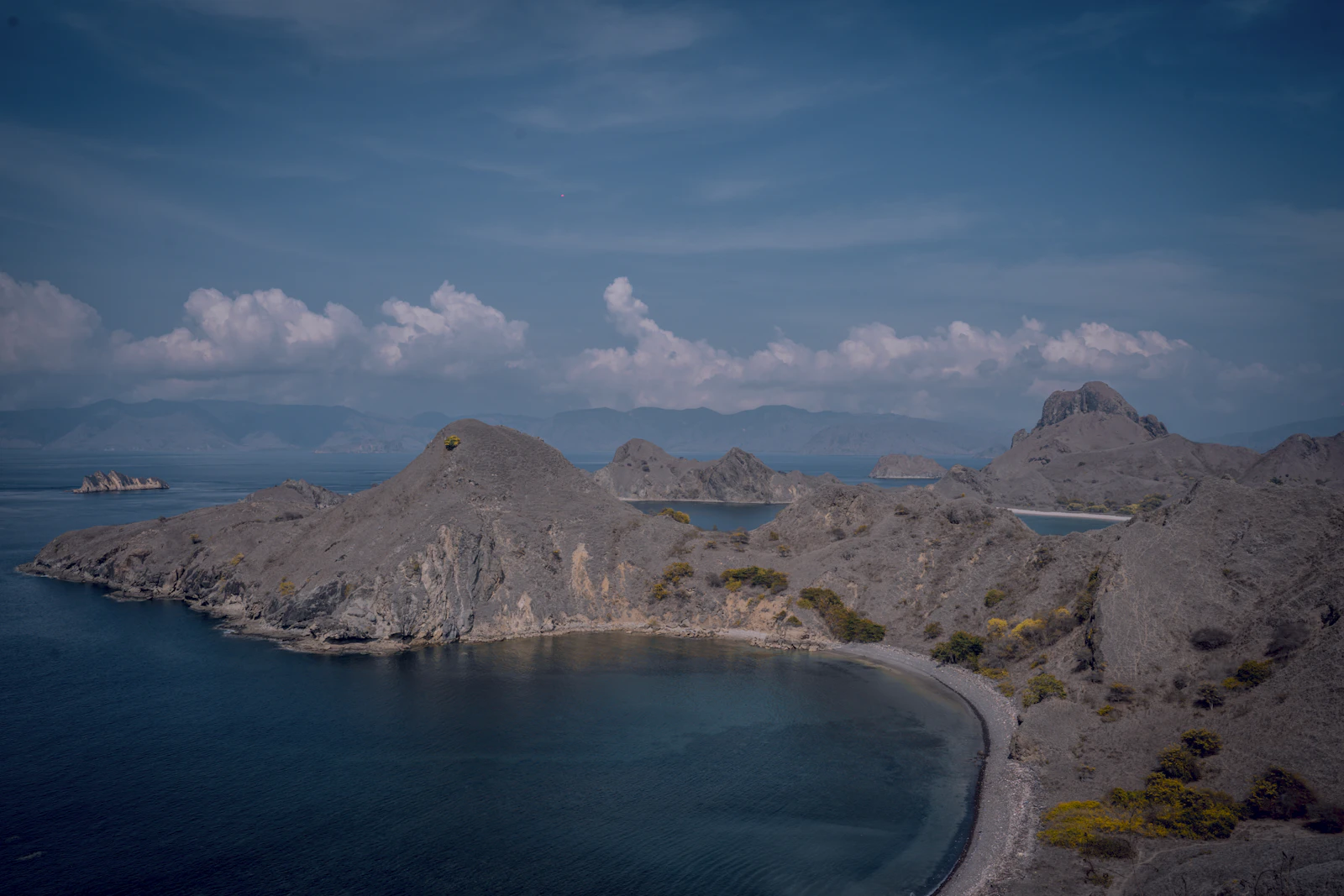
If you can’t choose your season, plan around whichever conditions you’ll actually get rather than wishing for the other one. Traveling in the wet season, build in a flexible day or two if possible in case of a weather-related delay, and don’t over-plan a single sunrise attempt as your only shot at the view. Traveling in peak dry season, accept that the summit will be busier and consider a private charter or an especially early departure if a quieter experience matters to you. Since Padar has no overnight stay option of its own, weather delays also interact with your onward plans — see our Padar Island overnight rules guide for why boat-based flexibility, not a backup place to sleep on the island, is the realistic contingency plan.
Frequently asked questions
What month are Padar Island’s hills the most green?
Typically January and February, at the height of the wet season, though the exact peak shifts slightly year to year with the monsoon pattern.
What month are Padar Island’s hills the most golden?
Typically July and August, during the peak of the dry season, which is also when the hills most closely match widely circulated reference photos.
Is the green season or dry season better for photography?
Neither is objectively better — green season offers a less common, higher-contrast look with more weather risk; dry season offers the classic golden look with more reliable conditions but larger crowds.
Is there a season that avoids both rain and crowds?
The October–November shoulder window is the closest compromise — usually still relatively dry with lighter crowds than peak dry season, though not a guarantee in either direction.
The bottom line
Neither season is a wrong choice, and both produce a genuinely worthwhile view from the summit. What changes is the specific trade-off you’re accepting: weather reliability against crowd size, or a common golden look against a less-photographed green one. Knowing which trade-off you’re making ahead of time, rather than discovering it on arrival, is really the whole point of checking hill color before booking a Padar Island trip at all.
Related reading
For the complete seasonal picture beyond hill color — including sea conditions and crowd patterns month by month — see our Padar Island best time to visit guide. For sunrise-specific timing that applies regardless of season, see our Padar Island sunrise guide.
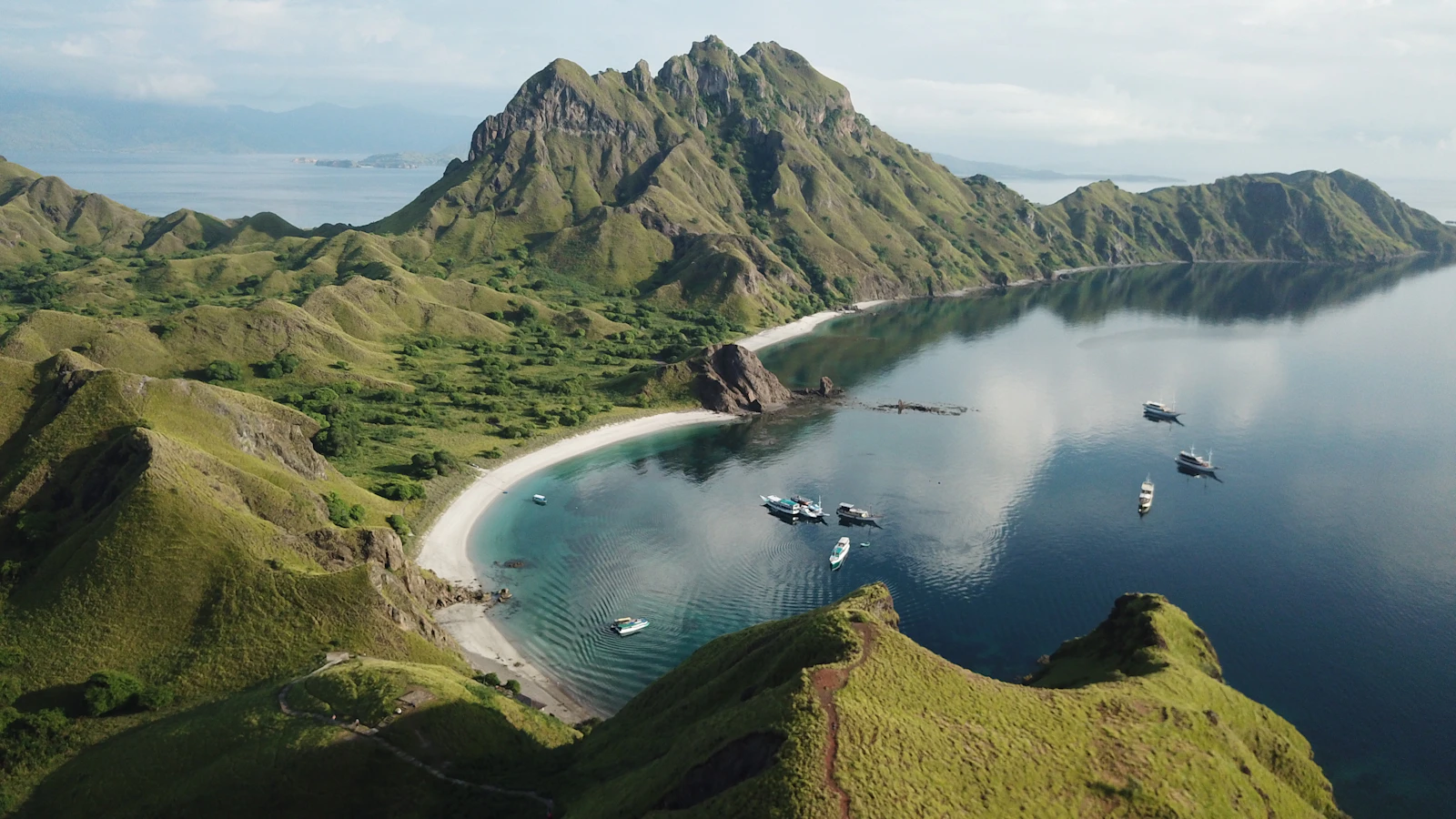
Green season or dry, the boat is booked the same way
This page is editorial only — padarisland.com takes no bookings. Vessels are operated by our affiliated partner, Komodo Luxury. Whichever version of the island you are chasing, the photograph you want depends on being anchored nearby the night before. Boats that make that possible: a Komodo tour from Bali, multi-day liveaboards, and the one-day Komodo sailing package.
When the hills change, and how fast
The transitions happen over weeks rather than on dates. The dry season builds from around April, when rain becomes less frequent and the grass starts curing; early on there can still be occasional showers, especially at night, and the green fades toward straw-gold as the weeks pass. By June the dry season is established and the hills are well into their golden phase, with traces of green surviving only on sheltered slopes. The reverse happens in the early wet season: once regular rain has soaked the savanna grass, a noticeable flush of green appears from roughly December and deepens after a few weeks of showers. The exact timing shifts from year to year.
That means the shoulder months are where you get mixed conditions, and several are genuinely good. April sits at the junction, often with greener slopes alongside patches beginning to dry — a fair compromise if you want some green without much rain risk. September is among the most reliable dry months: hills fully golden, seas frequently workable, humidity lower than earlier in the year, though it falls inside the busier period so the sunrise slots need booking. November is a rewarding shoulder month with remaining gold and the first hints of green if early rains arrive, at the cost of higher humidity and a growing chance of afternoon showers; some years it marks the early monsoon, with stretches of dry hazy days broken by sudden heavy showers that freshen the hills, which produces textured skies photographers like and schedule changes captains do not. March sits at the tail of the wet season with hills still green or just starting to fade, lush slopes and soft air in exchange for a real risk of showers or low cloud at sunrise. December is the transition into the wet: slopes starting to green, dust levels dropping, and heavier rain spells and overcast mornings arriving with them.
Green or gold: what actually differs
In the wet season the hills turn lush green and the gullies read more sharply against a darker, sometimes stormy sea. Trails feel softer underfoot and dust stops being an issue on the stairs, though they can be damp. The light swings quickly between brooding cloud and bright breaks, which gives you more variety in a single session than a clear dry morning will.
In the dry season the same shapes are picked out in pale gold and brown under strong sun, with much higher contrast. This is the savanna character that dominates the promotional images: sun-bleached grasses, high-contrast ridges, strong midday glare, firm trails and skies clear enough to see deep into the park. It is also the most popular time, partly because crossings from Labuan Bajo are more predictable, which makes advance reservations more important and the sunrise viewpoint considerably busier. Sand colour at the bays shifts less than the hills do; what changes is the light falling on it.
Practically, the dry season swaps mud for dust. The staircase stays straightforward but exposed, and loose gravel on the unpaved edges becomes the main footing issue rather than slipperiness. Heat management is the real discipline — dehydration and sunburn are the avoidable problems, so carry enough water and cover up even on a breezy day. Gusts at the top can be strong enough that cameras and phones need securing, and staying behind the railings matters more when the wind is pushing you. Starting early inside your session is what keeps the climb comfortable.
In the broader park, dry-season days are sunnier with less rain and often excellent visibility, clouds build less dramatically than in the wet months, and light is more predictable for a sunrise session. The trade-off is heat on the exposed steps, which catches out anyone unused to it.
Cloud is not the enemy
Overcast conditions still produce strong images, particularly for close foregrounds and evenly lit bays. Soft cloud removes harsh shadow from faces and steps and balances the exposure between sea and sky. What you lose is a dramatic sky and the sparkle on the water; what you gain is gentler climbing conditions and a more atmospheric mood, especially where mist or low cloud wraps the ridges. The hill shapes, curving bays and sandbars remain striking without direct sun — the character changes rather than the quality.
Golden hour is worth planning around rather than looking up. It occupies roughly the first and last hour of direct sunlight, which in practice hugs the start and end of the three-hour access windows. At sunrise, warmth peaks shortly after the sun clears the horizon and before the light turns white and hard on the steps; in the afternoon, the richest tones arrive in the hour before sunset. Boats aiming for dawn schedule arrivals so hikers reach the main viewpoint just as the sun appears, and afternoon trips time their descent around the same logic. Arrive early enough to find a position and allow for a short wait if the light has not settled.
In that light, side-lighting picks out the ridge shapes and the curve of the bays. Dry-season grasses glow warm; green-season hills deepen into richer tones. Editing follows from that: lift the shadows on the hills gently while protecting the highlights in the sky, warm the midtones to emphasise golden grass in the dry season, or cool them slightly to keep green-season images natural, and go light on clarity and contrast. White balance deserves attention at golden hour, because auto settings push dry-season files toward an unconvincing orange — a daylight or slightly cooler custom Kelvin value keeps the warmth believable, while the green season often suits a marginally warmer setting to stop the greens going cold.
Padar against the alternatives
Pink Beach offers intense close-up contrast between pink-tinted sand and turquoise shallows, strongest in midday light. Padar works at the opposite scale: broad, subtler contrasts between green or golden slopes, deep blue channels and differently shaded bays. For bold graphic colour in swimwear-and-sand frames, Pink Beach; for layered landscape, Padar. Neither substitutes for the other.
Rinca is about wildlife and open savanna on natural trails, with dragon viewing as the focus, while Padar is one built staircase to one ridgeline outlook. Komodo Island combines beaches, dragons and longer walks, with its appeal concentrated near the ranger station and along the coast. Kelor is a shorter, steeper climb to a single compact bay view, with close coral colours from a low hilltop; Padar’s higher ridge gives more complex shapes at a larger scale. Kanawa’s charm is underwater and at sea level — shallow reef and a low sandy shoreline — and cannot be photographed the way Padar can from above.
Bali is not really comparable at all: terraced rice fields, temples and waterfalls reached by road, on an island with its own infrastructure. Padar is a compact uninhabited island in a national park, reached by boat, built around one view. They serve different parts of a trip.
Whether Padar is the most beautiful viewpoint in Indonesia is not a question with an answer, but it is certainly among the most recognised, and the reason is structural: several bays, peninsulas and slopes align from one accessible staircase in a way that volcano rims and rice terraces do not.
This guide does not operate boats. Bookings are fulfilled by Komodo Luxury, and this site may earn a referral commission.
Ready When You Are
Ready to book?
Chat directly on WhatsApp with the Komodo Luxury team.
This guide does not operate boats. Bookings are fulfilled by Komodo Luxury, and this site may earn a referral commission.