Last updated: 23 August 2026

Padar Island is a small, uninhabited volcanic island inside Komodo National Park, Flores, Indonesia — reachable only by boat from Labuan Bajo (roughly 60–120 minutes by speedboat, or 2–3 hours or more by wooden boat) and famous for the three-bay sunrise viewpoint at the top of an ~800–840-step staircase. There is no accommodation on the island itself: every visit is a day-trip or liveaboard stop, entry requires an online park permit, and the round trip including hiking, photos and return typically takes half a day.
This guide covers everything you need to plan a first visit end-to-end: how to get there, what it costs, how the 2026 permit and quota system actually works, when to go, how hard the hike is, and what a realistic one-day itinerary looks like. Every other page on this site — cost breakdowns, itineraries, packing lists, and the 100-question FAQ — links back to this page as the starting point.
What Is Padar Island?
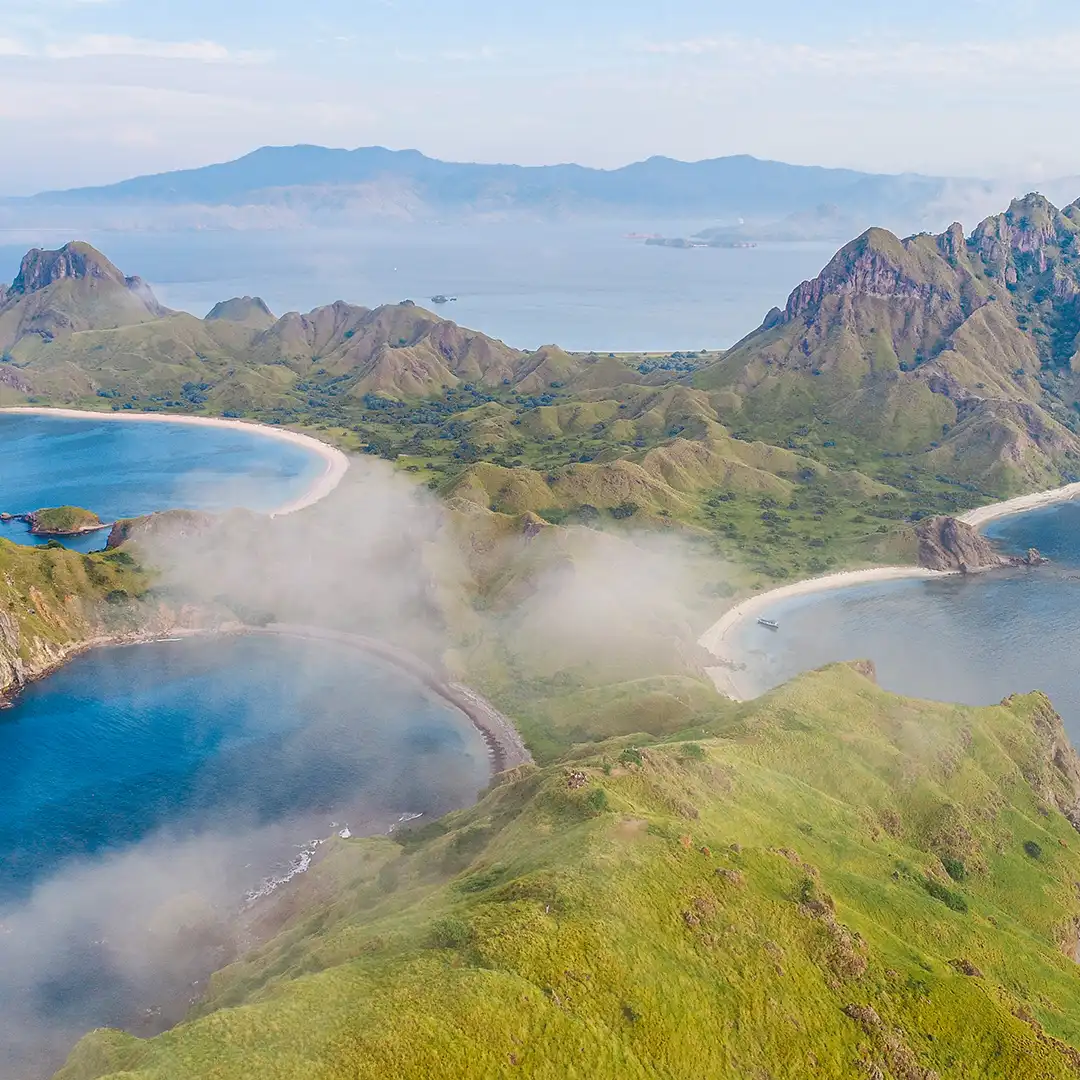
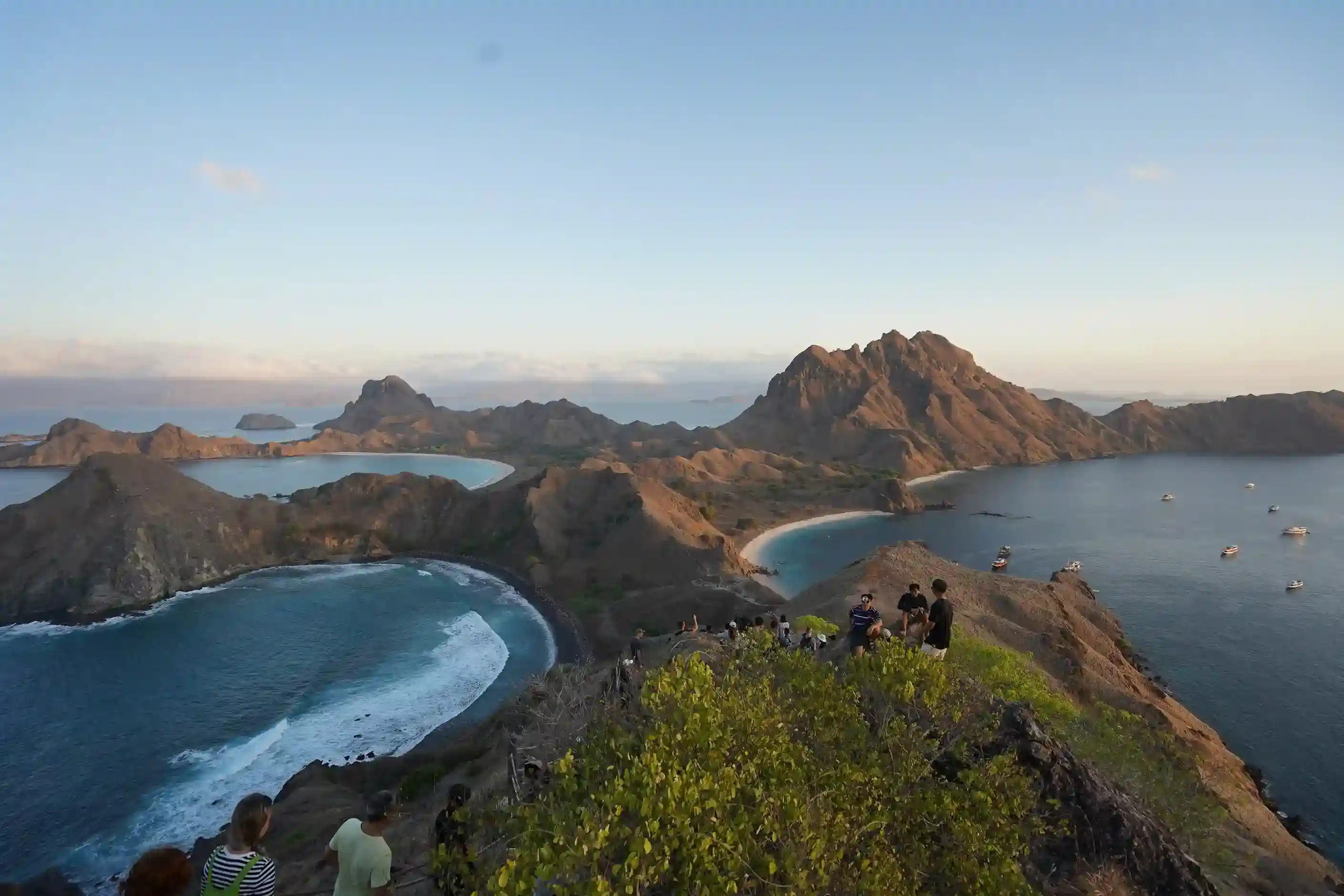
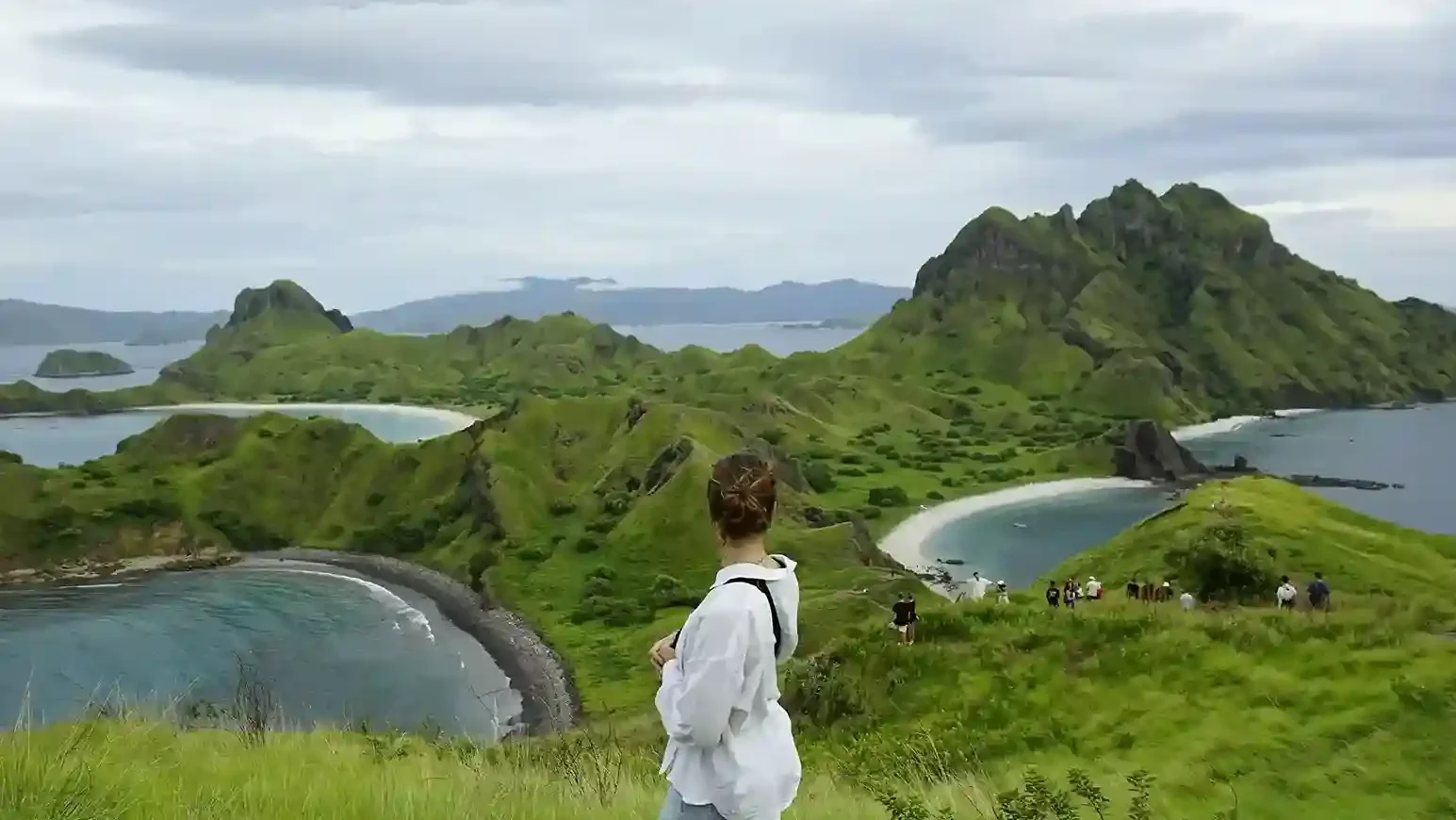
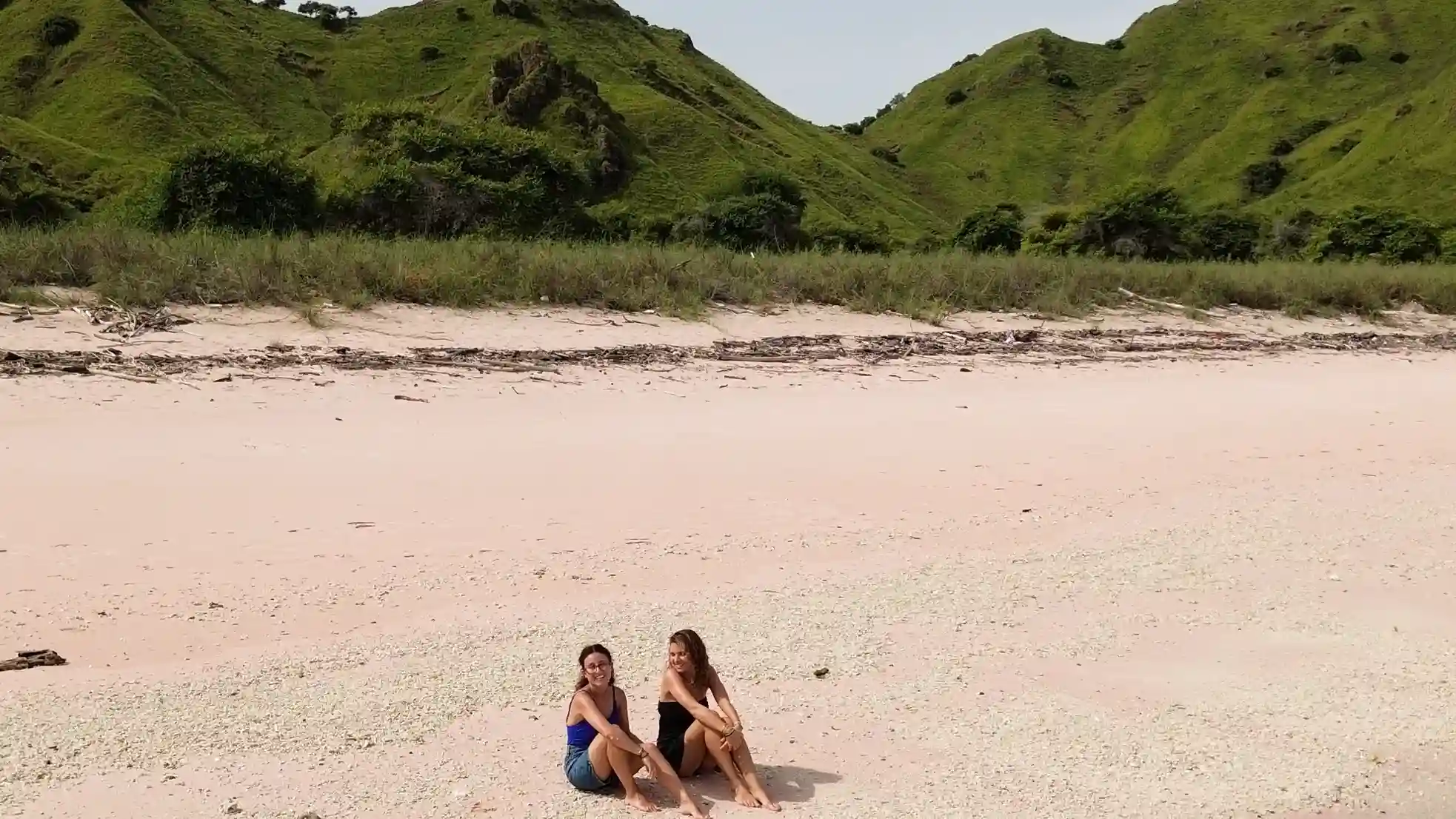
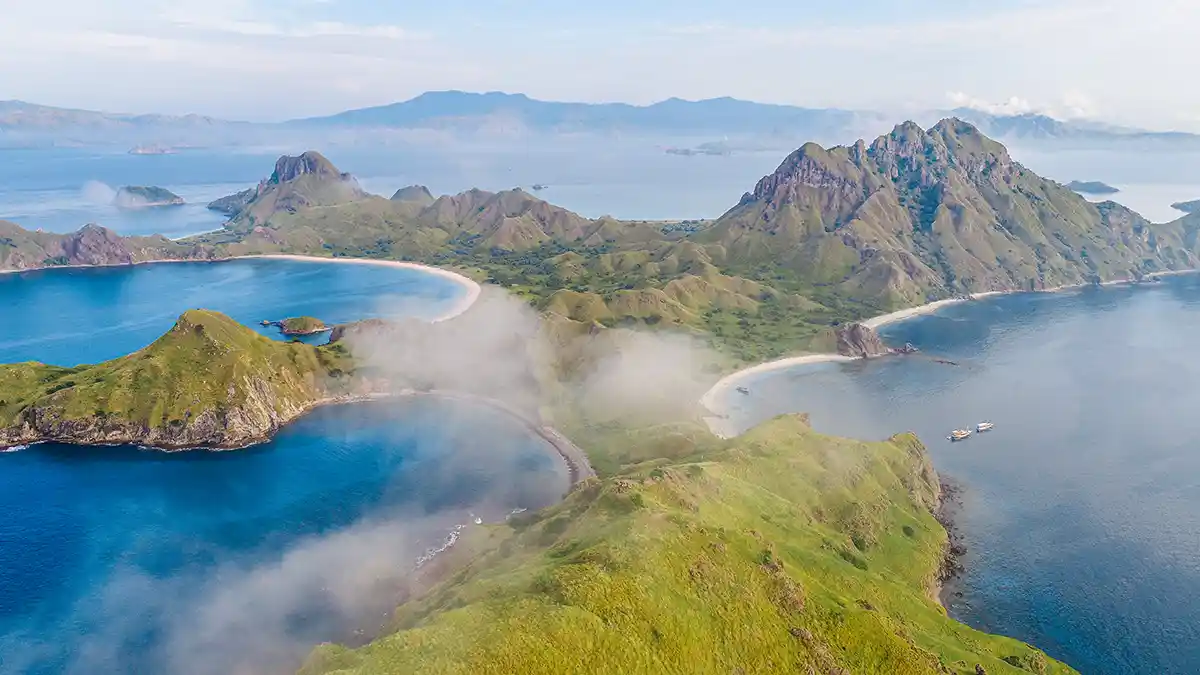
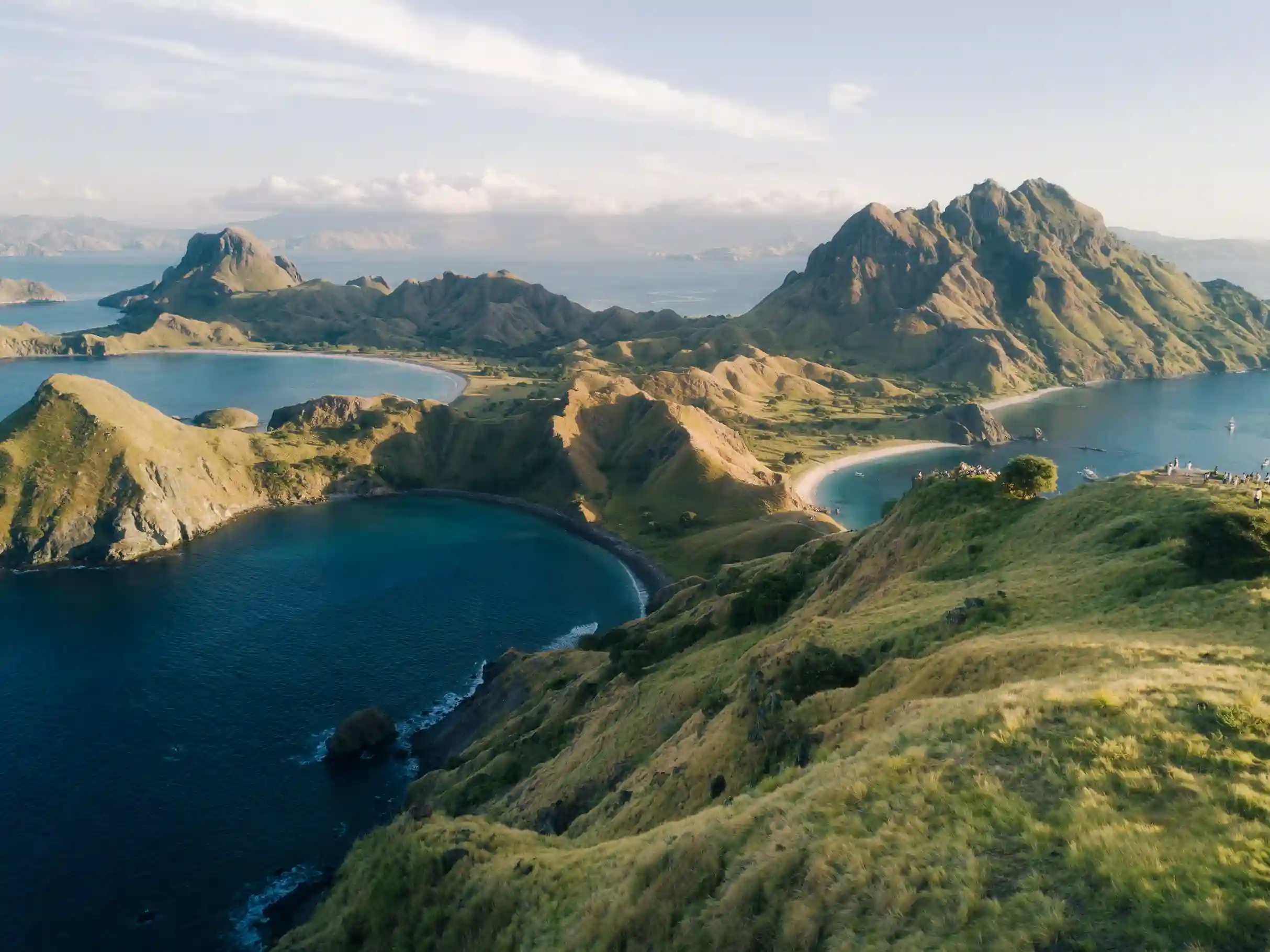
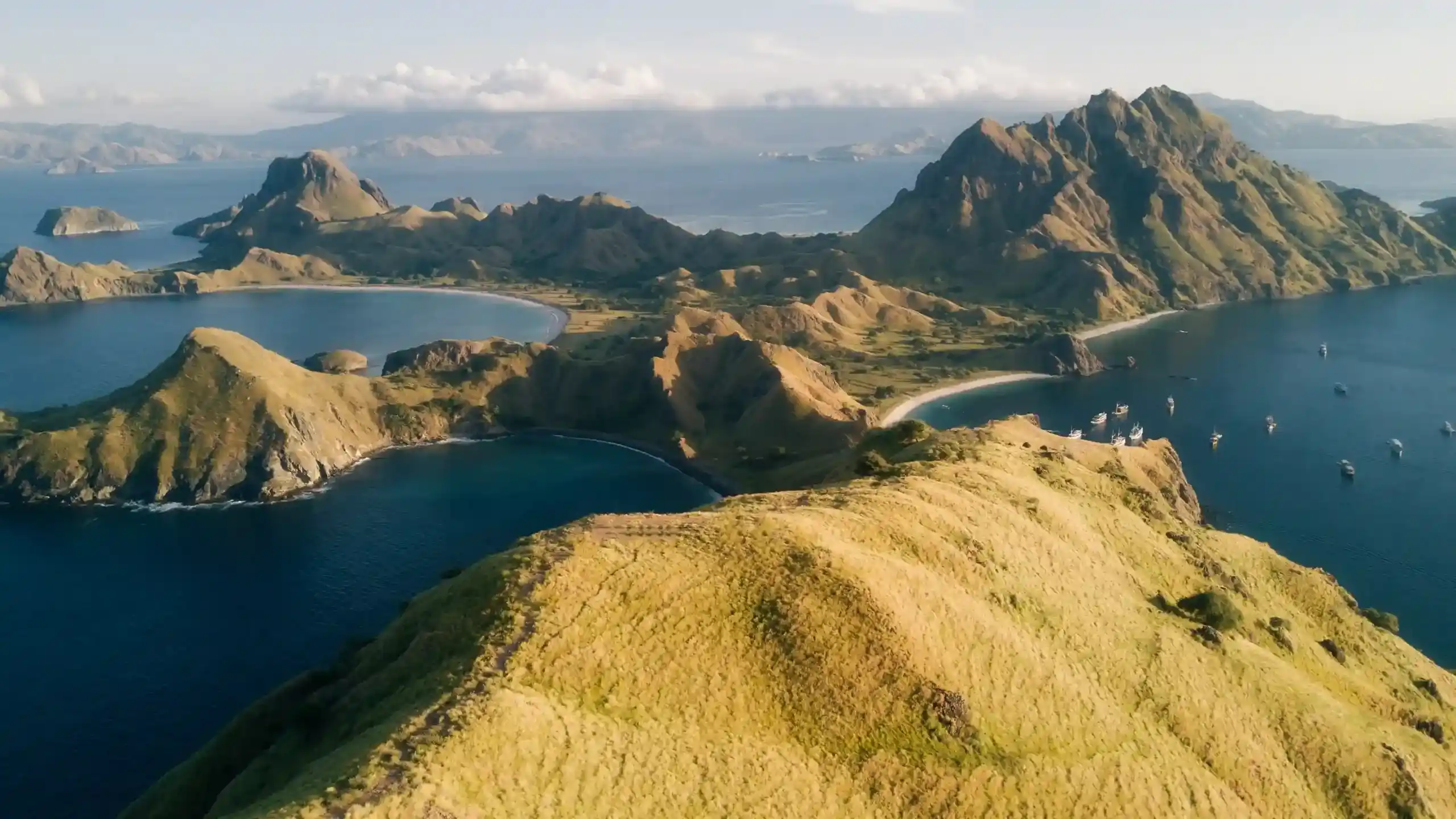
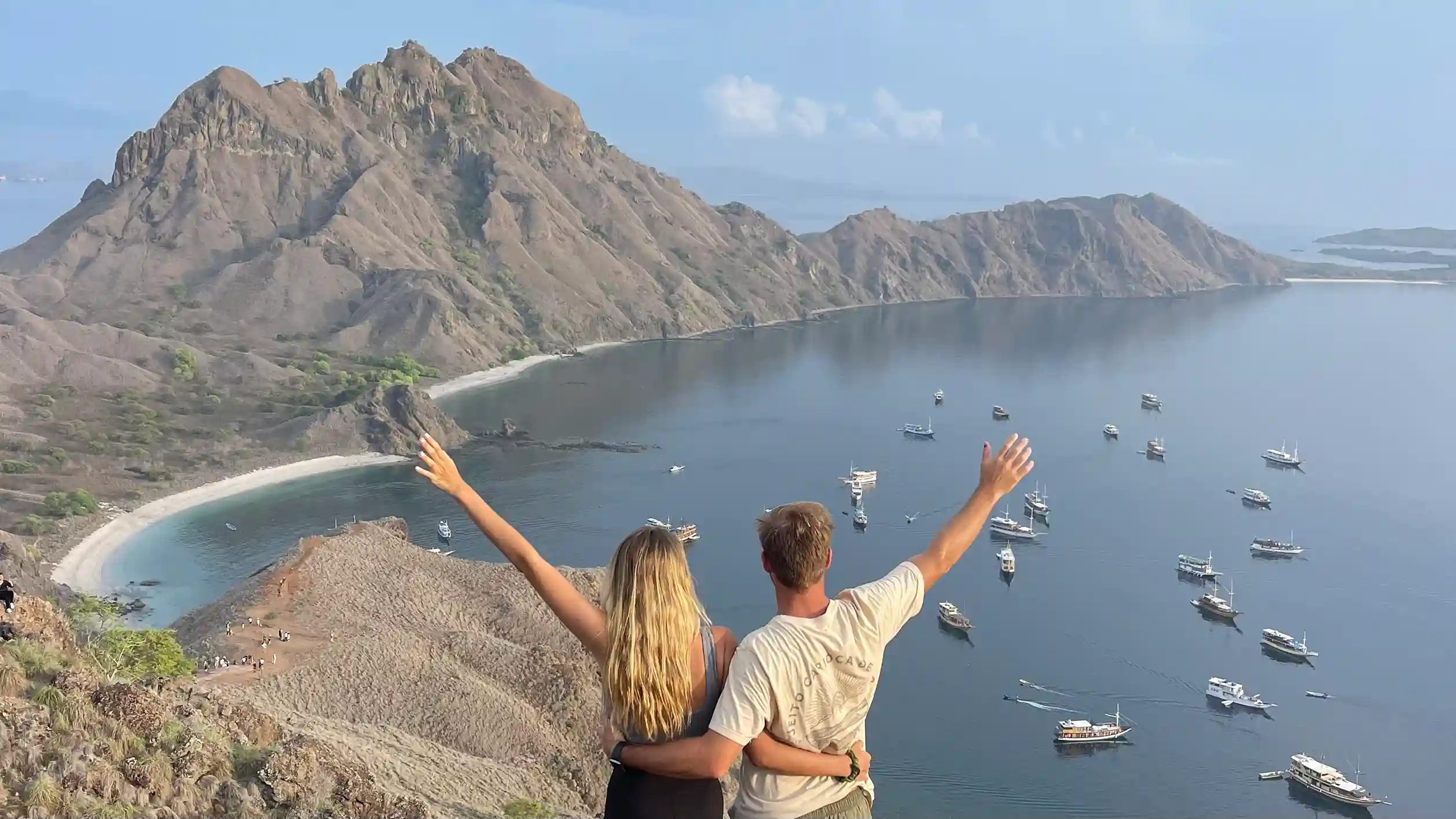
Padar sits between Komodo Island and Rinca Island inside Komodo National Park, part of East Nusa Tenggara (NTT) province. It is the third-largest island in the park after Komodo and Rinca, but unlike its neighbors it has no permanent village, and its tiny dragon population is not used for tourism. Its defining feature is geological, not wildlife: a dry, savanna-covered ridge that separates three curved bays — one with white sand, one with a pinkish tint, and one darker — visible together from a single viewpoint. That view, not dragons, is the entire reason Padar appears on almost every Komodo itinerary.
The island is uninhabited (see the accommodation page for what that means for planning), has no roads, and its only built infrastructure is the boat landing, a ranger post, and the hiking staircase. Everything else — food, water, toilets, shade — has to be brought with you or accessed on the boat.
Padar’s landscape is the result of dry-season savanna grass covering volcanic hill terrain rather than the rainforest cover found on wetter parts of Flores — that contrast is exactly why the hillsides photograph gold-brown for most of the year and turn green only during the short wet season. The island has no fresh water source of its own, which is part of why it has never supported permanent settlement the way Komodo village on Komodo Island has.
Common Mistakes First-Time Visitors Make
- Booking a midday boat instead of a sunrise departure. The staircase has almost no shade, and Padar’s viewpoint is at its least crowded and most photogenic in the first two hours after sunrise. A midday climb in full tropical sun is measurably harder and less rewarding.
- Assuming Komodo dragons are on Padar. They are not part of the visitor experience here — save dragon trekking for Komodo or Rinca on the same itinerary.
- Not confirming passport-detail submission with the operator in advance. Since entry runs through the SiORA online reservation system, arriving without your details pre-registered can cause delays at the checkpoint.
- Wearing sandals for a stair climb rated moderately difficult. Closed-toe shoes with grip matter more here than on flatter Komodo park trails; see the packing guide for the full list.

How Do You Get to Padar Island?

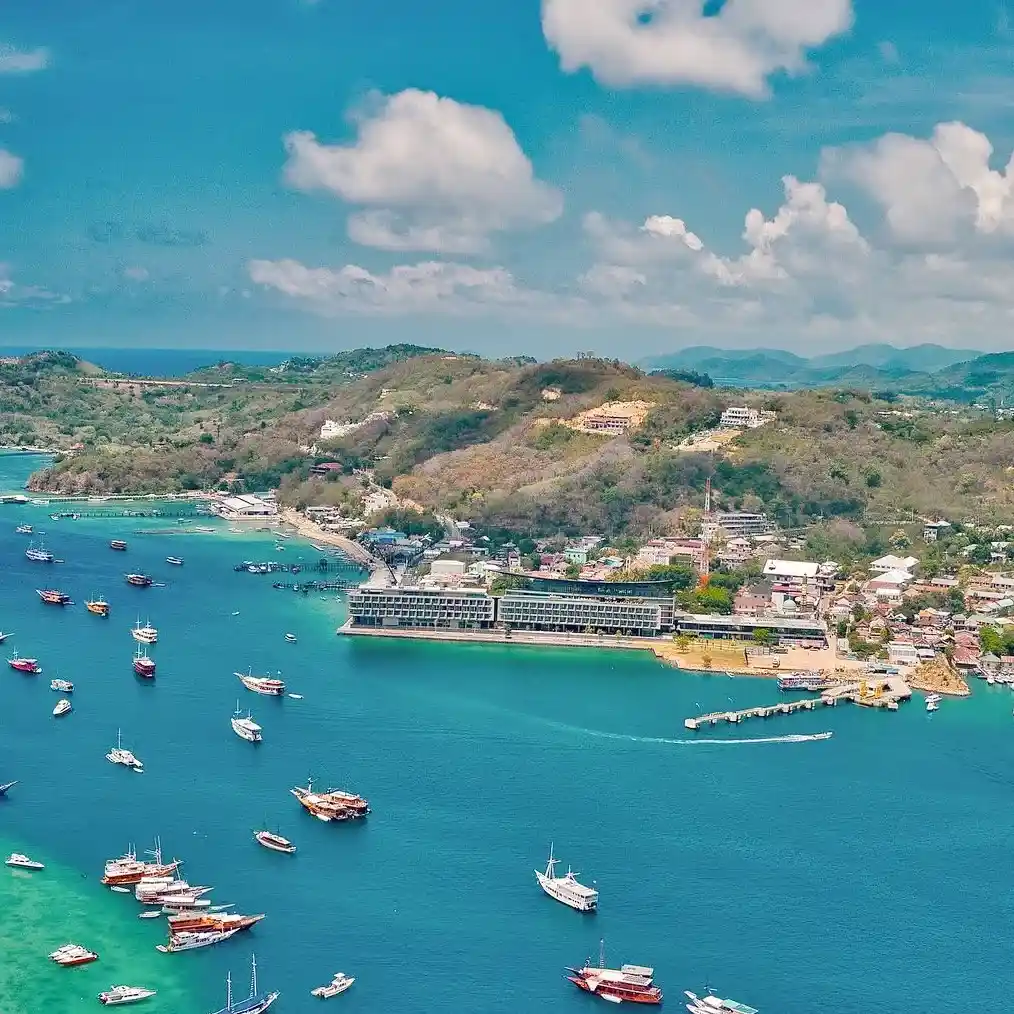
There is exactly one practical way to reach Padar: by boat from Labuan Bajo, the gateway town on the western tip of Flores with the nearest airport (Komodo Airport, code LBJ). There is no ferry terminal, no scheduled public boat, and no way to reach Padar without going through Labuan Bajo first.
| Boat type | Typical one-way time | Notes |
|---|---|---|
| Speedboat (shared or private) | ~60-120 minutes | Fastest option; standard for one-day trips |
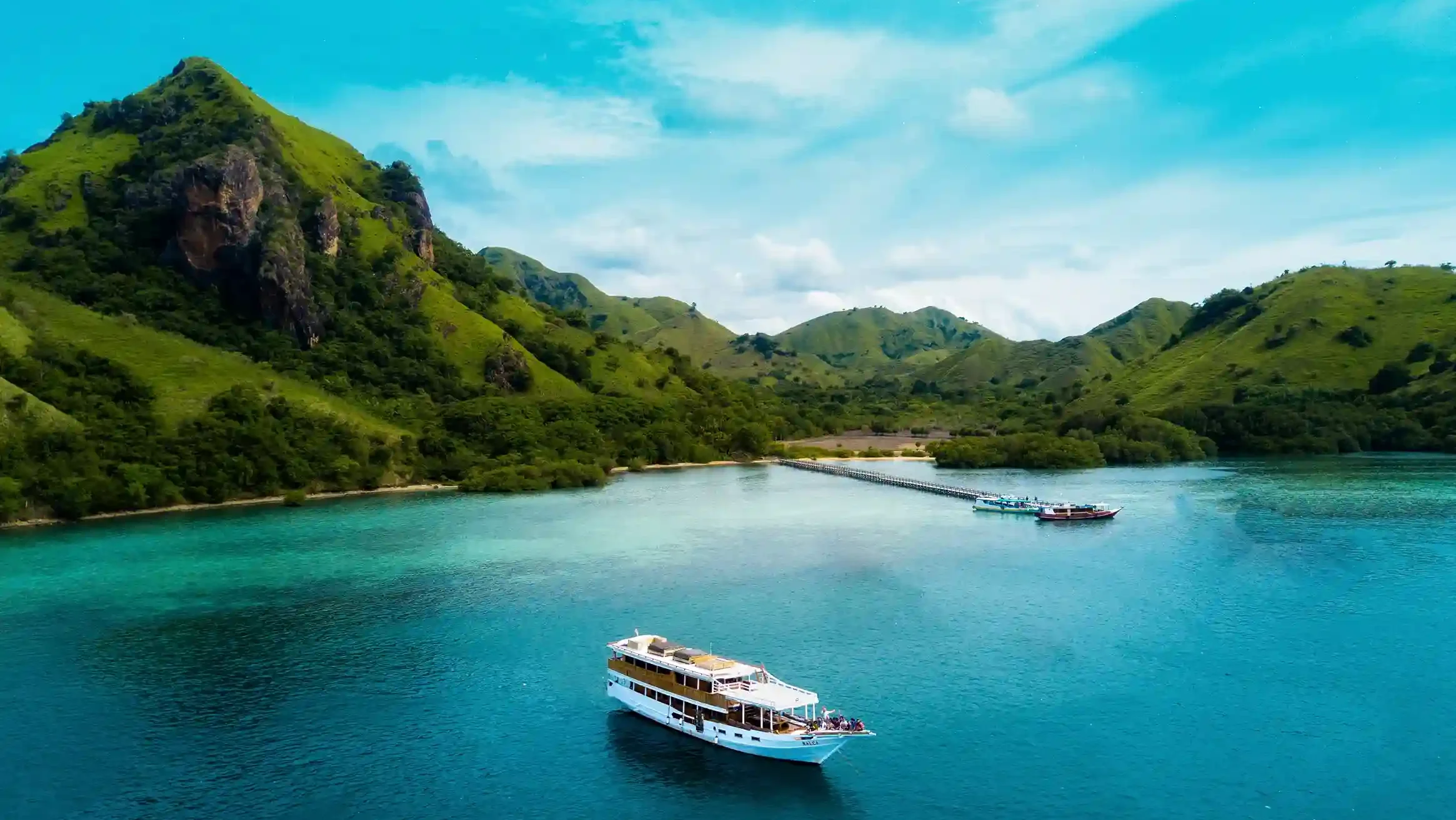
| Wooden phinisi day boat | ~2-3 hours or more | Slower but common on budget open-trip tours |
| Liveaboard (2–4 day cruise) | Padar is one stop among several | Overnight on the boat, hike included in the itinerary |
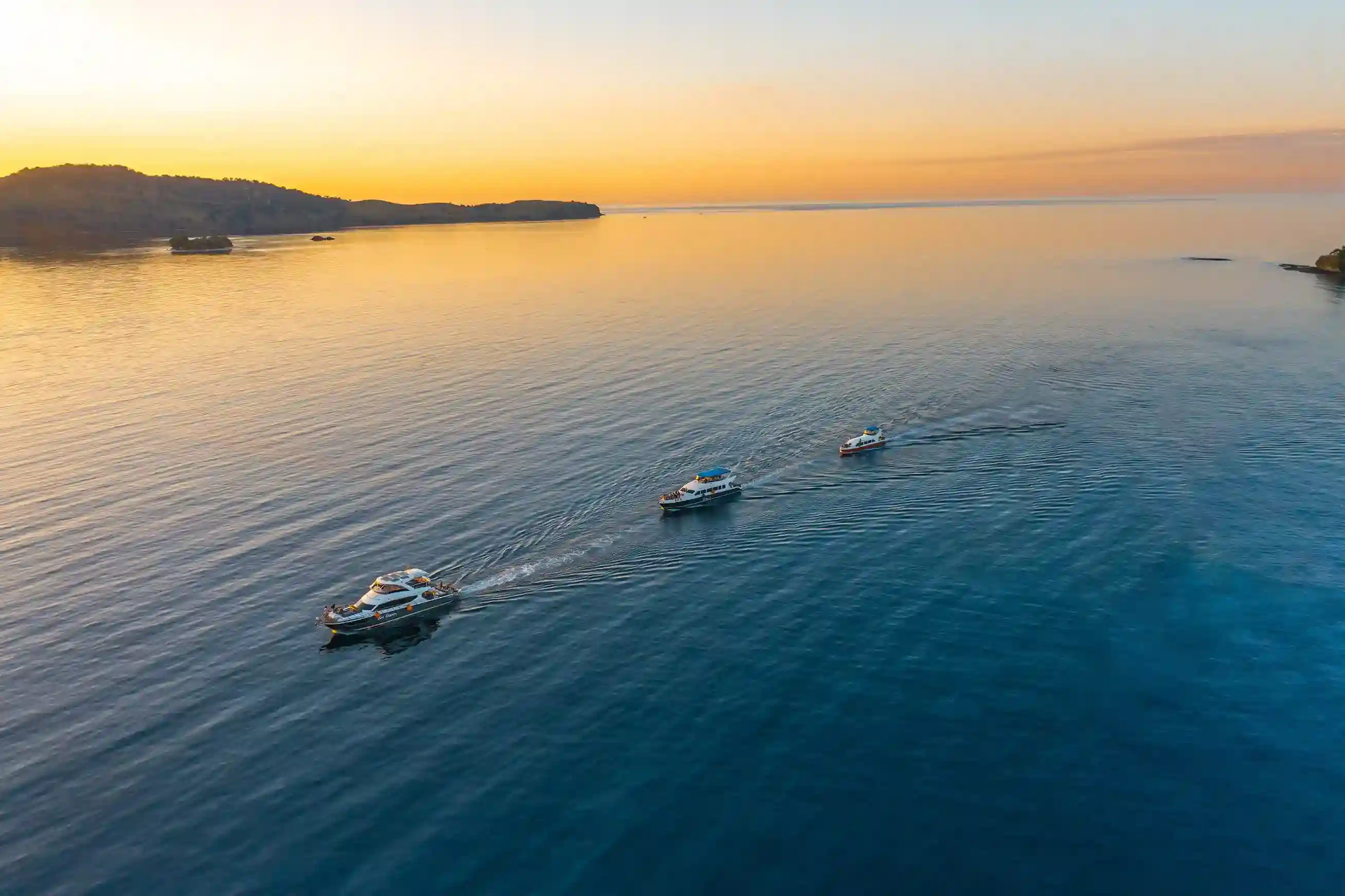
Most visitors reach Padar as one stop within a multi-island day trip (commonly paired with Pink Beach and Komodo or Rinca) or as a scheduled stop on a liveaboard cruise. Because Padar’s viewpoint is best at sunrise, many operators schedule it as the first stop of the day, departing Labuan Bajo around 04:00–05:00. For a full breakdown of route options and speedboat vs. liveaboard trade-offs, the Komodo Luxury boat trip page lists current departure schedules and vessel types running this route.
What Does It Cost to Visit Padar Island?
Answer first: the Komodo National Park entry fee is IDR 250,000 per day for foreign visitors (WNA) and IDR 50,000 per day (weekdays) or IDR 75,000 per day (Sundays & national holidays) for Indonesian citizens (WNI), though no verified per-person harbor fee applies (a per-boat vessel-entry charge may be billed instead, usually already folded into your trip price) — separate from whatever you pay your boat operator for the vessel itself. There is no weekday/weekend price difference under the current fee structure.
This is the single canonical fee figure for padarisland.com; rather than repeat it in multiple tables across the site, we maintain one dated, sourced breakdown on our Padar Island entrance fee page, which also covers the ranger/guide fee and the commercial drone (SIMAKSI) permit fee. For a complete, itemized cost breakdown across a full trip (boat, guide, food, fees), see the Padar Island cost guide.
Total practical cost, layered (per August 2026): that IDR 250,000 PNBP figure is only the entrance ticket. Add the ranger/guide fee (roughly IDR 150,000 per group of 1–5) and the conservation, dock, and insurance components bundled into the ticket, and a foreign visitor’s practical park-fee cost for one day typically lands around IDR 400,000–525,000 per person. Official schedule: tnkomodo.ksdae.kehutanan.go.id (live page returning HTTP 502 as of August 2026 — archived copy, 11 February 2026).
How Do You Book Entry? The SiORA Permit System

Since Komodo National Park moved to an online reservation model, entry to Padar in 2026 is meant to run through SiORA (Sistem Informasi Online Reservasi Alam), the park’s digital booking and e-ticketing platform, sometimes referenced as e-konservasi.Komodo.go.id. In practice, most independent travelers never touch the portal directly — licensed boat operators register passenger names, nationality, and passport numbers on your behalf as part of booking the trip, then present a QR-code permit at the entry point.
What this means for planning:
- Walk-in ticket purchases at the park gate are no longer the standard path — reservations are expected to be made in advance, typically by the operator when you book your boat.
- You will usually need to supply passport details (name as on passport, nationality, passport number) to your operator a day or more before departure.
- Entry is organized into timed sessions rather than an open-all-day model, which affects what time your boat needs to leave Labuan Bajo.

This is one of the least-documented parts of a Padar trip in most English-language guides, and it changes faster than blog content usually keeps up with — treat the mechanism (book ahead through your operator, bring your passport, expect a QR permit) as reliable, and treat any specific price or portal screenshot as something to verify at booking time.
Is There a Daily Quota for Padar Island?
Yes — but it’s Komodo National Park as a whole, not Padar Island alone, that has been capped at 1,000 visitors per day since 1 April 2026, split into three timed entry sessions — an early sunrise window from 05:00–08:00, a mid-morning window from 08:00–11:00, and an afternoon window from 15:00–18:00 WITA. Nothing inside that ceiling is reserved for Padar on its own, and no Padar-specific daily allocation exists under the 2026 system, as reported by national media coverage of the same regulation.
The timed-session structure and the online booking requirement are both real and functioning as of mid-2026. Book through a licensed operator and arrive within your assigned session window — same-day walk-in entry is no longer accepted at any Komodo National Park site.
What Is the Best Time to Visit Padar Island?
Indonesia’s dry season, roughly April through November, is the standard window — calmer seas, less rain, and the golden-brown “dry” hillside color that Padar’s viewpoint is known for in photographs. December through March is the wet season, with a greener landscape, rougher crossings, and a higher chance of a trip being postponed for weather. Neither season is objectively “wrong” — they produce different photographs and different crowd levels. The full month-by-month breakdown, including which months are busiest and which give the best light, is covered on the best time to visit Padar Island page.
How Hard Is the Padar Island Hike?
Moderately difficult, short in distance, and steep rather than long. The current route is a constructed wooden-and-concrete staircase — not the loose dirt trail that existed before roughly 2018 — running roughly 800–840 steps (there is no single official count published by the park authority; independent operator counts cluster in that range). Elevation gain to the main three-bay viewpoint is roughly 170–270 m, the spread reflecting which of the three viewpoints is measured over a one-way distance of about 0.7–1.5 km, meaning most visitors are looking at a 25–45 minute climb and a faster 20–30 minute descent. There is little to no shade for the entire climb. For the full breakdown by segment, rest points, and who should think twice before attempting it, see the Padar Island viewpoint hike guide.
What Else Is There to Do on Padar Island?
Beyond the viewpoint climb, Padar’s short list of activities includes swimming and snorkeling at the small beaches accessible from the landing point, drone photography (subject to park drone rules), and simply spending unhurried time on the boat around the island’s bays, since most itineraries don’t allow for a long stay onshore. A full activity-by-activity breakdown, including what’s realistic in a half-day stop versus a longer liveaboard call, is on the things to do on Padar Island page.
Where Do You Stay to Visit Padar Island?
Nowhere on Padar itself — there is no lodging, no homestay, and no permanent facility built for overnight guests. Every visitor bases themselves either in Labuan Bajo (day-trip model) or on a liveaboard vessel that sleeps at sea near the park (multi-day model). What that means practically for booking, luggage, and trip length is explained on the where to stay for Padar Island page.
Are There Komodo Dragons on Padar Island?

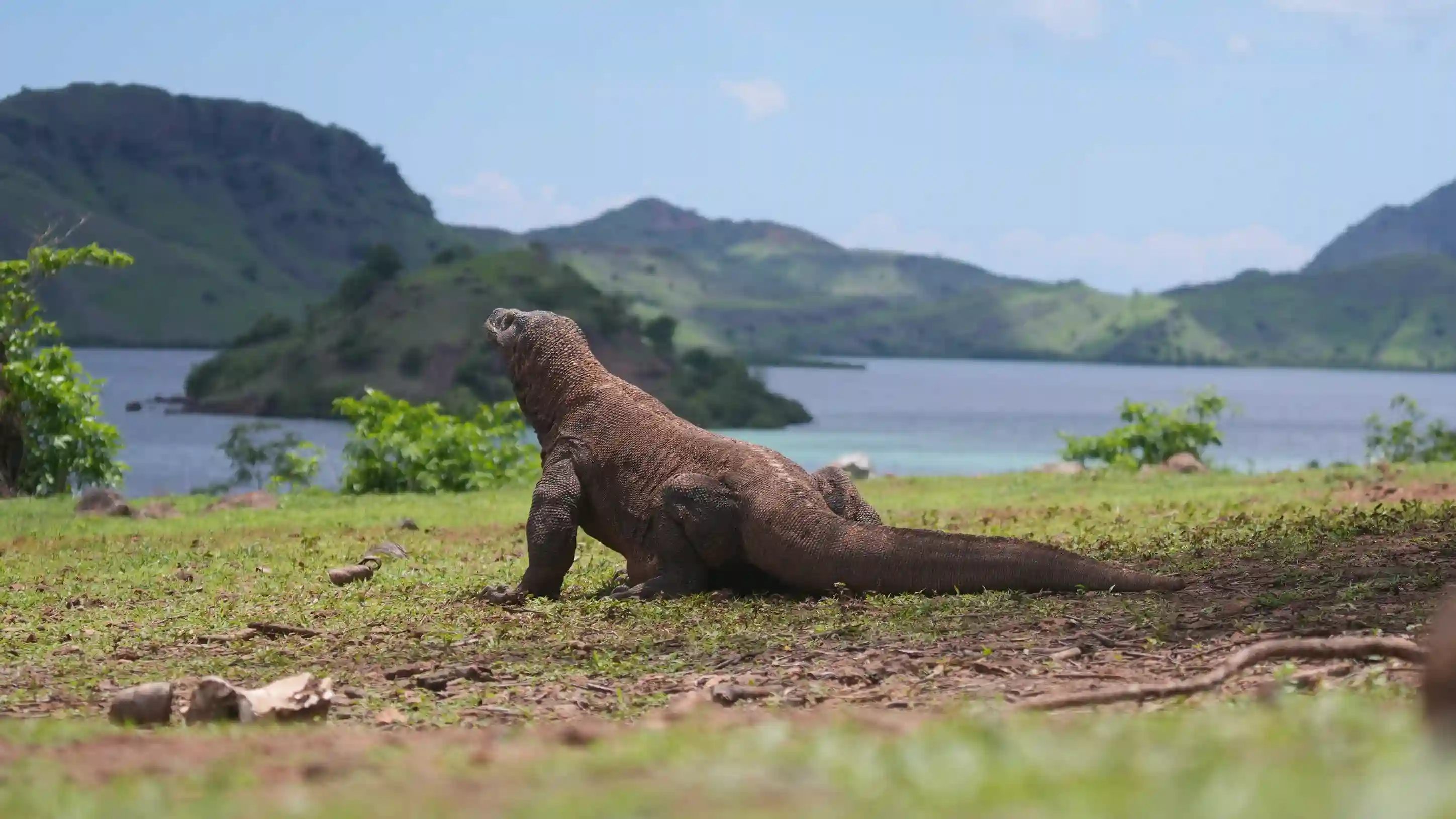
Not in any way that affects a visit. Padar is zoned by the park authority as a viewpoint-hiking destination, not a dragon-viewing site — dragon treks are run exclusively out of Komodo Island (Loh Liang) and Rinca Island (Loh Buaya). Historical ecological surveys note dragons have ranged across several islands in the park, but no tour operator runs dragon walks on Padar, and rangers do not manage it as dragon habitat for visitors. For trip-planning purposes, treat Padar as a place where you will not see a dragon: the island does hold a very small, sparse population, but sightings on the visitor trail are effectively never reported.
Has Padar Island Ever Been Closed?
This is worth separating clearly into what was proposed and what actually happened, because the two get conflated online:
- 2019–2020: Indonesian officials floated closing Komodo Island for a year to let the dragon population and habitat recover, and separately proposed an annual “membership” fee of around IDR 3.75 million per visitor for Komodo and Padar to reposition them as exclusive, low-volume destinations. Neither the closure nor the IDR 3.75 million membership fee was ever fully implemented — both were shelved in favor of the standard daily-fee-and-quota model described above.
- Late 2025: boat routes to Padar and Komodo were temporarily suspended by the Labuan Bajo port authority (KSOP) during a period of severe weather and rough seas — a maritime-safety measure, not a park policy change, and access resumed once conditions cleared.
As of August 2026, Padar is open to visitors under the standard reservation and quota system described above. The realistic risk to plan around is short, weather-driven route suspensions announced by port authorities, not a long-term park closure.
Sample One-Day Itinerary from Labuan Bajo

| Time | Activity |
|---|---|
| 04:00–04:30 | Depart Labuan Bajo harbor by speedboat |
| ~06:30 | Arrive Padar, begin the staircase climb for sunrise |
| 07:00–08:00 | Viewpoint time, photos, descent |
| 08:30–10:30 | Sail to Pink Beach or Komodo/Rinca for a second stop |
| 12:00–13:00 | Lunch on board |
| ~15:00–16:00 | Return to Labuan Bajo |
Multi-day versions of this itinerary that add Raja Ampat-style snorkeling stops, Rinca dragon treks, or an overnight liveaboard segment are laid out in full on the 5-day Padar Island itinerary and 7-day Padar Island itinerary pages, and packing specifics (footwear for the staircase, reef-safe sunscreen, drybags) are on the Padar Island packing guide.
Pulau Padar: Padar Island in Bahasa Indonesia
For Indonesian-speaking travelers, Padar Island is known locally as Pulau Padar, part of Taman Nasional Komodo (Komodo National Park) di provinsi Nusa Tenggara Timur (NTT). The questions most often searched for in Indonesian — such as how many steps Padar Island has, when the best time to visit is, and whether Padar Island is inhabited — are answered directly throughout this guide and on the FAQ Pulau Padar.
Padar Island Guide: Quick FAQ
Is Padar Island worth visiting?
Yes — the three-bay viewpoint is one of the most photographed vistas in Komodo National Park and is achievable as a half-day add-on to a Komodo or Rinca dragon trek, making it low-cost relative to the payoff for most itineraries.
Can you visit Padar Island without a guide?
You need a licensed boat and, in practice, a ranger checkpoint at the landing — independent travel without a registered operator is not the normal route in and is complicated further by the online permit requirement.
How long does a Padar Island visit take?
Most day-trip visitors spend 1.5–2.5 hours at Padar total, including the hike, from boat arrival to departure.
Do I need a permit for Padar Island?
Yes — entry is processed through the park’s online reservation system (SiORA / e-konservasi), normally handled by your boat operator as part of booking.
The complete 100-question FAQ, covering pricing, safety, photography, and family travel in more depth, is on the Padar Island FAQ page.
Plan Your Padar Island Trip

Padar Island is almost always booked as part of a broader Komodo boat trip rather than as a standalone ticket. The Komodo Luxury boat trip lineup covers day trips and multi-day cruises that include the Padar viewpoint hike alongside Pink Beach, Rinca, and Komodo Island. For longer stays, see the Komodo liveaboard cruises, Komodo tours from Bali, Labuan Bajo tour packages, and the Komodo Luxury fleet for vessel options.
How hard the climb really is
Short but strenuous is the honest description. The staircase rises almost continuously from the jetty to the viewpoints with very little flat relief, and there is no scrambling and no technical exposure — the difficulty is entirely gradient, sun and humidity. Most reasonably fit visitors get up within an hour at a gentle pace, and grip on your footwear, enough water and a willingness to stop often matter more than athletic fitness. Push for sunrise or sunset light and your heart rate will climb fast; people unused to hills appreciate the handrails and frequent shade breaks, of which there are few.
Against Rinca, Padar is steeper and far more sustained. The dragon trails on Rinca are longer but roll rather than climb, so visitors who find Rinca easy can still be caught out by Padar in heat or when rushing a session. Photography makes it harder still: stopping repeatedly means loose gravel beside the staircase and one eye permanently on your footing, so allow real time to set up at two or three terraces rather than only the top. Tripods work at the wider platforms and become a nuisance on crowded, narrow sections.
Children of about seven upward who are used to walking generally manage with breaks. The challenges are heat, exposure and uneven step heights rather than terrain — carry plenty of water, use sun protection, set a slow pace and agree in advance how high you intend to go, because the mid-level terraces already give a strong view when younger legs tire. Mixed-age groups often complete it together by pacing carefully: active seniors into their seventies usually cope with trekking poles or the handrails and rests whenever needed, and building in extra time means nobody feels hurried. Since mobile reception is unreliable, stay together and agree simple meeting points before you start.
Two practical realities on the island. There is no fresh water source and no shop; whatever water sits near the ranger post arrived by boat and is limited, so bring what you need for the whole stop. And access is exclusively by sea from Labuan Bajo or elsewhere in the park — no airstrip, no public ferry — on private speedboats or traditional wooden and phinisi vessels, which means weather and sea conditions control your timing and your plans should have slack in them.
Booking sensibly, and what to spend on
First-timers benefit from an organised tour that handles permits, ranger coordination and tide timing: an early start, a briefing at the jetty, a guided walk up the staircase. Wear shoes with grip rather than beach sandals, pack light for the climb, and take sun exposure more seriously than most people do on arrival — a hat and sunscreen are not optional here.
The cheapest way in is a shared-boat day trip from Labuan Bajo covering Padar among several stops, which spreads fuel and crew costs. Park entry and ranger fees still sit on top, and those are fixed, so savings come from boat choice, group size and skipping add-ons rather than from negotiating the ticket. Cutting further means accepting simple boat facilities, early departures and less flexibility over how long you stay anywhere. The general principle worth applying is to spend on a safe, reputable boat rather than onboard luxuries; shared speedboats usually balance cost and time best, and wooden boats can be cheaper if you can afford the extra hours on the water.
Most organised boats include a guide who coordinates with the rangers, manages hike timing and covers the safety basics, walking with the group but deferring to rangers on the island for route and crowd control. If a guide matters to you, confirm it explicitly at booking rather than assuming. English-speaking guides are common on tours aimed at international visitors, though fluency varies; if you want detailed photography or nature discussion, say so when you enquire rather than at final payment, since some operators can allocate a particular crew member or a freelance guide while others rely on basic bilingual staff. Ask how large the group will be and whether explanations happen only on board or also during the climb.
Safety provisions deserve a direct question. Basic communication equipment and life jackets matter more in this exposed stretch of water than small differences in travel time, and if you cannot verify what a boat carries, choose another operator even at a higher fare or a less convenient departure.
Tipping is discretionary and appreciated. Most visitors tip the crew and guide together in cash at the end of the day rather than at each stop; there is no scale. A small additional tip handed directly to someone who helped materially during the hike — with children, or a slower walker — is common.
If your schedule is tight, a half-day visit covers the standard hike and a short rest at the top: straight from jetty to trail, limited time at the viewpoints, back to the boat without lingering. It fits well into a multi-stop day when daylight and tides are constrained, and it works especially well if your wider Komodo plans already include snorkelling and beach time elsewhere — operators can then sequence the arrival to miss the busiest docking window, which buys you a more comfortable climb and more room at the terraces. A half-day speedboat run is the efficient version, trading the slower feel of a wooden vessel for a direct crossing that fits around flights; just discuss timing carefully so you are not squeezed between an airport check-in and the midday heat on the staircase.
Photographing it well
Padar photographs the way it does because its three bays curve away in different directions, separated by sharp ridges that read clearly from a modest elevation. Dry volcanic slopes, shifting sea colours and sinuous shorelines give depth even in hazy light, and because the vista faces roughly east, sunrise side-lighting emphasises texture — most obviously in the clearer dry-season months.
A wide lens handles the sweeping bay frames and a mid-range zoom isolates the curves and the anchored boats. A polariser deepens sea tones but can darken a very wide sky unevenly. Arrive early enough to scout two or three positions before the best light, and keep the kit small enough to move easily on steps.
The mistakes are consistent and avoidable. Arriving late and shooting under overhead light. Overexposing the sky. Composing only from the highest platform. Not checking the horizon, which the multiple headlands make surprisingly easy to tilt. And forgetting that sea spray and dust land on lenses constantly on a windy day, so carry a cloth. Move between terraces to vary the angle rather than staying put.
In editing, the work is mostly balancing bright sky against darker slope. Gentle shadow and highlight adjustments hold detail without making the image look processed, a slight warming suits the dry-season palette, and modest haze reduction brings out the ridge layers. Crops that emphasise the curve of the bays tend to beat very wide flat horizons.
One expectation to correct: you are very unlikely to see a Komodo dragon on Padar, and visits are not organised around wildlife at all. For dragon photographs, plan a separate stop at Komodo or Rinca, where the treks are managed around known habitat under close ranger supervision with clear distance rules.
Engagement sessions work here if you are both comfortable hiking in heat and being seen doing it. Wear practical shoes for the climb and carry anything more formal in a backpack to change into near the top, and check in advance whether your photographer needs permits, particularly for drones or clearly commercial equipment.
Choosing your month
Conditions shift across the year: greener slopes and more unsettled seas in the wet months, drier and more stable but windier weather mid-year. Early dry-season months tend to give clearer skies and slightly cooler mornings; peak dry season brings stronger winds that mean more spray and less comfort on an open deck; late in the year the hills green up and the colour palette of photographs changes even where visibility occasionally drops. The shoulder periods usually combine decent visibility with fewer boats.
Rather than looking for the best month in the abstract, match the month to what you actually want: calmer crossings, softer light, or the brown, arid look most people associate with the classic Padar image. Those three do not all arrive together.
Indonesian readers: a full Bahasa Indonesia edition of this guide is at Panduan Lengkap Pulau Padar.
This guide does not operate boats. Bookings are fulfilled by Komodo Luxury, and this site may earn a referral commission.