 Most Popular
The trip most Padar Island visitors actually book — a shared or private boat covering Padar plus Komodo/Rinca or Pink Beach in one day, run by our operating partner Komodo Luxury.



Komodo National Park
Padar Island · Complete 2026 visitor guide
A volcanic island inside Komodo National Park, Indonesia. A stepped trail climbs to the ridge that looks down on three differently-coloured bays. This guide covers the fees, the boats and the timings, checked against the published canon.
Padar Island is a volcanic island inside Komodo National Park, Indonesia, best known for a stepped hike (roughly 800–840 steps — no official park count is published; independent operator counts cluster in that range, checked August 2026 — roughly 170–270 m of elevation) to a ridge overlooking three differently-coloured bays. Since 1 April 2026, entry runs through the park-wide SIORA booking system, capped at 1,000 visitors per day across three timed sessions.
Plan Ahead
The rules changed materially in 2026. Here is what we can currently verify against official sources — with a plain note wherever a number is not yet confirmed.
| Daily Visitor Quota | 1,000 visitors per day across the whole of Komodo National Park (Padar, Rinca, Komodo Island & 23 dive sites) — split into 3 sessions: 05:00–08:00, 08:00–11:00 and 15:00–18:00 WITA. In force since 1 April 2026. This is a park-wide cap, not a Padar-only sub-quota. |
|---|---|
| Foreign Visitor (WNA) Ticket | USD 40-50 per person, per day — a flat rate, same on weekdays and weekends, and it already includes trekking, wildlife viewing and snorkeling. This is the official PNBP rate under Government Regulation (PP) No. 36/2024, in force since 30 October 2024. |
| Domestic Visitor (WNI) Ticket | USD 20-25 per person. This is the official PNBP rate under Government Regulation (PP) No. 36/2024, in force since 30 October 2024. Verified 24 Aug 2026. |
| Harbor / Port Fee | No verified per-person harbor fee is confirmed by any official source. Where an operator itemises a boat-entry charge, it is billed per boat, not per person. |
Verified 24 Aug 2026 · Sources: Ministry of Forestry (kehutanan.go.id) & PP No. 36/2024 Full price breakdown Permit & booking guide
Book The Trip
Our operating partner for boat charters and tours out of Labuan Bajo. Starting prices below are quoted directly from each linked page, checked 24 August 2026 — always confirm the live total before booking.
Most PopularThe trip most Padar Island visitors actually book — a shared or private boat covering Padar plus Komodo/Rinca or Pink Beach in one day, run by our operating partner Komodo Luxury.

The fastest way from Labuan Bajo to Padar — a private speedboat you can schedule around sunrise or your own timetable.

A single, well-paced day covering the Padar viewpoint hike and one or two more Komodo National Park stops.

Join a shared multi-day sailing group in a shared cabin — the budget-friendly way to combine Padar with an overnight liveaboard route.
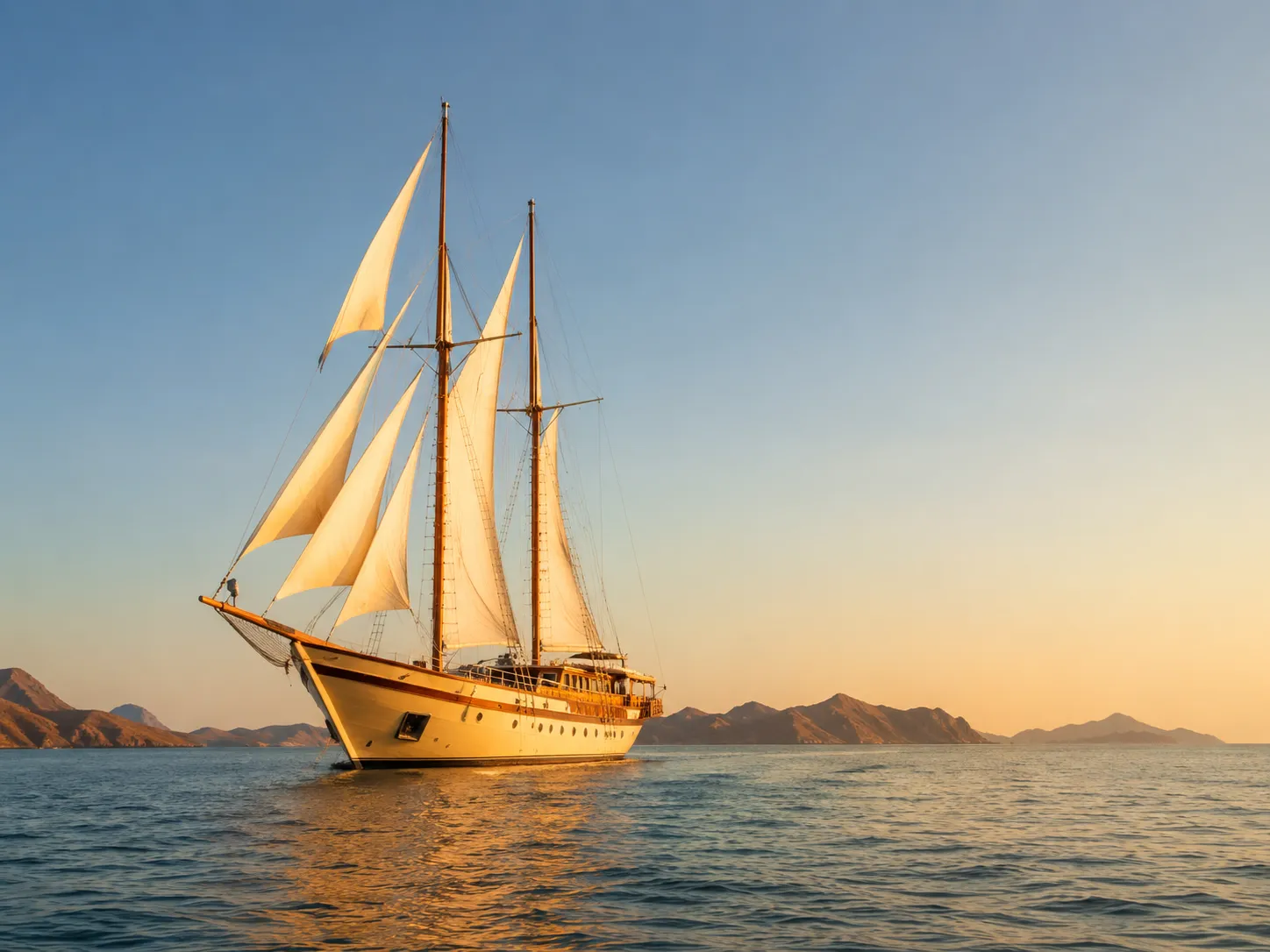
Charter the whole boat for your own group — full control over the route, timing, and who else is on board.
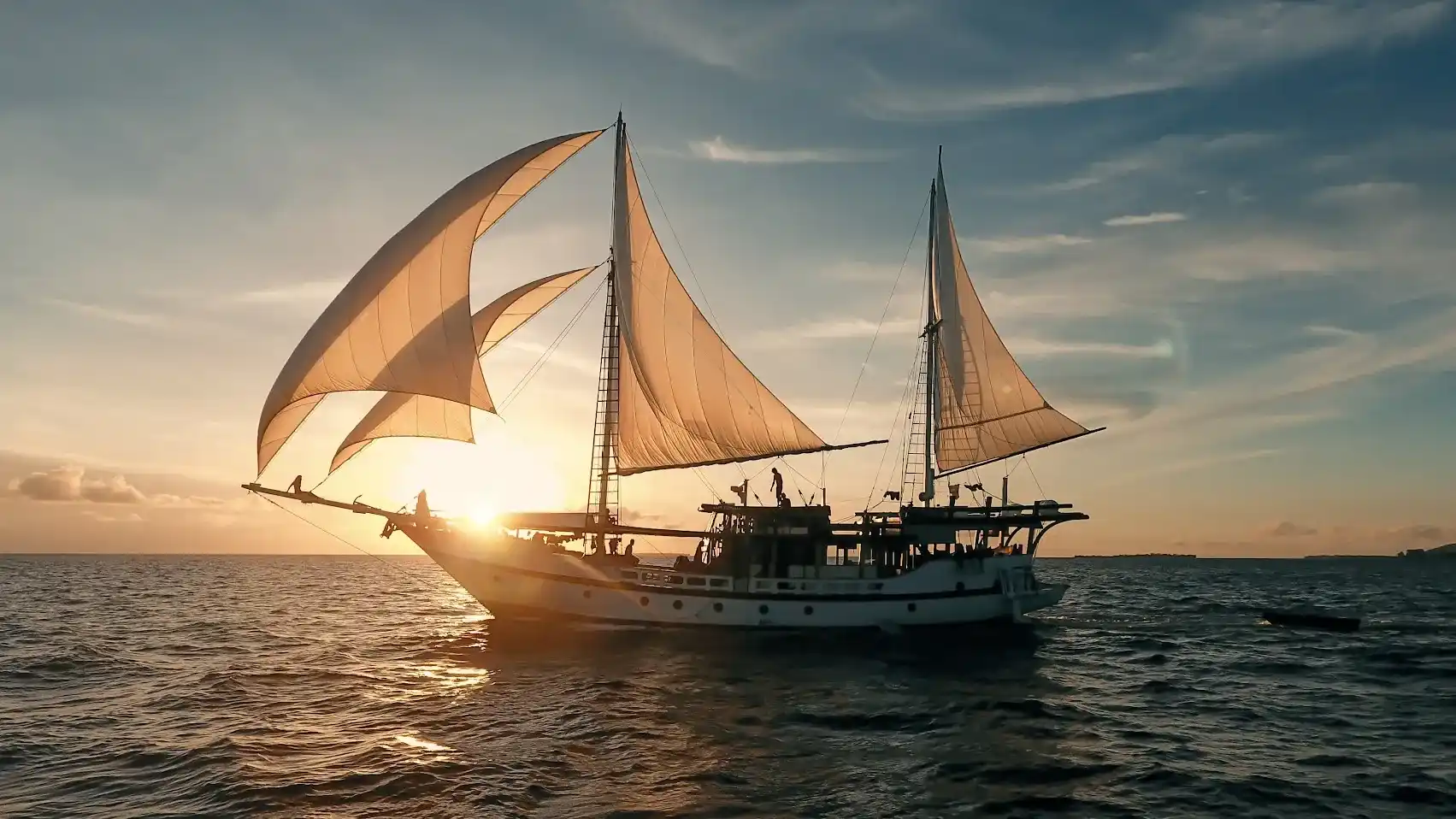
Sleep near Padar overnight — the only reliable way to catch sunrise at the viewpoint without a pre-dawn speedboat transfer.
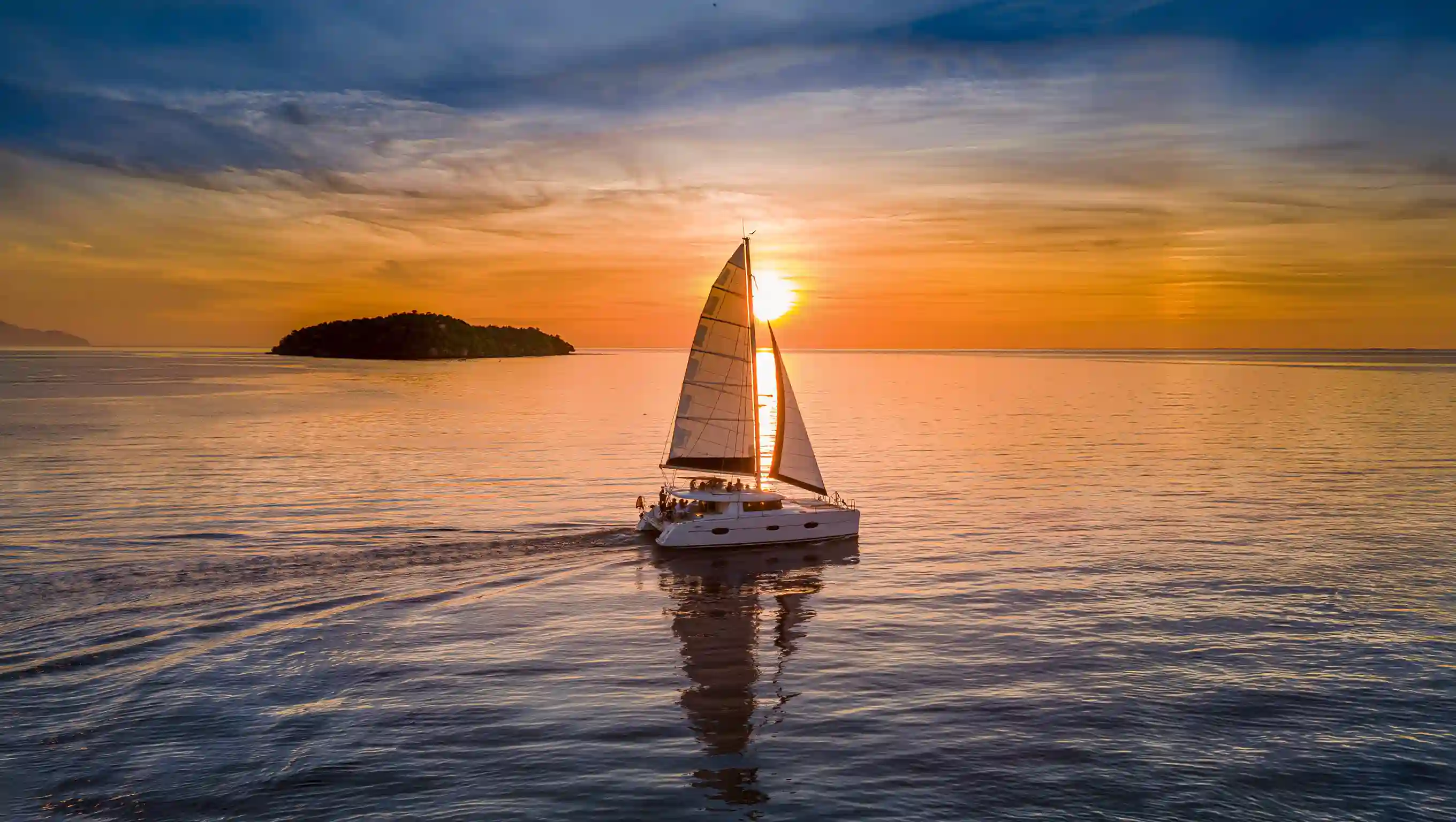
Browse every boat Komodo Luxury operates, from budget shared boats to full superyachts, with real specs and photos.
Photography on this page: Komodo Luxury and IndonesiaJuara Trip.
This guide does not operate boats. Bookings are fulfilled by Komodo Luxury, and this site may earn a referral commission.
Go Deeper
Padar Island is one of Indonesia’s most photographed landmarks, but reliable, practical, up-to-date information about actually visiting it — permits, cost, seasonal conditions, the hike itself — is scattered across forums, outdated blog posts, and operator marketing.
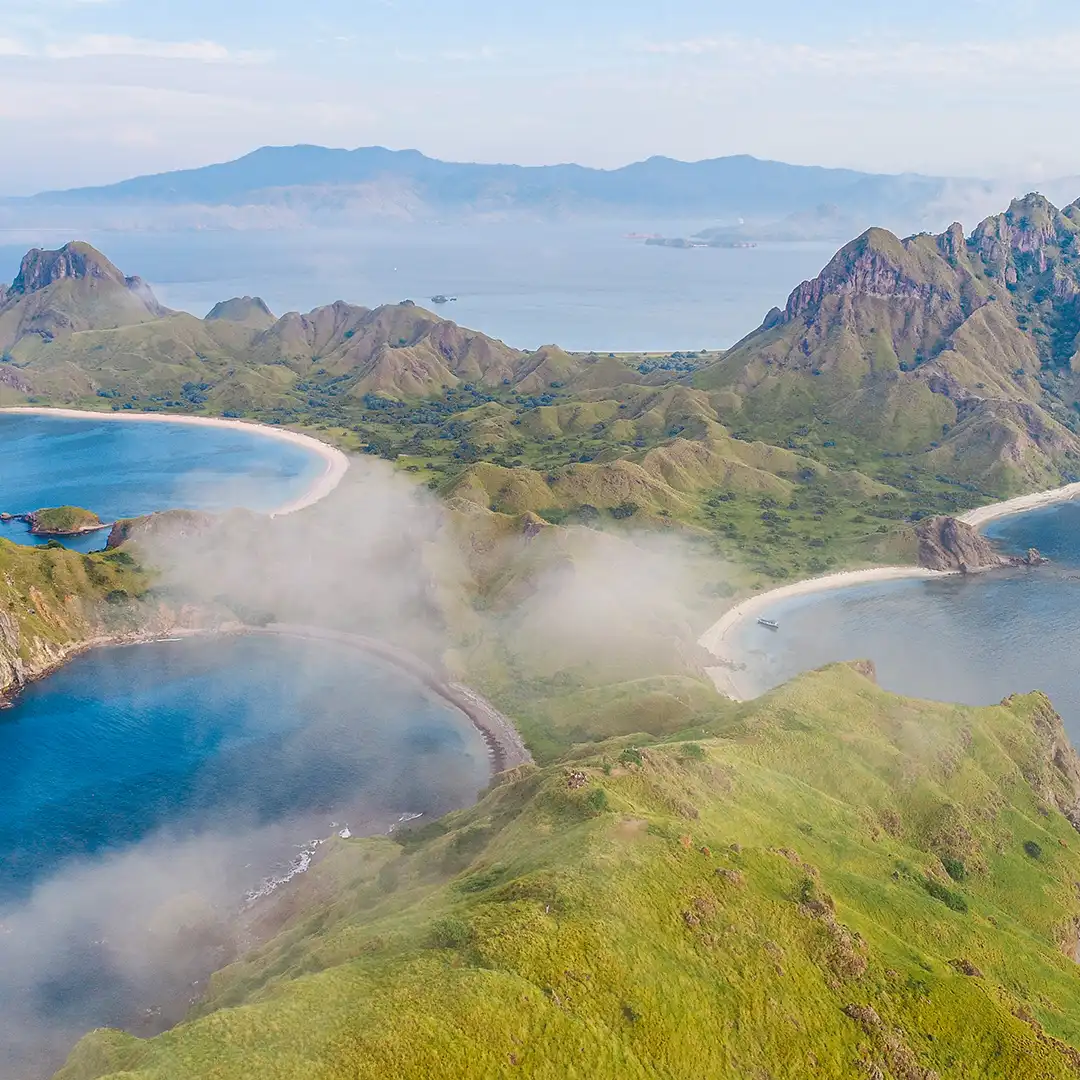
The full overview: what it is, when to go, and how to plan around it.
Hour-by-hour plans for a rushed day trip up to a slower multi-day route.
A real, itemised cost breakdown by boat type and group size.
How SIORA works, what documents you need, and when to book.
Every route from Labuan Bajo, Bali and Jakarta, compared.

Shared vs private boats, and what each actually costs.
Ready When You Are
Compare boat and charter options before you commit to a date.
See Boat OptionsGet a real quote from our operating partner for your dates and group size.
Get a quote from Komodo LuxuryChat directly on WhatsApp with the Komodo Luxury team.
Book with Komodo Luxury on WhatsApp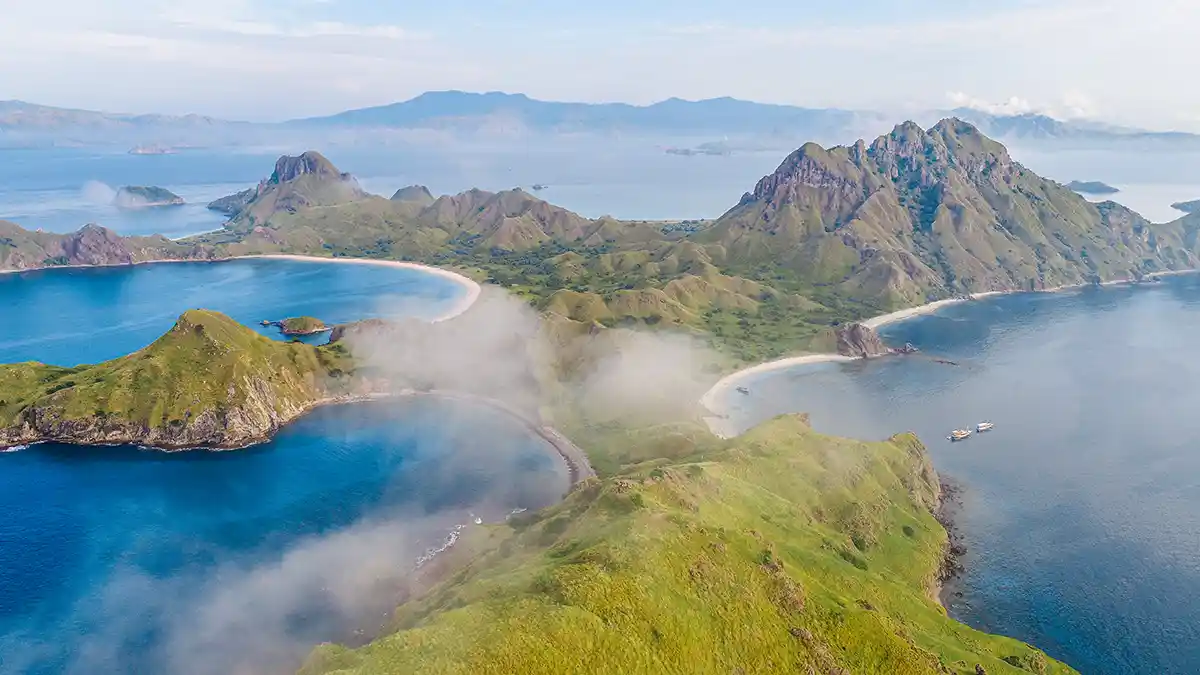
The Island
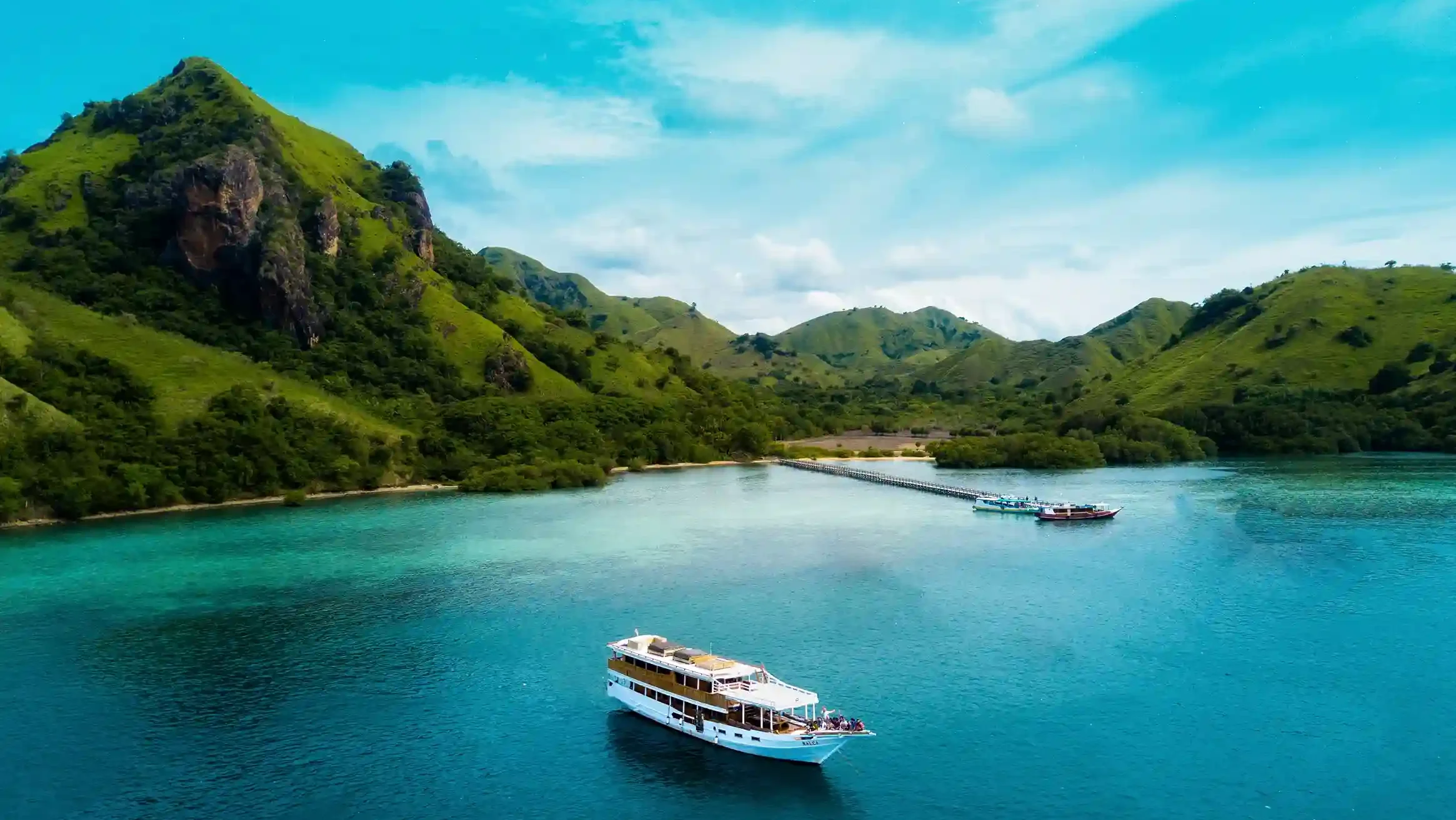
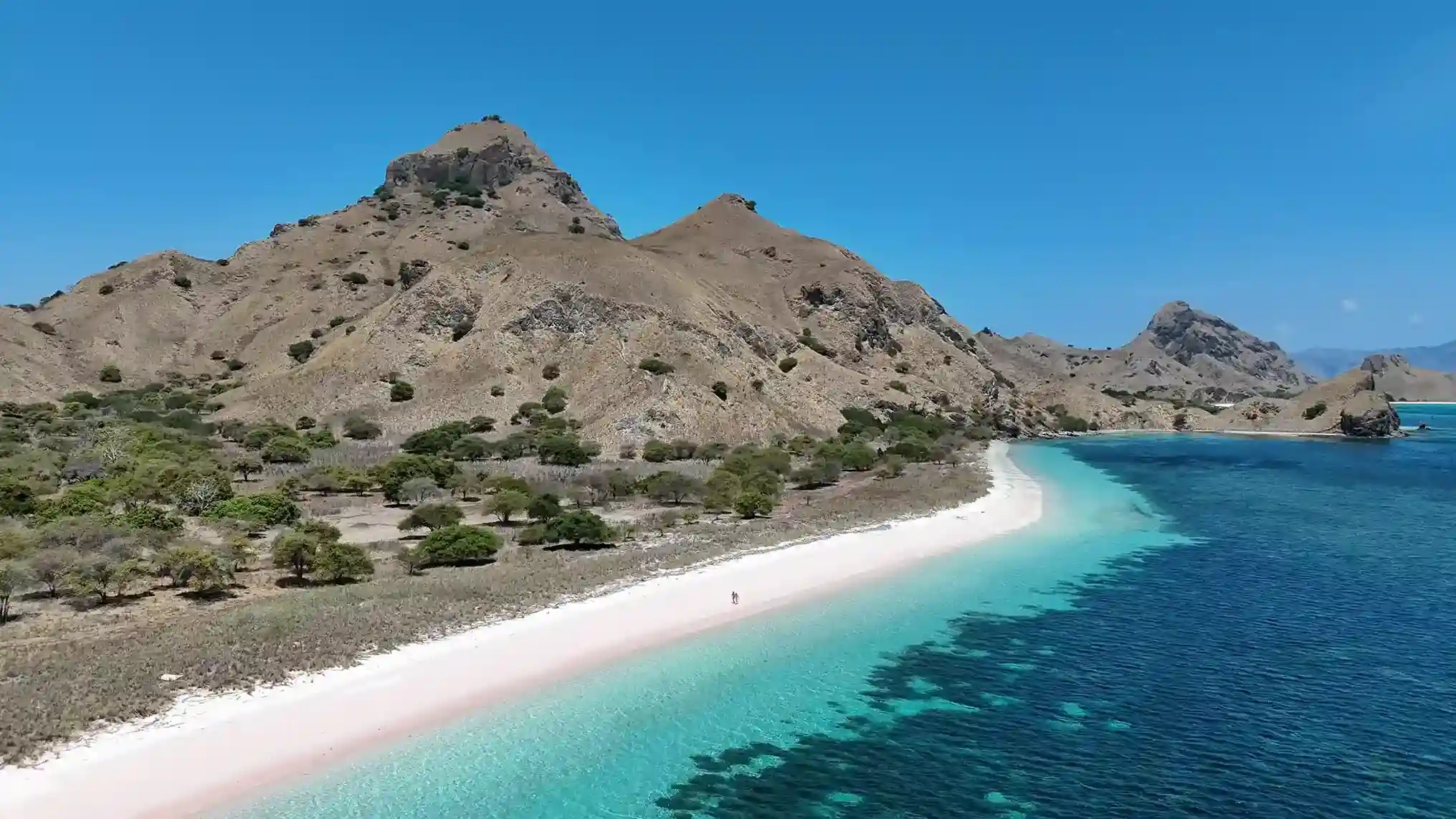
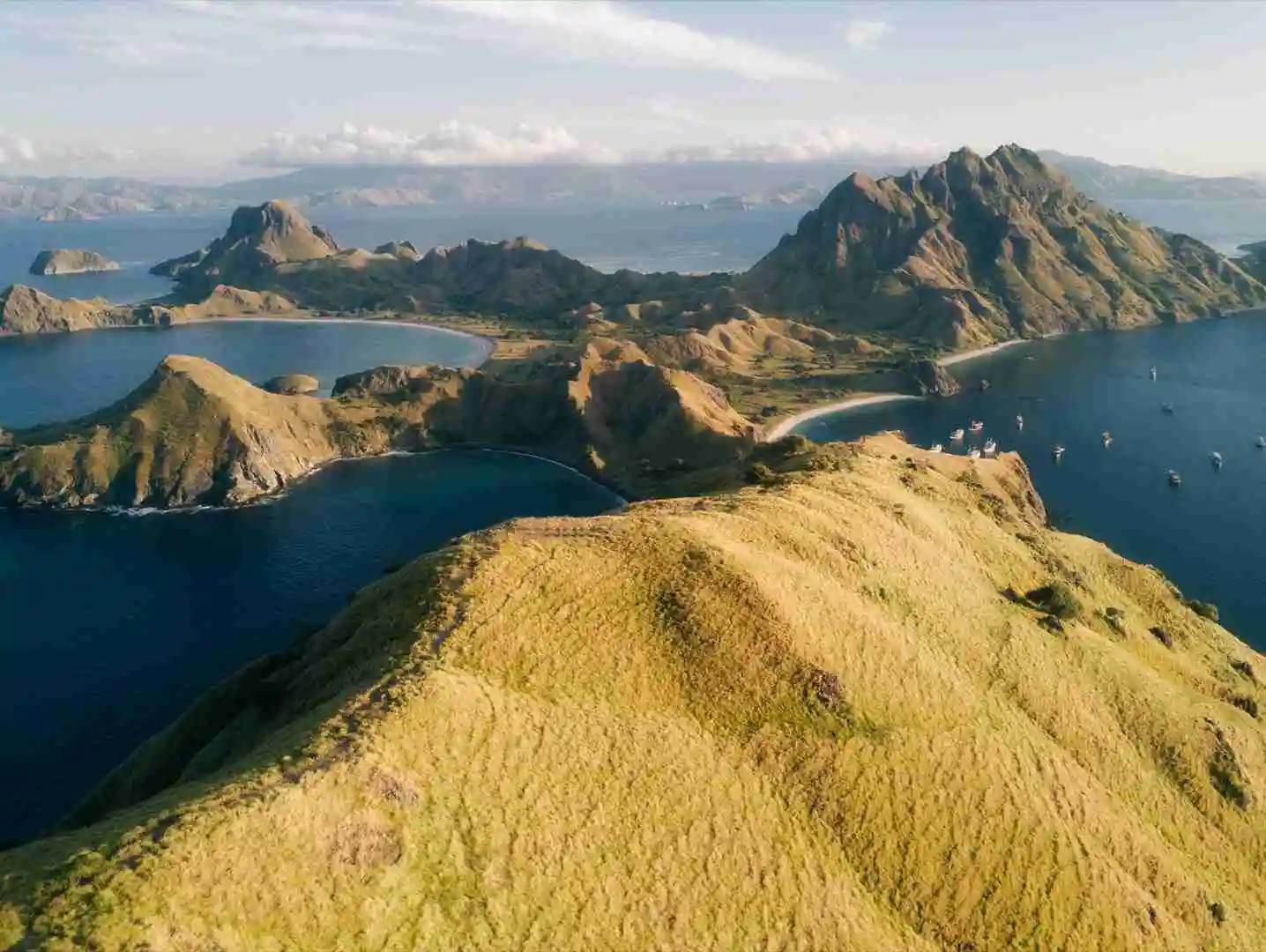
Padar Island is a volcanic island inside Komodo National Park, East Nusa Tenggara (NTT), Indonesia — famous for the elevated viewpoint that shows three differently-coloured beaches (black, pink-tinted, and white) wrapped around a single bay. It sits roughly 36 km (22 mi) from Labuan Bajo in a straight line, is reached only by boat, and has no permanent accommodation, shop, or ATM on the island itself. Most visitors climb its stepped trail before or around sunrise, when the light is softest and the crowds are thinnest.This page is the entry point to everything we’ve published about Padar Island: permits and the 2026 quota system, a real cost breakdown, weather by season, what to pack, sunrise times by month, and itinerary options from one day to a full week. Every figure below carries a “last updated” date because Komodo National Park’s rules changed materially in 2026 and several numbers you’ll find on older blogs are already out of date.
| Location | Komodo National Park, East Nusa Tenggara, Indonesia (between Komodo and Rinca islands) |
|---|---|
| Nearest town | Labuan Bajo, Flores — approx. 36 km (22 mi / 19 nautical miles) in a straight line; a boat covers more, because the route bends around Rinca and Komodo |
| Boat travel time | 60–120 minutes by speedboat; 2–3+ hours by traditional wooden boat |
| Viewpoint elevation | Roughly 170–270 m above sea level at the main viewpoint. The trail starts at the beach, so this is also the elevation gained; published figures vary because the island has three viewpoints and no official park survey exists |
| Steps to the main viewpoint | Roughly 800–840 steps; no official park count has been published, and independent operator counts cluster in that range |
| Hike duration | 25–45 minutes up for an average adult; allow up to an hour at an easy pace |
| Entry system (since April 2026) | Mandatory advance booking via the SIORA online system, no same-day walk-ins |
| Daily visitor cap (park-wide) | 1,000 visitors per day, split into 3 sessions (the park does not publish a per-session figure; divided evenly implies roughly 330 each) (in force since 1 April 2026) |
| Typical cost range | IDR 1,400,000–2,400,000 per person for a shared day trip; private charters cost more |
| Best months to visit | April–June and September–November (dry season, calmer seas, fewer crowds than July–August peak) |
01
02

03
04

The climb, stage by stage
The walk from the ranger jetty to the three-bay viewpoint is short but entirely unshaded.
The park publishes no official step count; the 800–840 range is where independent operator counts cluster. The elevation gain is also the viewpoint’s height above sea level, because the trail starts at the beach. Daily highs around Padar sit at roughly 28–33 °C and the open staircase radiates hotter than the air. There is no clinic and no medical facility on the island — rangers and crews carry basic first-aid supplies only.
Answers
Pick a topic, or type a word to filter every question on this page.
Yes, for most travellers it remains one of the highest-value single stops in Komodo National Park: a 25–45-minute hike delivers one of Indonesia’s most recognisable panoramas. The main change for 2026 is procedural, not experiential — you now need to book your entry slot through the SIORA system in advance rather than arriving unannounced, and the park-wide 1,000-visitor daily cap (not a Padar-only quota; split into three sessions) means popular sunrise slots can fill up during peak months.
No. Padar Island is the hiking viewpoint with three visible bays; Pink Beach (Pantai Merah) is a separate, well-known snorkeling beach elsewhere in Komodo National Park, most commonly near Komodo Island. Many day-trip itineraries visit both Padar and Pink Beach on the same outing, which is likely why the two get confused.
Most photos labelled “Padar Island viewpoint” are taken from the main, most-accessible platform at the top of the primary staircase — the one covered by the visitor numbers on this page. Two further, higher ridgeline points exist along the same trail system and offer wider panoramas, but they require additional unmarked scrambling beyond the maintained steps and are not part of the standard tour stop; most day-trip schedules do not allow time for them, and park rangers do not actively encourage visitors past the main platform.
Padar Island is famous for a single 25–45-minute hike that ends at a ridge overlooking three bays with sand of different colours — a jet-black volcanic beach, a beach with a pale pink tint from crushed red coral, and a bright white-sand beach — all visible in one panorama. It is the third-largest island in Komodo National Park after Komodo and Rinca, and unlike those two islands, Padar’s dragon population is tiny and sparse and is effectively never seen on the visitor trail, so its draw is purely the landscape and the sunrise light.
The island’s savanna-covered hills and dramatic ridgelines have made it one of the most photographed viewpoints in Indonesia over the past decade, appearing on magazine covers and travel-brand campaigns. Geologically it is part of the same volcanic arc that produced Komodo and Rinca, with dry grassland replacing the forest cover typical of wetter Indonesian islands — a landscape more reminiscent of East African savanna than tropical rainforest.
Yes. Padar Island sits fully inside Komodo National Park’s boundaries, between the larger islands of Komodo and Rinca. It is managed by the same national park authority (Balai Taman Nasional Komodo) and, since April 2026, falls under the same SIORA online booking and daily-quota system that governs entry to Komodo and Rinca. A single park permit route can legally cover Padar together with Komodo Island or Rinca Island on the same trip, which is why most operators sell it as part of a combined day tour rather than a standalone destination.
Yes, but only a very small and sparse population, and visitors effectively never see one. A 2004 survey by the Komodo Survival Program recorded at least a dozen individuals on Padar, including a hatchling, after the island had long been assumed empty. The park’s large, visible dragon populations are on Komodo Island and Rinca Island, both a boat ride away, because Padar’s savanna hills, limited fresh water and depleted deer prey base cannot support numbers on that scale. If seeing a dragon is a priority for your trip, plan a stop at Rinca or Komodo Island in addition to Padar.
Komodo National Park as a whole is capped at 1,000 visitors per day, split into three timed sessions (05:00-08:00, 08:00-11:00 and 15:00-18:00 WITA) since 1 April 2026. This is a park-wide cap; no separate Padar-only daily quota applies under the system in force since 1 April 2026 by the park authority as of August 2026. Booking through SIORA is required in advance — walk-ins are no longer accepted.
You need a licensed boat operator to reach the island and, under the SIORA system, a valid booked entry slot — a park ranger is typically present at the landing point rather than a personal guide walking the trail with you. Most visitors join an organised boat tour that bundles the permit, boat, and basic guiding together rather than arranging each piece separately.
Since April 1, 2026, every visitor — Indonesian or foreign — must book an entry slot through the park’s SIORA online reservation system before arriving; same-day walk-in tickets are no longer sold. Komodo National Park as a whole — not Padar Island alone — is capped at 1,000 visitors per day across three timed sessions (05:00–08:00, 08:00–11:00, 15:00–18:00 WITA), in force since 1 April 2026. Under the system in force since 1 April 2026 there is no separate Padar-only daily quota, and the pre-2026 figure of 400 visitors per day for Resort Padar Selatan was superseded by that park-wide cap.
Because two separate changes happened close together — the official entry tariff changed on 30 October 2024 under PP No. 36/2024, and the booking mechanism changed again on 1 April 2026 when SIORA introduced timed-entry slots and the park-wide daily quota — faster than most travel blogs update, and because “Padar Island tour” listings range from a shared seat on a 15-person speedboat to a private phinisi charter with a private chef — two products with almost nothing in common besides the destination. Always confirm what a quoted price includes (park permit, ranger fee, boat fuel, lunch, snorkeling gear) before comparing numbers between operators.
A shared day trip from Labuan Bajo that includes Padar Island, depending on boat type, group size, and what else is included (Komodo/Rinca stop, snorkeling gear, lunch). Private charters and multi-day liveaboards cost considerably more and price per boat rather than per head. Because advertised prices online are frequently a year or more out of date, we keep a dated, itemised breakdown — see Padar Island cost for the current per-item ranges and what’s usually excluded.
Of that total, the Komodo National Park entrance fee (PNBP) is USD 40-50 per person per day for foreign visitors under PP No. 36/2024. Full breakdown and official source: Padar Island entrance fee page.
Yes, with some adjustments. Children who can already climb hundreds of steps unassisted can generally join the hike, with close supervision near the unfenced cliff edges. Toddlers and children who still need to be carried are better left on the boat, since there is no stroller-friendly path or handrail along the route.
Both groups can usually manage it, with adjustments. Children who can comfortably climb a few hundred stairs unassisted generally do fine with breaks and supervision near the unfenced ridge edges; toddlers and very young children are better left on the boat. Older travellers in reasonable walking fitness have completed the hike, typically taking it slowly with rest stops at the landing points — there is no wheelchair access and no continuous handrail along the full route. We cover both scenarios candidly, including where most people should realistically turn back, in Padar Island for kids, seniors & non-swimmers.
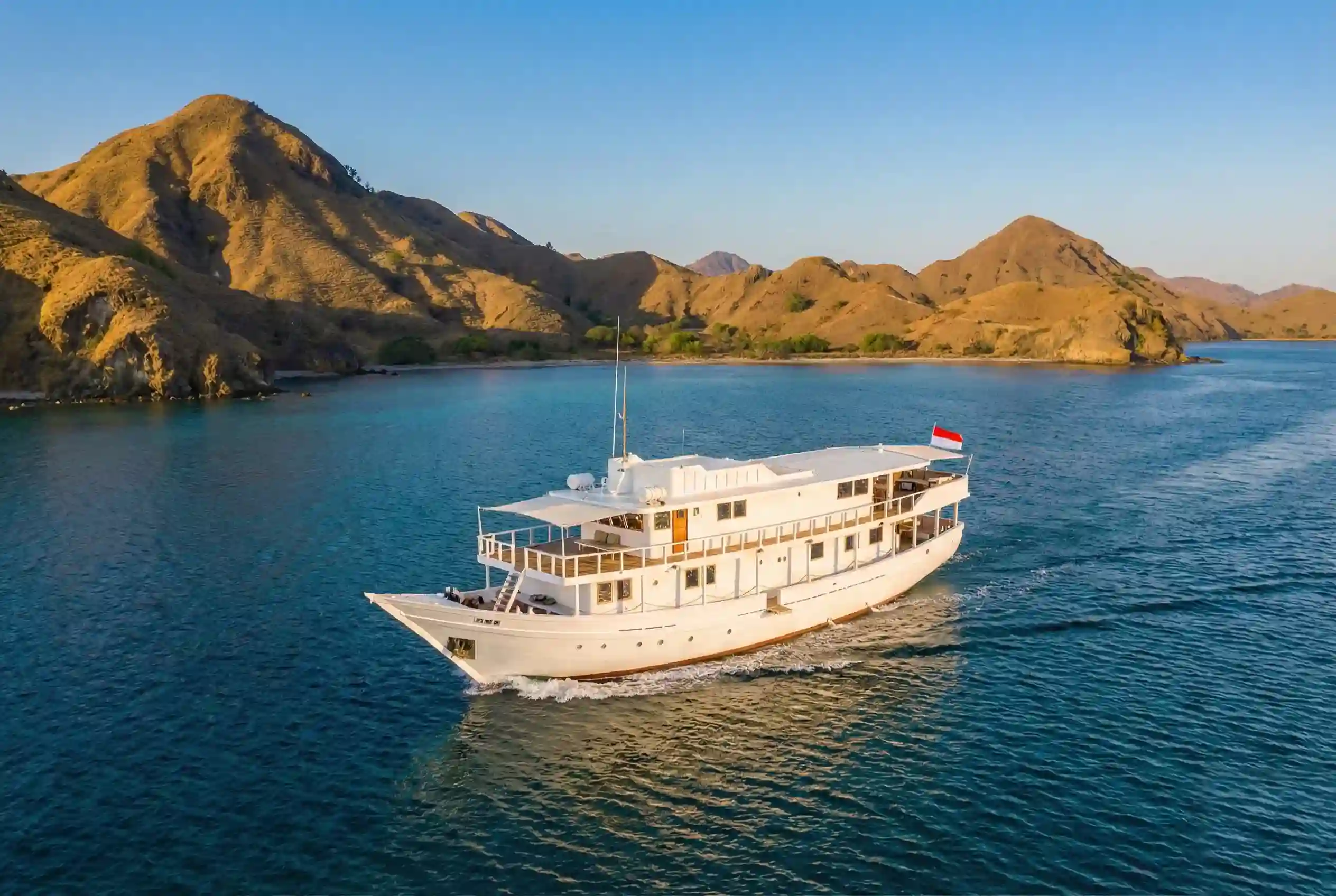
Padar Island has no airport and no road access — the only way in is by boat from Labuan Bajo, roughly 36 km (22 mi) away in a straight line. A shared or private speedboat covers the distance in about 60–120 minutes under normal sea conditions; a traditional wooden liveaboard (“phinisi”) takes 2–3+ hours, though most liveaboard trips build this into an overnight route with other stops rather than treating it as a direct transfer. We break down every option, cost, and timing scenario on our dedicated page, how to get to Padar Island.
Both work. A one-day speedboat trip from Labuan Bajo can realistically cover Padar plus one more stop (commonly Pink Beach or a snorkeling site) and return the same evening. Multi-day liveaboards anchor near Padar overnight, which is the only reliable way to catch sunrise from the viewpoint without a pre-dawn speedboat transfer. If you have more time, our 7-day Padar Island & Flores sailing itinerary shows how Padar fits into a longer route toward Sumbawa or Lombok.
Most healthy adults find it a moderate hike: roughly 800–840 steps (no official park count published; independent operator counts cluster in that range, checked August 2026) and roughly 170–270 m of elevation gain, taking 25–45 minutes at a steady pace. The lower section is wooden boardwalk, the upper section concrete steps with handrails on the steepest stretches, and there are flat landings roughly every 50–80 steps to rest. There is almost no shade, so heat — not the incline — is usually what visitors underestimate.
Padar is not extreme, but it isn’t universally easy either, and being honest about that saves people a bad morning. The combination of direct sun, near-zero shade, uneven natural rock in places, and no rescue infrastructure beyond what your boat crew can arrange means it is a poor fit for anyone with uncontrolled cardiac or respiratory conditions, significant mobility limitations, or a fear of unguarded drop-offs near the ridge. Pregnant travellers, people recovering from lower-body injuries, and very young children are usually better served staying on the boat and enjoying the bay from the water.
April–June and September–November generally offer the best mix of dry trails, clearer visibility, and lighter crowds than the July–August peak. December–March is the wet season, with a higher chance of rain and rougher seas that can delay or cancel boat departures. Note that July–August, while dry, is also the strongest-wind period in the Flores Sea, which can mean choppier crossings despite blue skies. Season-by-season detail, including how sea conditions affect boat schedules, is on our Padar Island weather & sea conditions guide.
Sunrise in the Komodo area runs roughly between 05:30 and 06:20 WITA depending on the month, with the earliest sunrises around late October–November and the latest around June–July — a small swing because Labuan Bajo sits close to the equator. Boats aiming for sunrise typically depart Labuan Bajo around 03:30–04:30 to reach Padar’s dock and finish the climb before first light. We publish the fullest month-by-month table available at sunrise at Padar Island.
Closed, sturdy shoes (not flip-flops), a hat, reef-safe sunscreen, sunglasses, and at least one litre of drinking water per person are the non-negotiables — there is little to no shade on the trail and no shop on the island. Toilets, if available at all, are on the boat, not on the island, so plan accordingly before you land. Our full checklist, including what many first-timers forget, is at what to bring to Padar Island.
This site is maintained as part of Juara Holding Group’s Komodo-region travel information network, alongside Komodo Luxury, our operating partner for boat charters and tours in Labuan Bajo. Our editorial team researches, verifies, and dates every figure on this site against current park regulations and operator pricing rather than recycling older blog posts; see how we work on our editorial pages, and reach the team directly via WhatsApp at +62 811-3810-8110 or sales@komodoluxury.com.
If you’re planning your first trip, start with permits and cost — the two things that change every travel season — then move to logistics and packing. In order: permit & quota rules → real cost breakdown → getting there → weather & best months → sunrise timing → what to pack → a longer itinerary.
No question matches that word yet. Try a shorter term.
Membaca dalam Bahasa Indonesia? Lihat panduan lengkap Pulau Padar dan tiket, biaya dan transportasi Pulau Padar.

Ready When You Are
Chat directly on WhatsApp with the Komodo Luxury team.
This guide does not operate boats. Bookings are fulfilled by Komodo Luxury, and this site may earn a referral commission.