
Padar Island Editorial Desk · Last updated August 2026

What time does the sun actually rise on Padar Island?
Padar sits in the WITA time zone (UTC+8), the same as Labuan Bajo and the rest of Nusa Tenggara. Sunrise time shifts across the year by close to 47 minutes between its earliest and latest points. Based on standard astronomical data for the Labuan Bajo/Komodo area, the earliest sunrise of the year falls in November at approximately 05:31, and the latest falls in early to mid-July at approximately 06:18.
| Month | Approximate sunrise (WITA) |
|---|---|
| January | ~05:46–06:01 |
| February–March | ~06:01–06:06 |
| April | ~06:04–06:05 |
| May–June | ~06:05–06:16 |
| July (latest) | ~06:16–06:18 |
| August–September | ~05:47–06:16 |
| October | ~05:33–05:46 |
| November (earliest) | ~05:31–05:33 |
| December | ~05:33–05:46 |
Ranges are approximate, drawn from standard sunrise tables for the Labuan Bajo area (8.5°S, 119.9°E). Exact minute-level times shift slightly year to year — check a current sunrise calculator for your specific travel date, especially if you are planning a tight departure window.

What time should I leave Labuan Bajo to catch the Padar sunrise?
Work backward from the sunrise time above, then add margin for the boat crossing and the hike. A typical sunrise-focused schedule looks like this:
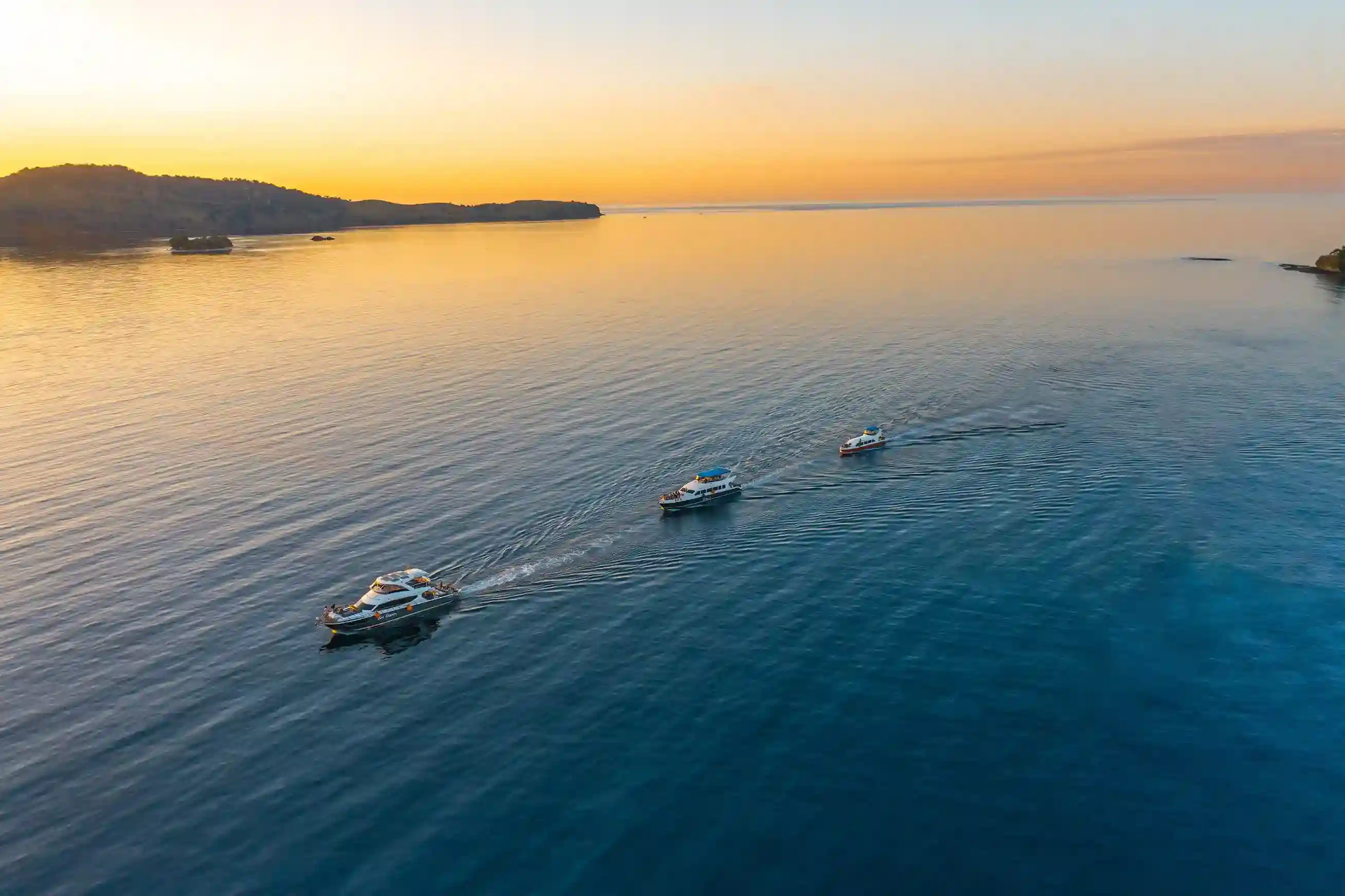
- Speedboat day-trippers: depart Labuan Bajo harbor around 3:30–4:30 a.m. to allow a 60–120 minute crossing plus a buffer for docking and the 25–45 minute hike, arriving at the viewpoint with time to spare before first light.
- Liveaboard guests: the boat is usually already anchored near Padar overnight, so guests are woken around 4:30–5:00 a.m., landed by tender, and hike up in the dark using headlamps, reaching the top just as the sky begins to lighten.
- Traditional wooden boats: given a 3–4 hour crossing, a true sunrise arrival generally requires departing the previous evening or very late at night, which is why wooden-boat operators more commonly sell Padar as a mid-morning stop rather than a sunrise stop.
For the full breakdown of how these boat types compare beyond just the sunrise question, see our complete guide to getting to Padar Island.
Sunrise or sunset — which is better on Padar?
Both are genuinely worthwhile, and the honest answer depends on your itinerary rather than one being objectively superior.
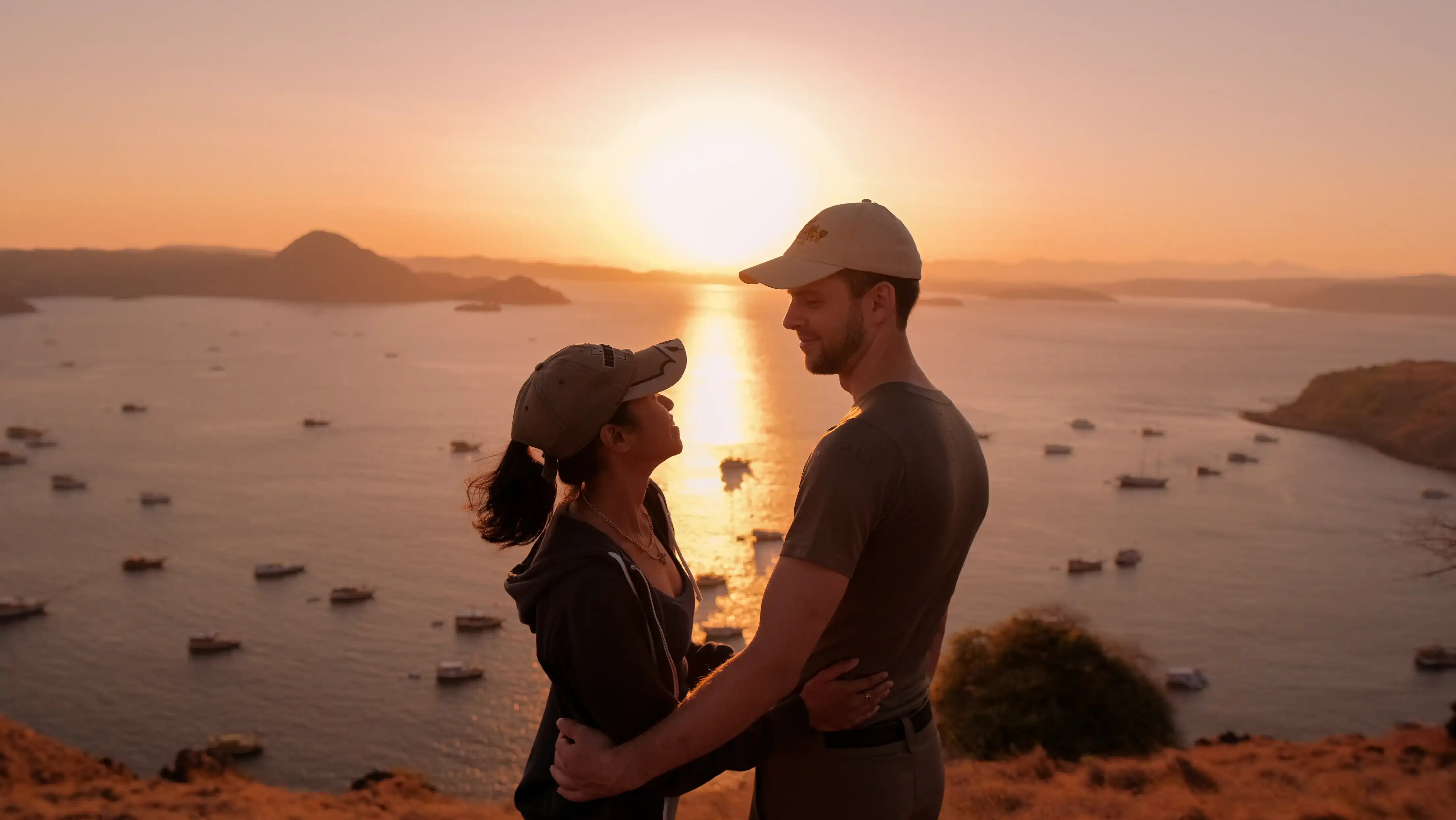
Sunrise is the more popular choice among photographers and most tour operators, for two practical reasons: cooler hiking temperatures before the tropical sun climbs, and a real chance of reaching the viewpoint before the bulk of day-trip boats arrive mid-morning. The trade-off is the very early wake-up call and, for day-trippers, a longer total travel day.
Sunset is less commonly packaged into standard day trips because most speedboats need to be back in Labuan Bajo harbor before dark for safety and mooring reasons, but it is a realistic option for liveaboard guests already anchored nearby, or for private charters that build in a late-afternoon landing. Crowds are typically thinner at sunset than at sunrise, since almost every operator defaults to a morning schedule.

If your goal is simply “fewest other people at the viewpoint,” ask your operator directly about a sunset landing rather than assuming sunrise is always the quieter option — on many days, the opposite is true given how concentrated the tour industry is around dawn departures.
Why does the light matter so much on Padar specifically?
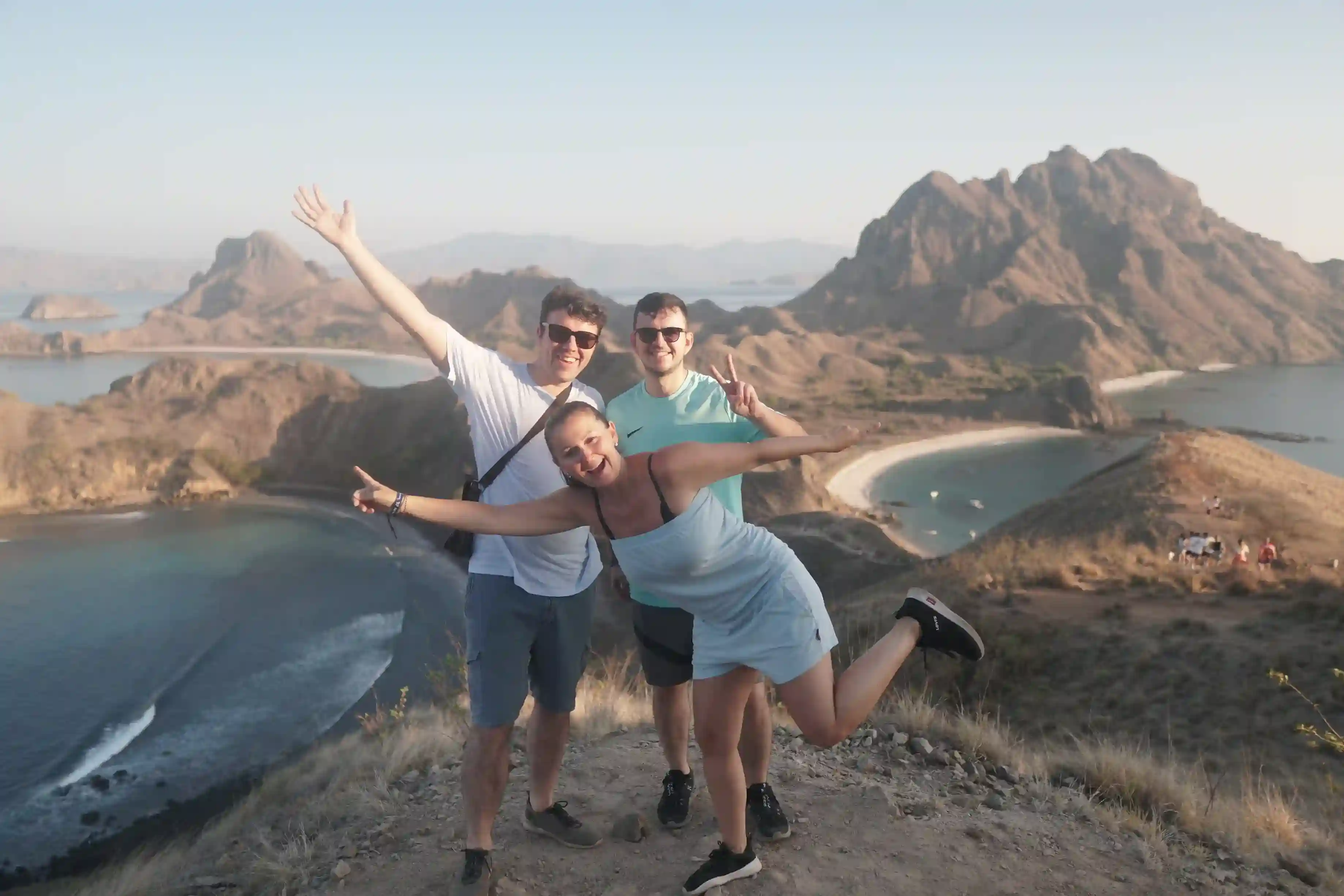
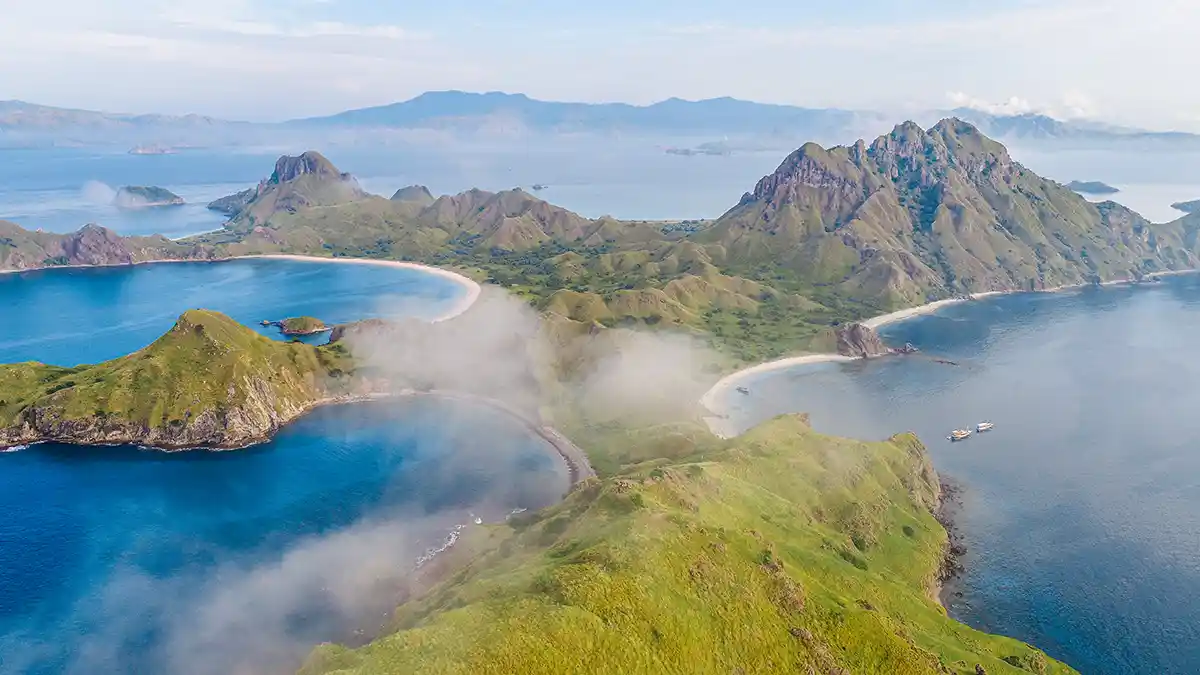
Padar’s viewpoint looks down on three separate bays at once — a genuinely unusual composition even by Komodo National Park standards, where most viewpoints frame a single bay or coastline. At sunrise, the low, warm-angled light rakes across the savanna hills from the side rather than from directly overhead, which does two things a midday visit cannot: it deepens the shadow contours of the ridgelines so the terrain reads as three-dimensional rather than flat, and it lights the sand and shallow water of the three beaches at an angle that exaggerates the color difference between them, which is the exact detail most visitors come to photograph. For a full breakdown of the three-bay layout itself, see our guide to Padar Island’s three beaches; for spot-by-spot framing advice once you are at the top, see our Padar Island photography guide.
By roughly two to three hours after sunrise, the sun has climbed high enough that this side-lighting effect is mostly gone, replaced by flatter, harsher overhead light and noticeably higher heat on the exposed, shade-free trail. This is the main practical reason operators push sunrise departures so heavily — it is as much about hiking comfort and photographic quality as it is about tradition.

How crowded is the viewpoint at sunrise by season?
Crowd levels at the summit move with Indonesia’s dry and wet seasons rather than with any single calendar date. During the dry season months (roughly April through November), and especially the July–August peak, sunrise boats from Labuan Bajo run at their highest frequency, and the viewpoint area can hold a genuinely large number of visitors within the same 30–45 minute window as the light comes up. During the wetter months (roughly December through March), fewer boats run the early crossing, seas are occasionally too rough for a comfortable pre-dawn speedboat trip, and the numbers at the top thin out considerably — though at the cost of a real chance of cloud cover blocking the sunrise itself on any given morning. There is no version of this trade-off that eliminates risk entirely: peak season trades solitude for weather reliability, and shoulder or wet season trades weather reliability for solitude.
Is Padar Island open 24 hours, and are there fixed opening hours?
No — Padar is not a 24-hour attraction in any meaningful sense. There are no lights, no staffed facilities overnight, and camping on the island is not permitted (see our Padar Island overnight and camping rules guide for the full explanation). In practice, access is bounded by daylight and by the operating rhythm of ranger-staffed landing points and Komodo National Park’s ticketing system, which has at times specified visiting sessions — the three timed sessions are 05:00–08:00, 08:00–11:00, and 15:00–18:00 WITA, in force since 1 April 2026 — though exact cutoffs can shift operationally, so confirm with your operator or the park’s current booking system before travel rather than treated as fixed. The practical takeaway for planning purposes: treat Padar as a dawn-to-dusk destination reached by boat, not a site with a conventional round-the-clock opening schedule.
How to plan a Padar Island sunrise hike
- Check the sunrise time for your travel date using the monthly table above or a current sunrise calculator for Labuan Bajo.
- Book a boat that explicitly offers a sunrise departure — not every day-trip package does; confirm the stated departure time before booking, since “morning departure” can mean anywhere from 4 a.m. to 8 a.m. depending on the operator.
- Pack a headlamp or phone flashlight. The trail up from the ranger dock is unlit, and a sunrise hike means climbing in darkness for at least part of the ascent.
- Wear closed, grippy shoes. The path is dry, loose, and rocky in sections; sandals are a common cause of slips on the pre-dawn climb.
- Arrive at the dock with enough buffer for a 25–45 minute hike at a careful, unhurried pace in low light — rushing on an unfamiliar dark trail is the main safety risk, not the hike’s difficulty itself.
- Bring water but plan to eat afterward. There are no facilities on Padar; breakfast is typically served back on the boat after the descent.

What should you actually pack for the sunrise climb?
Beyond the headlamp and grippy shoes already mentioned, a short, specific packing list makes the difference between an uncomfortable climb and an easy one. Bring a small amount of drinking water (500ml–1L is generally enough for the short ascent), a light jacket or long-sleeve layer for the boat crossing itself — pre-dawn sea air is noticeably cooler than the daytime heat waiting at the top — and a dry bag or plastic sleeve for your phone or camera, since sea spray on an open speedboat is common even in calm conditions. Sunscreen matters less for the pre-dawn portion but should go on before the descent, once the sun is up and the shade-free trail starts to heat up quickly. For the complete list beyond just the sunrise leg, see our Padar Island packing guide.
Frequently asked questions
What time does the Padar Island sunrise hike start?
Most sunrise-focused boats depart Labuan Bajo harbor between about 3:30 and 4:30 a.m., landing at Padar with enough buffer to complete the 25–45 minute hike before first light, which itself falls between roughly 05:31 and 06:18 WITA depending on the month.
Can I watch the Padar Island sunset instead of sunrise?
Yes, though it is less commonly packaged on standard speedboat day trips because most operators need to return to harbor before dark. Liveaboard guests and some private charters can arrange a late-afternoon landing for sunset instead.
Is Padar Island open 24 hours a day?
No. There are no overnight facilities, camping is not permitted, and access follows daylight hours and the park’s ticketing and session system rather than a round-the-clock schedule.
How long does the hike to the Padar viewpoint take at sunrise?
Typically 25–45 minutes depending on fitness level and pace, though it can feel slightly slower in the dark with a headlamp compared to full daylight.
Do I need to book a sunrise-specific tour, or can any boat do it?
You need to book with an operator or charter that explicitly commits to an early, pre-dawn departure time. Many standard day-trip packages depart later in the morning and will not reach Padar before sunrise.
Is it worth waking up that early for the Padar sunrise?
Most visitors who make the early departure describe it as worthwhile specifically because of cooler hiking conditions and lighter crowds at the top, compared to a mid-morning arrival when the sun is already high and more boats have landed.
Putting it together
The sunrise decision on Padar really comes down to three linked choices made at booking time, not on the morning itself: which month you travel in (which fixes your actual sunrise minute), which boat type you book (which fixes how early you must leave Labuan Bajo), and whether your operator commits to a genuine pre-dawn departure rather than a vague “morning” slot. Get those three right during planning, and the climb itself is straightforward — a well-marked trail, a modest 25–45 minutes, and a clear reward at the top regardless of which week of the year you arrive.
Book the sunrise departure

If a pre-dawn Padar landing is the priority, book a package that states the departure time up front rather than one that simply says “morning.” Komodo Luxury’s one-day Komodo sailing trip is built around an early harbor departure for exactly this reason, and their Komodo boat trip and Komodo sailing trip pages let you compare formats before choosing. Couples planning a private sunrise landing ahead of the day-trip crowds may prefer the Komodo honeymoon cruise, which is timed around exactly this kind of quiet, early arrival.
Sunrise or sunset, and what each actually gives you
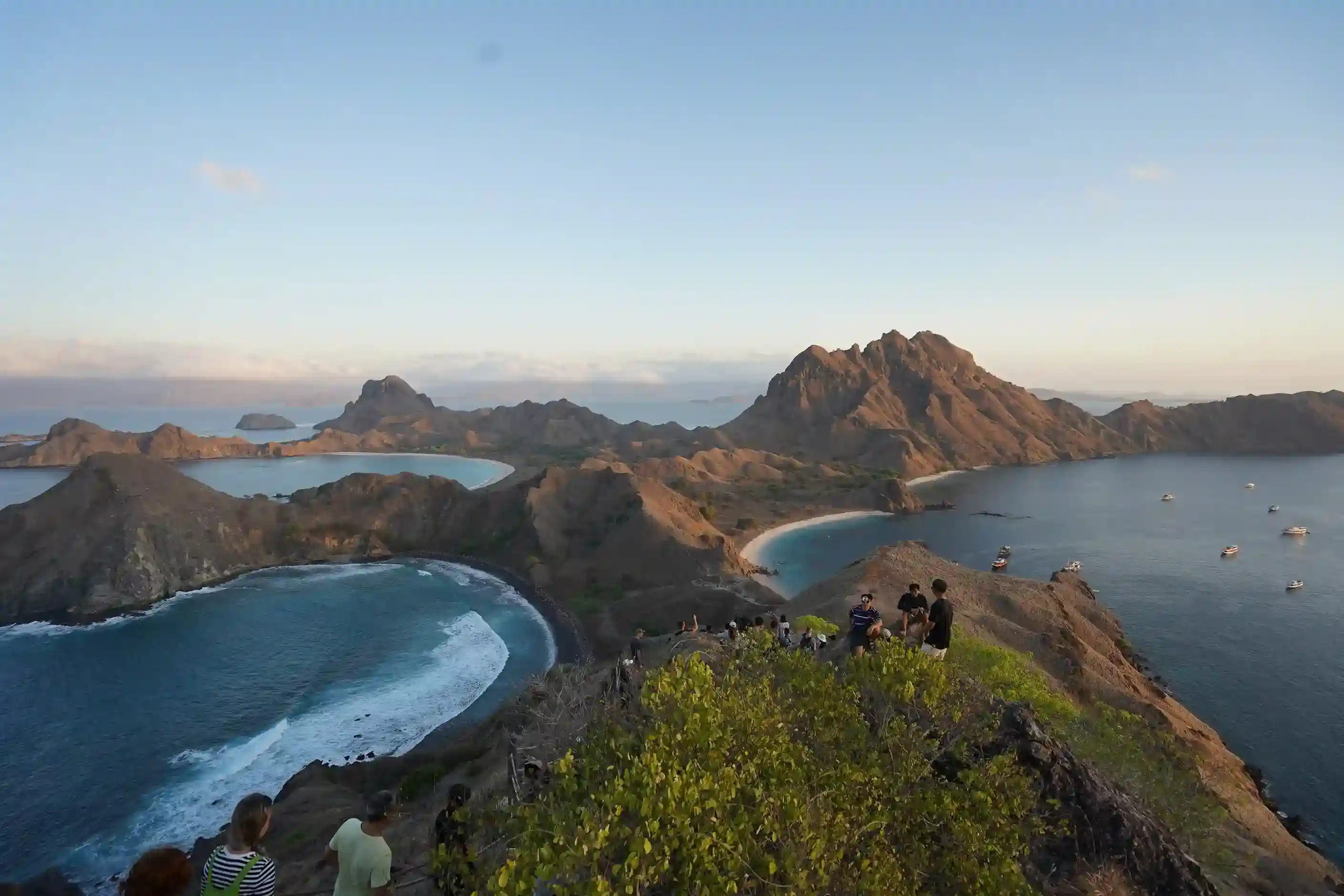
The climb itself is identical; only the conditions change. Sunrise brings cooler air, the classic front-lit view across the three bays, cleaner atmosphere, subtler colour and fewer boat wakes disturbing the water below — at the price of a departure from Labuan Bajo in the dark and a pre-dawn climb. Sunset costs you no sleep, tends to be quieter, and produces stronger silhouettes and warmer tones when scattered cloud catches the last light, but the air is often hazier and the sun may drop behind the outer islands rather than into open water.
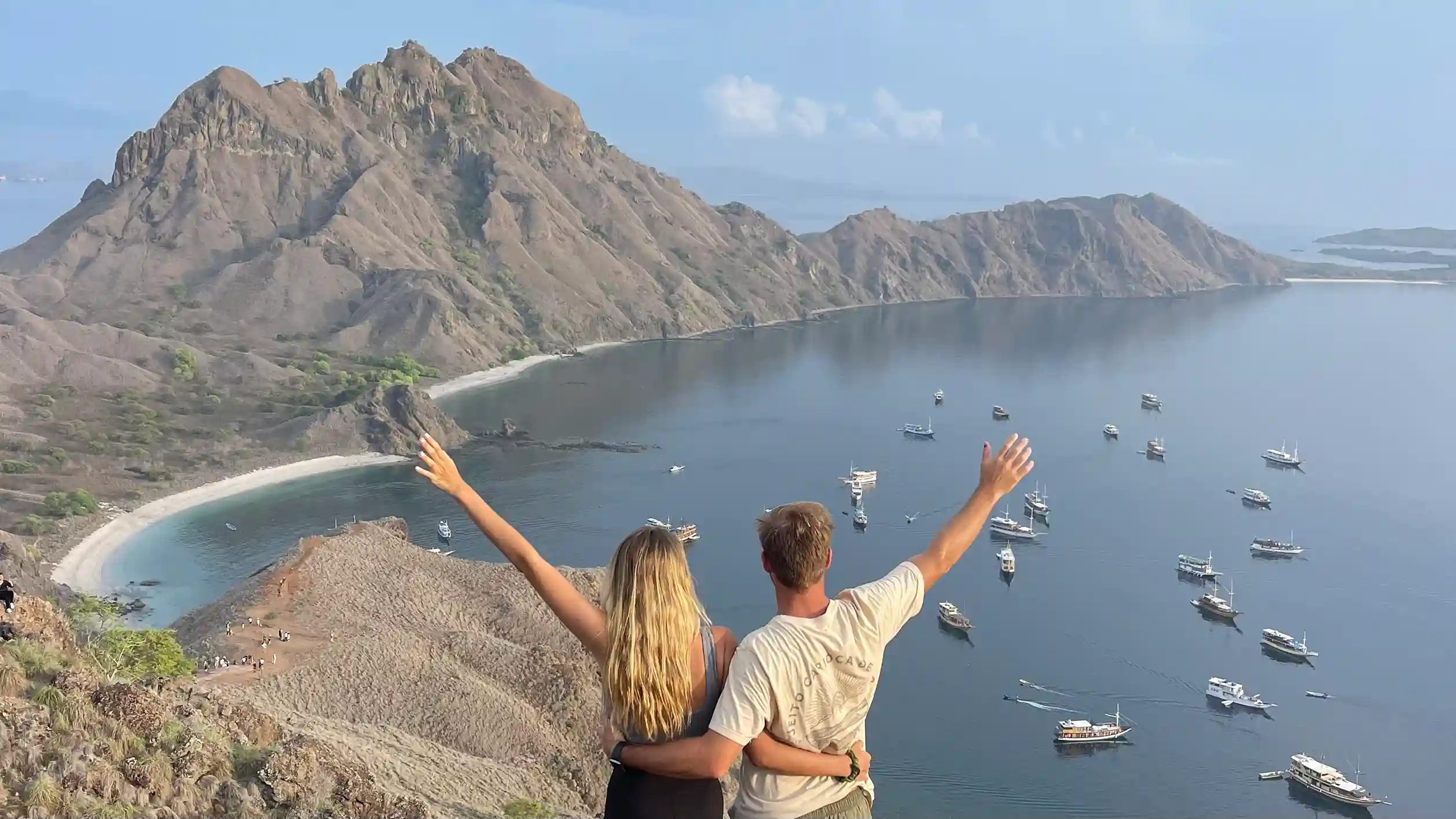
If you can only do one, sunrise gives the most recognisable images and the most directional light. Sunset is the better choice if a pre-dawn start is unrealistic, or if you are fitting Padar around a day of snorkelling or dragon walks. It is also the more forgiving schedule: a mid-afternoon departure from Labuan Bajo leaves margin for the crossing, the briefing at the jetty and an unhurried climb, and speedboats can leave slightly later than wooden or phinisi vessels.
Photographically the difference is worth planning around. Sunrise frames hold more detail in the ridges and bays because the light falls from behind the camera; sunset frames lean into contrast as the sun descends toward the horizon line of the outer islands. Aim to be at the main viewpoint roughly 20 to 40 minutes before the sun touches the horizon, which balances soft light against enough visibility to read the foreground and the curve of the bays.
Sunset times shift through the year, though only modestly at this latitude, and Padar shares a time zone with Labuan Bajo, so checking sunset there works as a proxy. Dry-season months give clearer horizons; the wetter season produces more dramatic evening cloud. Whichever you use, plan the hike backwards from the actual time rather than from a general sense of “late afternoon”.
Where to stand
The main constructed viewpoint near the top of the staircase remains the best position for sunset, because it gives the cleanest alignment across all three bays. The lower terraces work if steps or heights bother you, though the sun can disappear behind higher ground sooner from there. That upper viewpoint is also the single must-see of a Padar visit — but most people get more from pausing at one or two mid-level terraces on the way, which frame the individual bays differently and are considerably less congested.
Crowding concentrates into sunrise and the early-morning sessions, when most boats aim for the classic view. The staircase bunches at the narrower turns, though rangers pace groups and keep people moving, and the later sessions thin out noticeably. Sunset hikes are usually quieter than sunrise, partly because arrival times vary more by boat schedule and groups spread out — but in high season you will not have the trail to yourself, so allow extra time for people passing. Weekends feel busier, especially when domestic holidays coincide with good weather, and weekdays are calmer on both the staircase and the top terraces, though sunrise still draws a committed crowd whatever the day.
Climbing and descending in low light
Allow 25 to 45 minutes for the climb itself depending on fitness and how often you stop, plus another 15 to 20 minutes of buffer for a busy trail or a slower member of the group. A sunset hike typically starts mid-afternoon, giving time for a measured ascent and a rest at the top before the light peaks, with the descent beginning shortly after the sun drops so most people reach the jetty before full darkness.
Padar is safe with rangers present, but moving in the dark adds tripping and navigation risk. The staircase has handrails at key points and there are still uneven steps and loose gravel between them. Bring a head torch rather than relying on a phone, wear closed footwear with grip, follow the ranger’s instructions on where to stop, and stay off the boardwalk cut-throughs that look shorter and are loose underfoot. If anyone in your group is slow or unsteady, start the descent earlier rather than pushing the light.
On astrophotography: once the boats thin out and the last glow from Labuan Bajo fades, Padar is genuinely dark — there is no village light on the island, though liveaboard anchor lights show offshore. What you cannot easily get is permission and time, since the sessions all end well before proper darkness, so treat it as something requiring specific arrangement rather than something you might squeeze in.
Padar against its neighbours
Padar is smaller, steeper and far more viewpoint-focused than the other islands in the park. There is no village, no beach club and no dragon walk. Rinca and Komodo are about wildlife and, on Komodo, ranger-led savannah walks and occasionally pinkish beaches; their trails are longer but generally less steep. Padar’s staircase is short, sharp and entirely about what waits at the top.
On fees, the park charges the standard Komodo National Park entrance ticket plus per-boat vessel charges billed to operators. There is no published per-person harbour tax specific to Padar, whatever a package description might imply — if you see one itemised, ask which official charge it corresponds to.
This guide does not operate boats. Bookings are fulfilled by Komodo Luxury, and this site may earn a referral commission.