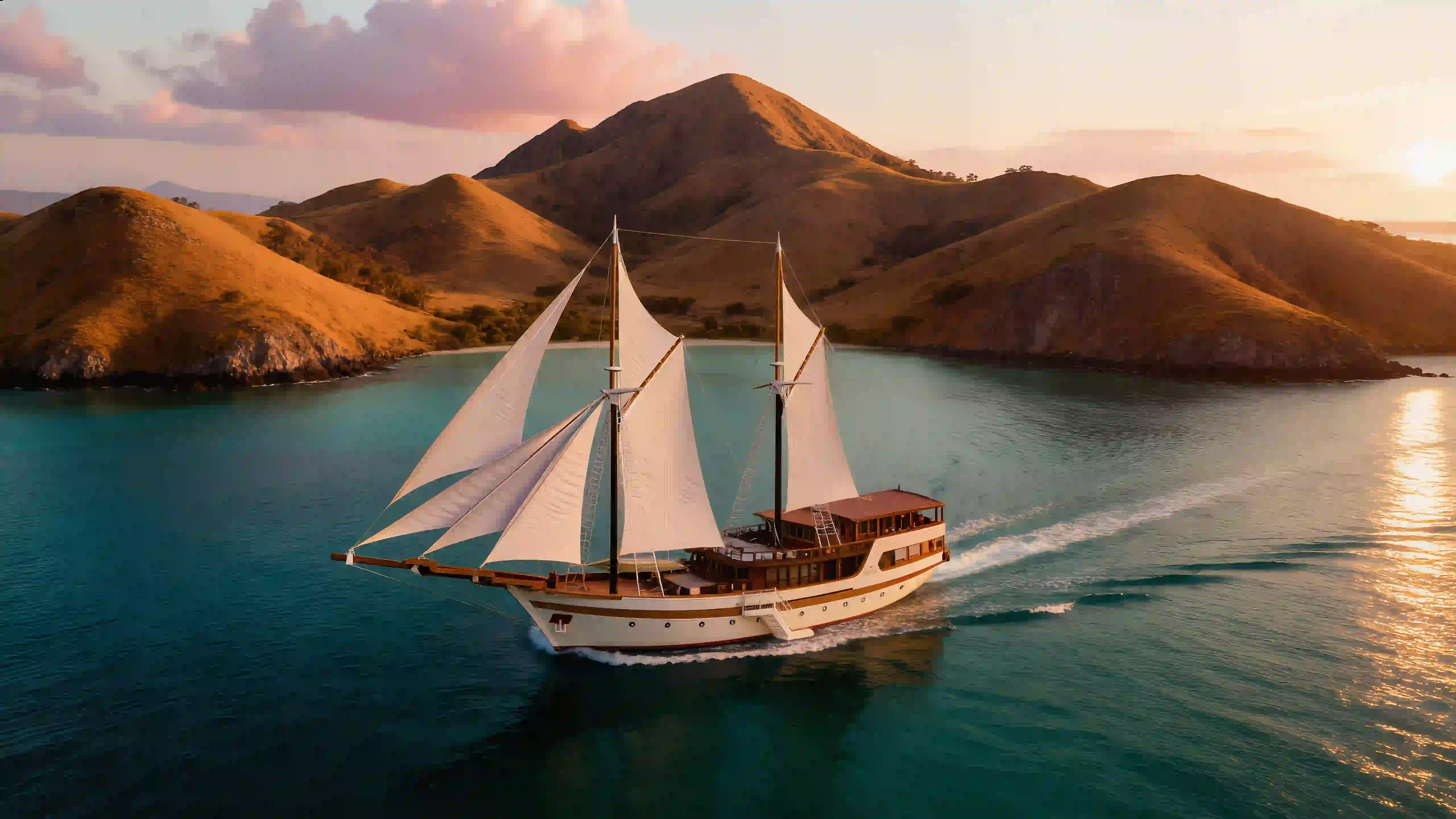

Traditional wooden phinisi sailing boat silhouetted against the sunset sky in the Komodo region
Photo: Rohim Ari on Unsplash.

Padar Island Boat Trip & Charter Options

Getting to Padar Island always means a boat — there is no road or airstrip on the island itself. You choose between a shared speedboat day trip (from ~USD 90/person), a private speedboat charter (~USD 800/boat/day), or a phinisi sailing charter (from ~USD 5,300/night for the whole boat), each suited to a different group size and pace.

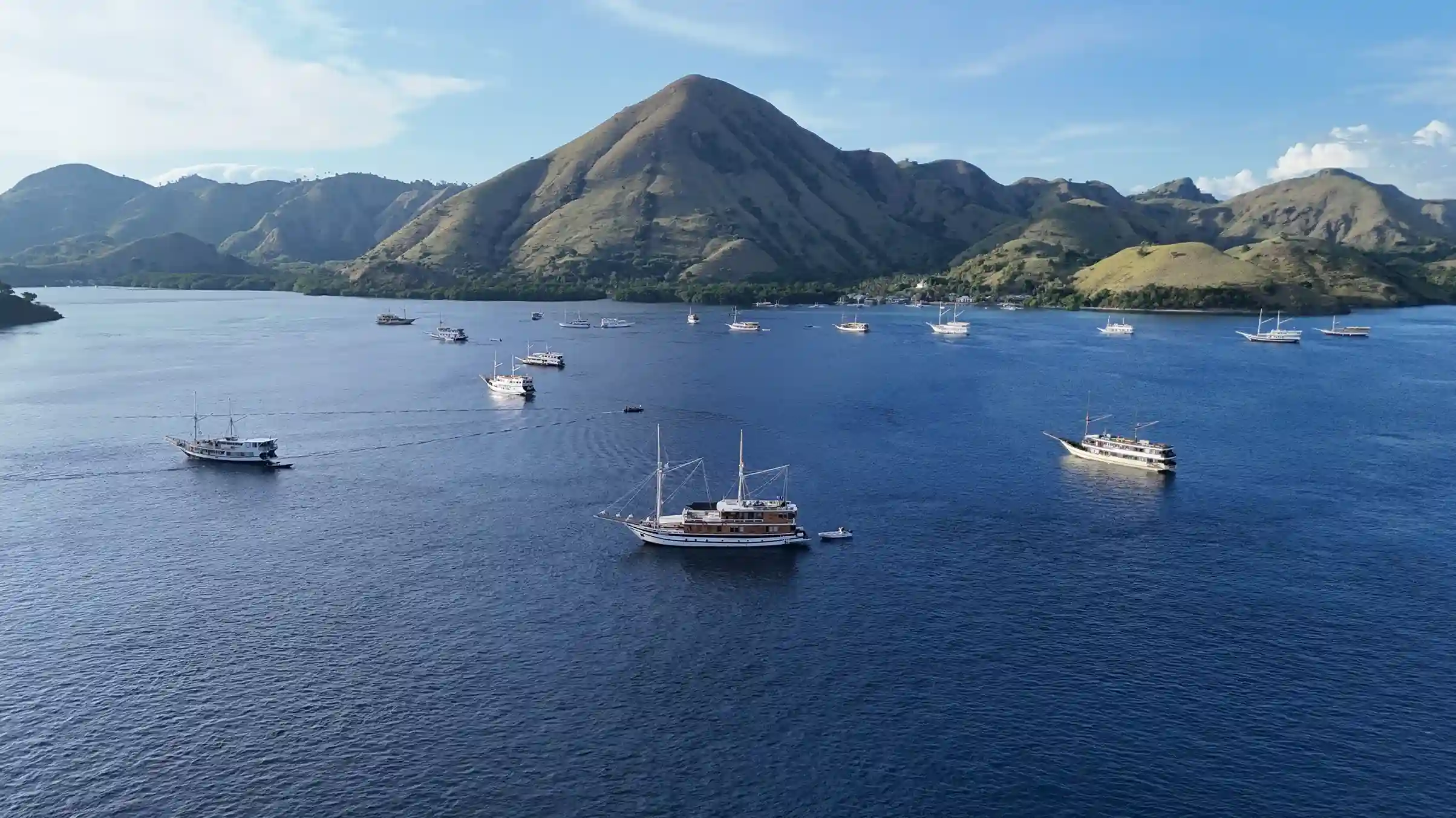
A large phinisi liveaboard floating in the waters of the Komodo area, one charter option toward Padar
A phinisi liveaboard in Komodo’s waters. Photo: Simon Spring/Unsplash.

What types of boats go to Padar Island?

Three boat categories serve Padar, and picking the wrong one is the most common regret travellers report after the fact:

Illustration comparing three boat types side by side: a small sailing boat, a phinisi and a motorboat
Illustration comparing boat types to help you choose the right category.
Boat typeTrip lengthBest forSleeps aboard?
SpeedboatDay trip (1 day)Solo travellers, tight schedules, sunrise-hike-only visitsNo
Phinisi (shared / open-trip)2–7 daysBackpackers and mid-budget travellers wanting multiple islandsYes, shared cabins
Phinisi (private charter)2–7+ daysFamilies, couples, small groups wanting full schedule controlYes, private cabins

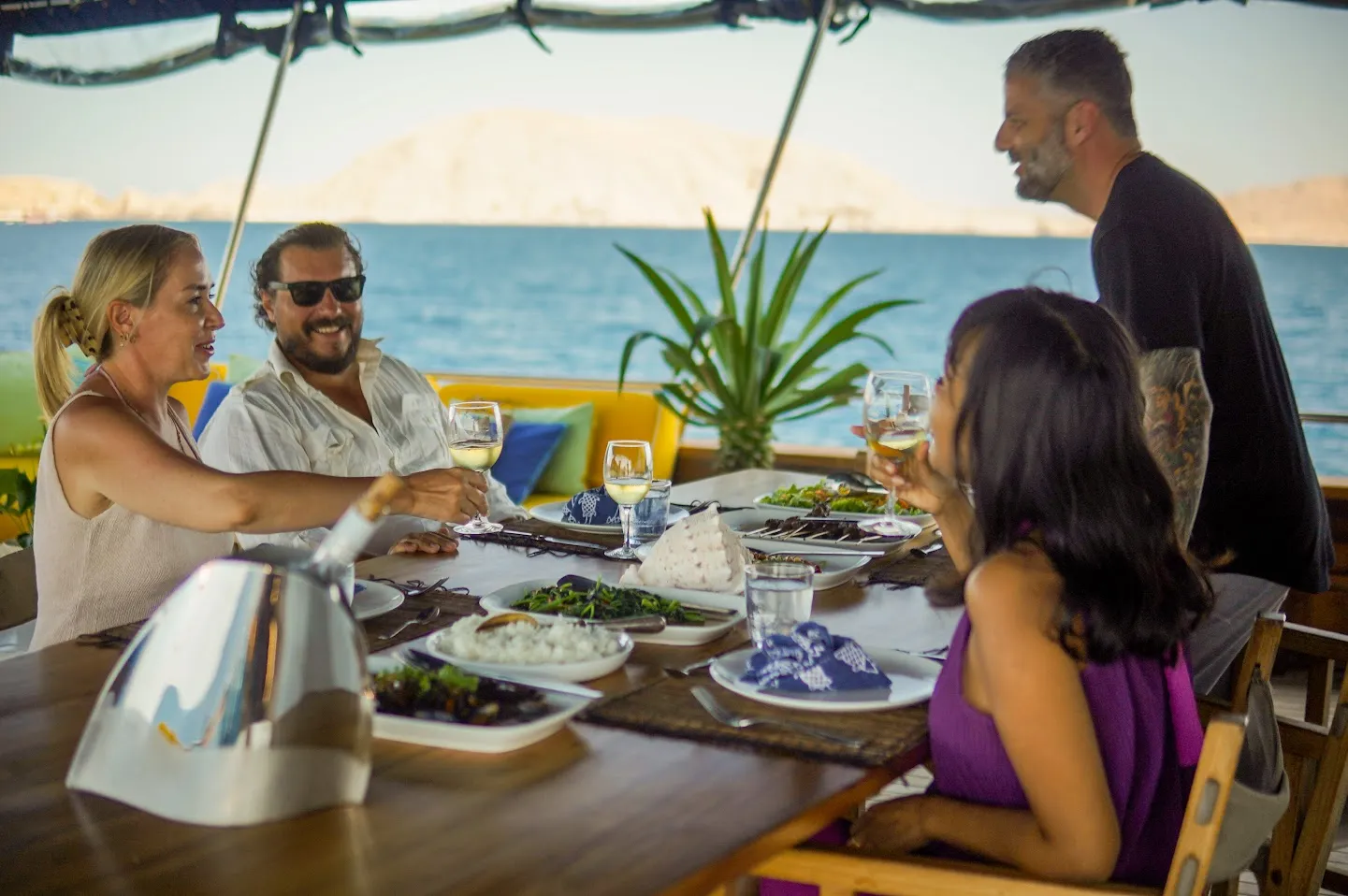
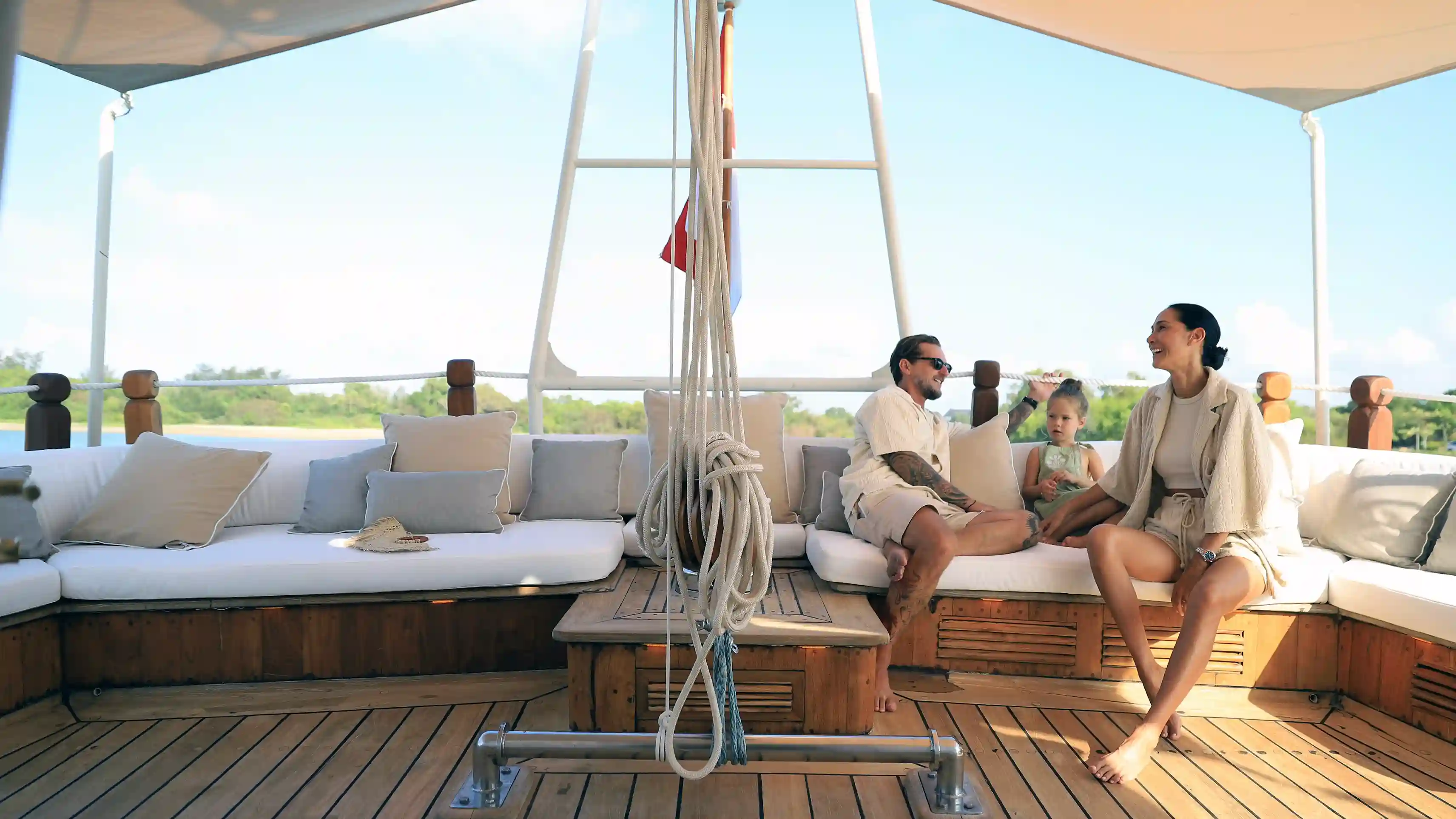
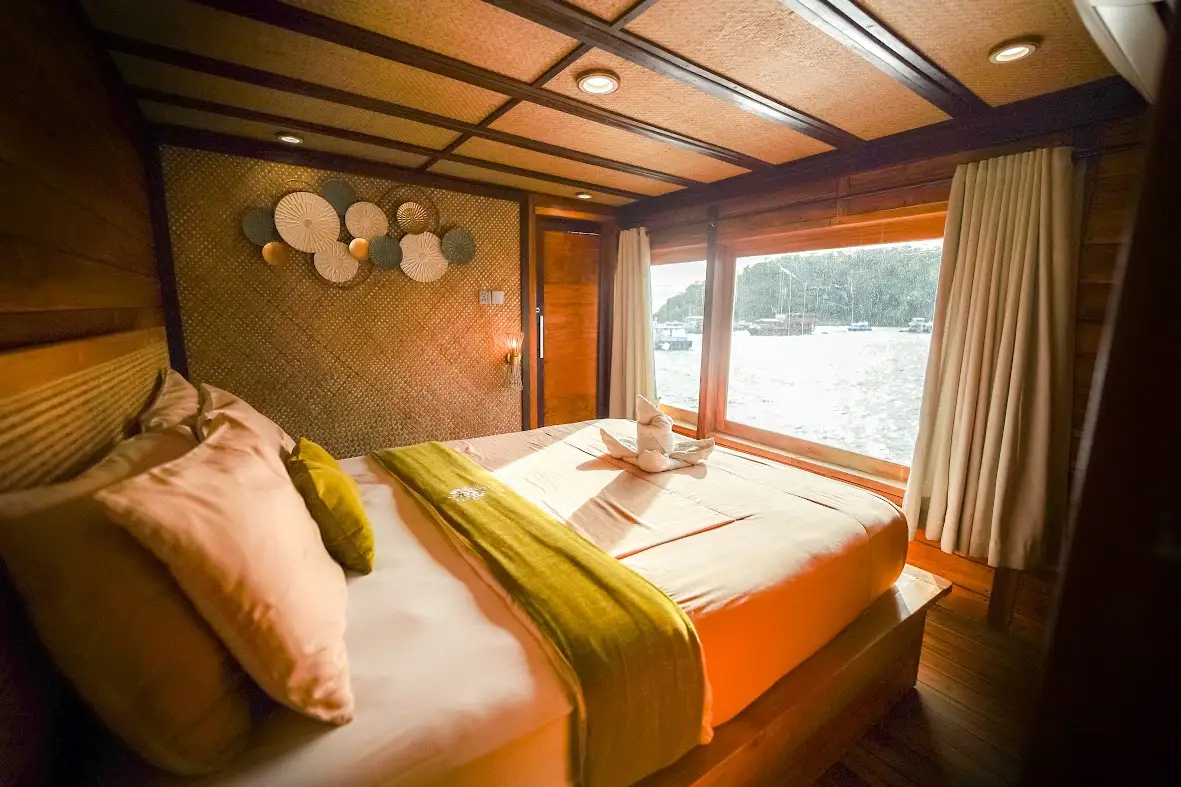
A phinisi is the traditional Indonesian sailing vessel used across Komodo National Park — built with masts and a deep hull, now almost always fitted with a modern engine, cabins and a dining deck rather than sailed under canvas alone. See Komodo Luxury’s phinisi charter fleet for what a modern one actually looks like inside.

Open trip vs private trip — which should I book?

This is the single most consequential choice for a Padar Island visit, more than which specific boat you pick within a category.

  • Open trip (shared): You join a fixed departure with other travellers, splitting the boat cost. Cheaper per person, but the itinerary, meal times, and even which viewpoint you hike are set by the group booking, not you. Departure dates are fixed by the operator’s schedule, which matters if your dates are inflexible around Padar’s daily visitor cap.
  • Private trip: You charter the whole boat for your group only. More expensive in absolute terms, but the per-person cost drops fast as group size grows, and you control departure time — useful for hitting Padar at first light without waiting on a shared boat’s schedule. See private yacht charter options for current whole-boat pricing by group size.

As a rule of thumb: solo travellers and pairs on a budget usually do better joining an open trip; groups of four or more typically find a private charter comparable in per-person cost while gaining full control of the schedule.

Speedboat vs phinisi — what’s the real difference for Padar?

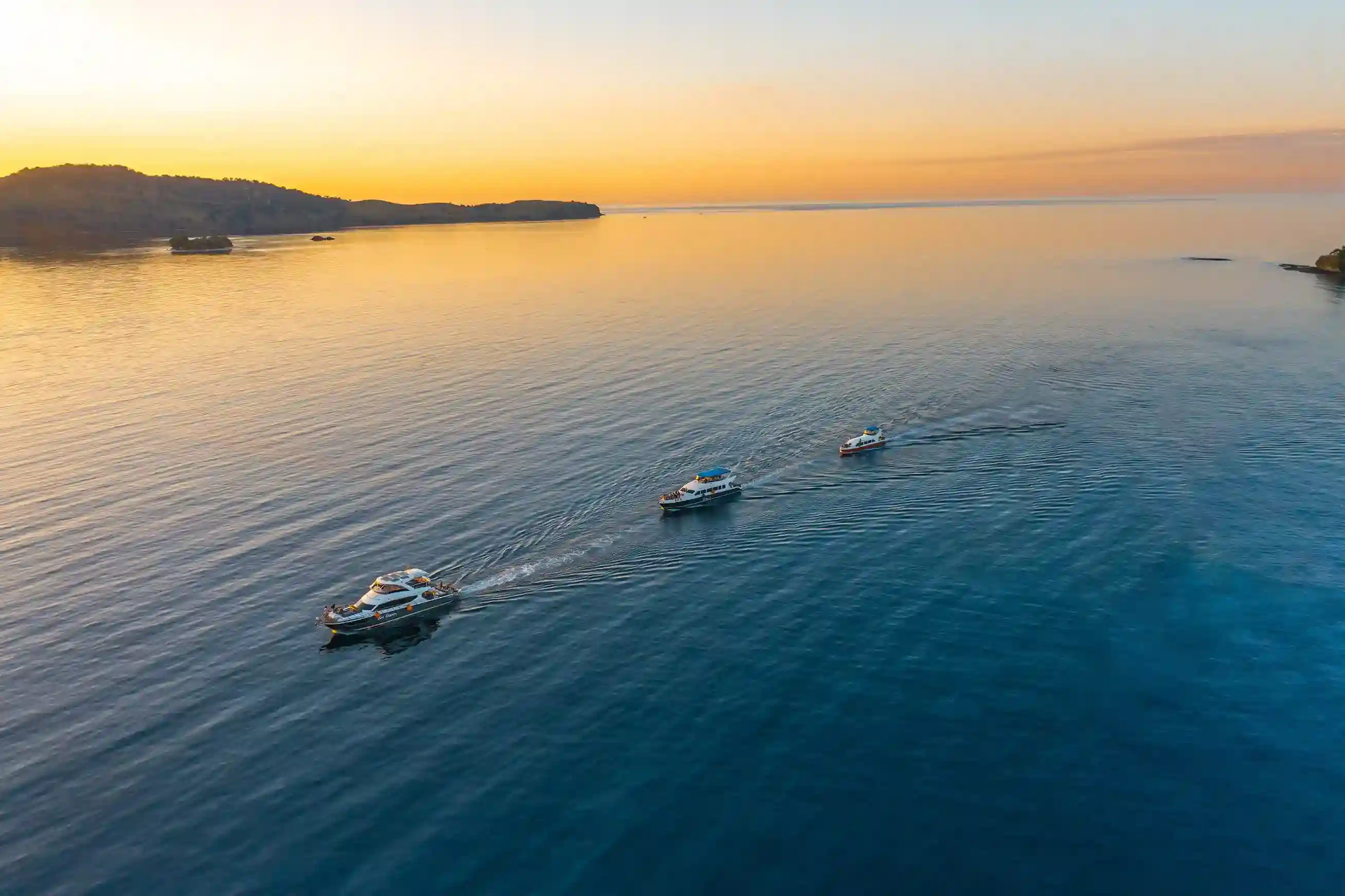
Speedboats are faster (Labuan Bajo to Padar in roughly 60–120 minutes) and cheaper, but you don’t sleep aboard, so a speedboat trip is inherently a single day. Phinisi boats are slower per leg but you sleep, eat, and live aboard between stops, which is how a 2–7 day itinerary covering Padar, Komodo, Rinca, Pink Beach and Manta Point becomes possible without multiple hotel check-ins. If your goal is Padar’s sunrise and nothing else, a speedboat is the more efficient and cheaper choice. If Padar is one stop among several islands, a phinisi removes the need to return to Labuan Bajo between each one.

A speedboat cutting quickly through waves on open water toward Padar
A speedboat is the fastest option for a day trip to Padar. Photo: Liam Gelap/Unsplash.

What’s included in a Padar Island boat charter package?

Inclusions vary by operator, but a properly quoted package on Komodo Luxury’s boat trip fleet typically covers:

  • The boat itself, crew, and captain for the full itinerary
  • Meals aboard (number varies by trip length — confirm per quote)
  • Snorkelling equipment for stops like Manta Point and Pink Beach
  • Ranger-guided access at Rinca or Komodo Island for dragon viewing
A wooden boat deck with lounge chairs and a parasol facing the tropical sea (AI-generated illustration, not a photograph of a real charter vessel)
Illustration of the deck atmosphere on a private charter (generic illustration).

What is typically not included and worth asking about upfront: the Komodo National Park entrance/conservation levy paid via SIORA (see the full cost breakdown), alcoholic drinks, crew tips, and any drone permit if you plan to fly at the summit. A written quote that itemises these separately, rather than folding everything into one number, is generally the more trustworthy one.

How do I book a Padar Island boat trip?

  1. Decide open trip vs private charter based on group size and how fixed your dates are.
  2. Pick a boat class — day speedboat, shared phinisi, or private phinisi — using the itinerary guide to match trip length to what you want to see.
  3. Message the Komodo Luxury booking desk with your dates, group size, and preferred boat class. Because Komodo National Park as a whole (not Padar Island alone) carries a 1,000-visitor daily cap split into three timed sessions under the park’s 2026 SIORA system, earlier booking (ideally 4–8 weeks out in dry season) matters more than it used to.
  4. Confirm what’s included in writing before paying a deposit — see the inclusions list above.

For groups wanting the top end of the fleet, luxury yacht charters and the full Komodo Luxury fleet list specific vessels by cabin count and layout. Travellers who want to combine sailing with dive-focused stops should look at Komodo liveaboard options, and those preferring a wider, more stable deck for families sometimes prefer a catamaran charter over a traditional phinisi hull.

Boat size, stability, and comfort at sea

Larger phinisi generally handle open-water swell more comfortably than speedboats, which matters more than most first-time chargers expect — the crossing to Padar happens on open water, and a smaller, lighter boat transmits more motion in anything beyond calm conditions. If you or anyone in your group is prone to seasickness, this is worth weighing against the cost savings of a smaller vessel: a mid-size phinisi with a deeper hull and slower cruising speed often makes for a meaningfully more comfortable multi-day trip than a fast, light speedboat repeated across several day trips. Cabin count and layout also affect comfort independent of price tier — a boat with fewer, larger private cabins costs more per berth than one with bunk-style shared cabins, even within the same nightly rate range.

Crew and captain qualifications worth confirming

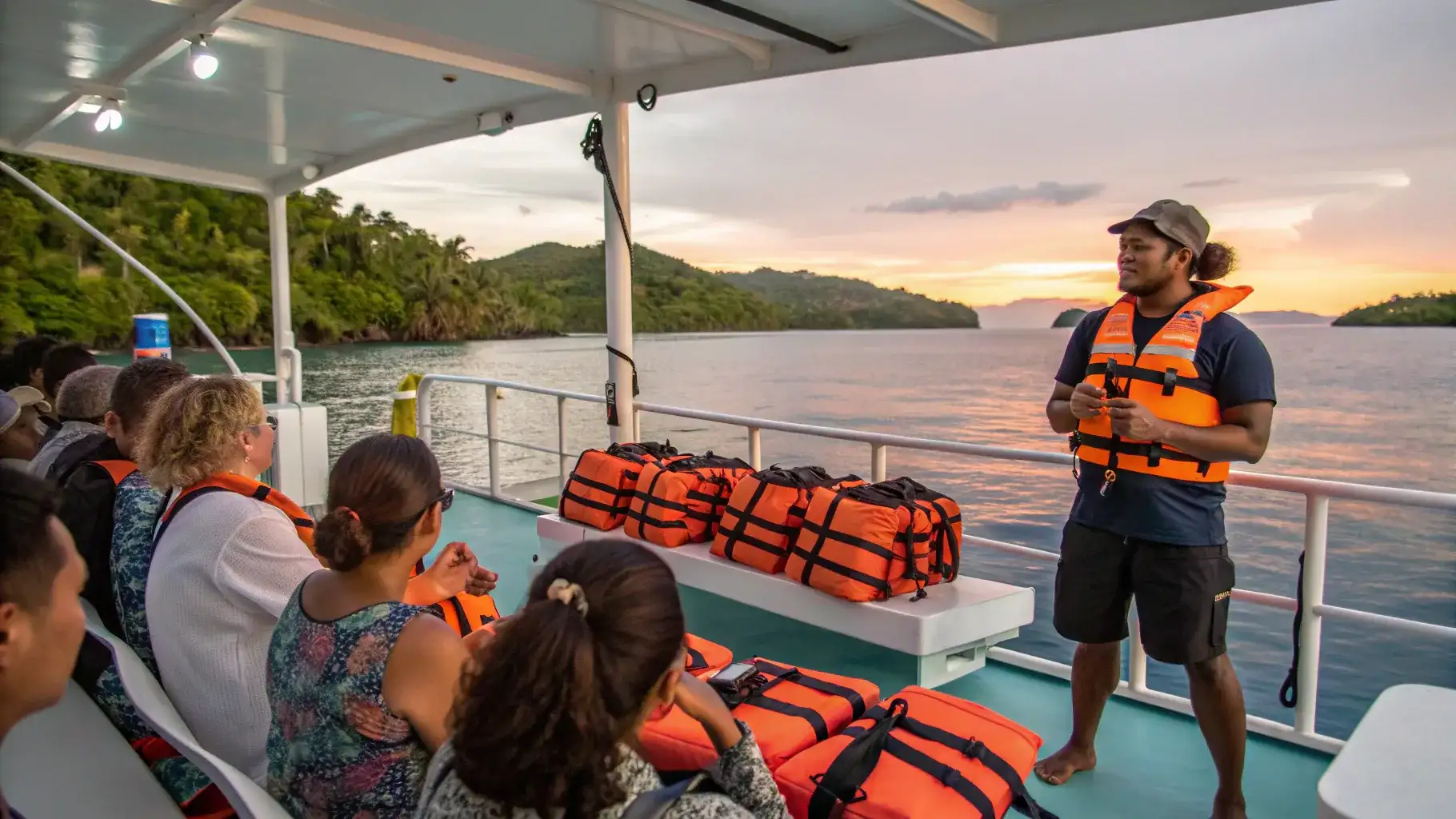
Indonesian-flagged tourist vessels operating in Komodo National Park are required to carry licensed captains and appropriate safety certification, but enforcement and documentation quality varies across the large number of independent operators working out of Labuan Bajo. Before booking, it’s reasonable to ask directly: how many years has this captain run the Padar route specifically, what safety equipment is aboard (life jackets for every passenger at minimum, ideally a radio or satellite device for open-water sections), and whether the crew is trained in basic first aid. An operator that answers these specifics readily and in writing is a stronger signal than one that only offers vague reassurance.

What a proper written quote should include

Before paying any deposit, a trustworthy quote should itemise, rather than bundle, the following:

  • Exact boat name/class, cabin configuration, and maximum group size
  • Full itinerary with approximate timing for each stop
  • What’s included (meals, snorkelling gear, crew) versus what’s separate (park fees, alcohol, tips, drone permits)
  • Deposit amount, payment method, and cancellation/rescheduling terms — particularly for weather-related changes
  • Confirmation that Padar Island is explicitly on the route, not assumed

A quote missing two or more of these is worth a direct follow-up question before you commit, regardless of how competitive the headline price looks.

Common route variations between operators

Not every “Komodo boat trip” follows an identical route, even at the same nominal trip length. Some 3D2N itineraries prioritise diving stops over a second dragon-viewing island; others swap Gili Lawa in for Kalong Island’s flying-fox sunset. If a specific stop matters to you — Padar itself, obviously, but also things like a second Komodo dragon viewing versus only visiting Rinca once — confirm the exact stop list rather than assuming all “3D2N Komodo tour” listings are interchangeable.

How pricing actually scales with group size

Because charters are quoted per boat rather than per person, group size is the single biggest lever on your effective cost — more so than which specific vessel you choose within a tier. A private speedboat at roughly USD 800/day costs a couple USD 400 each; the same boat filled to 6–8 people drops to USD 100–135 each. The same math applies to phinisi charters: a standard vessel from ~USD 5,300/night is expensive for two people but becomes genuinely competitive with shared open-trip pricing once split across six or more. Before assuming a private charter is out of budget, run the per-person number for your actual group size rather than comparing the sticker price directly to a shared-trip seat price.

What to check before choosing an operator

Not all boats advertised for Komodo trips are equally maintained or equally safe, and price alone is a poor signal of quality. Worth confirming before you book, regardless of boat class:

  • Safety equipment. Life jackets for every passenger, a functioning radio or satellite communication device, and a captain licensed for the route.
  • What’s actually included in the quoted price, itemised rather than bundled — see the inclusions section above.
  • Cancellation and rescheduling policy, particularly around weather. Reputable operators reschedule rather than sail through genuinely rough conditions; confirm what happens to your payment if that happens on your dates.
  • Reviews specific to the Padar route, not just general Komodo trip reviews — a boat can be excellent for calm-water Pink Beach stops and still be a poor match for the earlier, tighter Padar sunrise schedule.
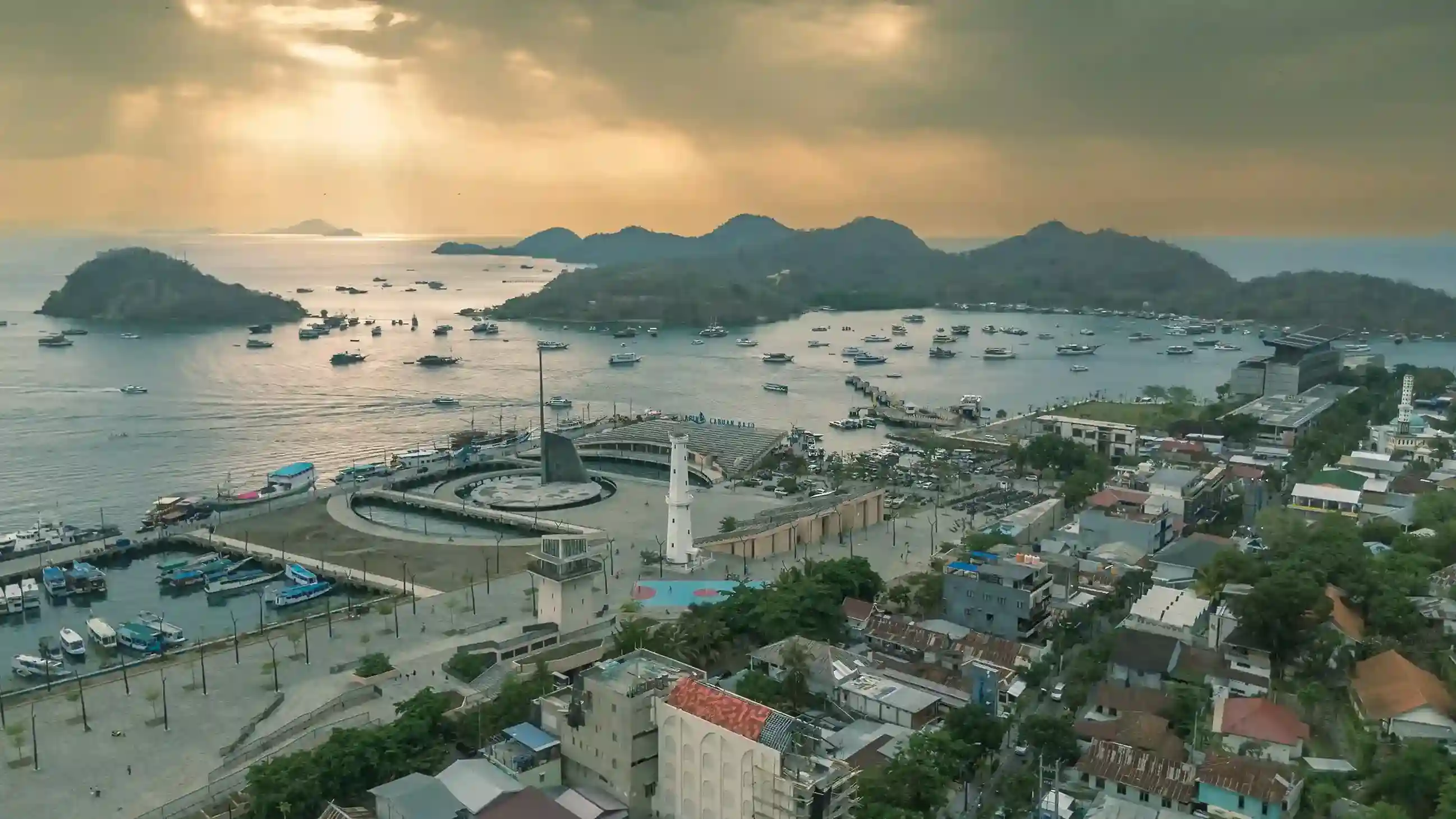
Labuan Bajo harbour seen from a hillside above the town, with tour boats moored and green hills behind, tempat operator boat trip beroperasi
Labuan Bajo harbour, the departure point for the boat fleet toward Padar. Photo: Farida Tania/Unsplash.

Cancellation, weather delays, and rebooking

Weather-driven schedule changes are a normal, safety-motivated part of Komodo boat travel, not a sign of a poorly run operator. Most reputable charters reserve the right to adjust departure times, swap the order of stops, or in genuinely rough conditions, postpone a Padar landing entirely if sea conditions make the crossing unsafe. Ask your operator directly what their policy is for rebooking versus refunding in that scenario before you pay a deposit — this varies enough between operators that it’s worth a direct written answer rather than an assumption.

How far in advance should I book a Padar Island boat?

For dry season (roughly April–November) and any peak-week travel, 4–8 weeks ahead is a safer margin than the 1–2 weeks that used to be enough — Padar’s daily visitor cap under the 2026 SIORA system means popular sunrise slots do sell out, particularly for July–August.

What’s the minimum group size that makes a private charter worthwhile?

Around four people is typically where a private speedboat day charter starts making per-person financial sense against a shared open-trip; for a multi-day phinisi charter, that threshold moves closer to six to eight people, per the cost-scaling example above. Below those thresholds, the appeal of a private charter is control and privacy rather than cost savings.

Can I switch from a shared open trip to a private charter after booking?

Usually yes if you ask early enough and pay the price difference, but it depends on boat availability for your dates — message the Komodo Luxury booking desk as soon as your group size or budget changes rather than waiting until close to departure.

Do all boats stop at Padar Island, or do I need to request it?

Not automatically. Some day-trip routes prioritise Komodo dragons and Pink Beach without a Padar stop, since Padar’s sunrise timing doesn’t fit every schedule. Confirm Padar is explicitly on the route before booking, especially for shared open-trip departures.

What happens if the sea is too rough to reach Padar?

Operators reroute or reschedule around weather rather than risk a rough crossing — this is standard practice across Komodo National Park and is covered in more detail in the safety and sea conditions guide.

Do I need to bring my own snorkelling gear?

Not usually — most boat packages, including standard and private charters through Komodo Luxury, include snorkelling equipment for stops like Manta Point and Pink Beach. If you have specific fit requirements (prescription masks, for instance), confirm gear availability directly or bring your own.

What’s the difference between a “boat trip” and a “liveaboard” in Komodo bookings?

The terms overlap in casual use, but “liveaboard” usually signals a dive-focused multi-day trip with 3–4 dives scheduled daily, structured around dive sites first and sightseeing stops like Padar second. A general “boat trip” or sailing charter puts sightseeing stops, including Padar’s sunrise hike, at the centre of the schedule, with snorkelling rather than tank diving as the water activity. If diving is a priority, specify that when booking so you’re quoted the right category of boat rather than a sightseeing-first itinerary.

Interior of a liveaboard cabin with two beds and a round window facing the sea, generic illustration
Illustration of a liveaboard cabin interior (generic illustration).

Do I need a certification to join a Komodo liveaboard that stops at Padar?

Only for the diving component — a certified diver credential (PADI or equivalent) is generally required to dive from a liveaboard, but the Padar Island hike and any snorkelling stops included on the very same multi-day trip do not require any diving certification at all.

Is a catamaran a better option than a phinisi for families?

Often yes for families specifically — a catamaran’s dual-hull design gives a wider, more stable deck with less roll in open water, which matters for younger children and anyone prone to seasickness on a multi-day trip. A traditional phinisi generally offers more cabins and a more distinctly “Indonesian sailing” character, which some travellers prioritise over the catamaran’s added stability. Neither is objectively better across the board — see catamaran charter options alongside the phinisi listings above to compare specific layouts for your group.

Ready to check dates? Message the Komodo Luxury booking desk with your group size and preferred boat class, or browse the current fleet directly on Komodo Luxury’s boat trip page.

Last updated: 24 August 2026.

Shared, private, or somewhere in between

A shared speedboat is the sensible default for solo travellers and couples: you get speed without paying for a whole vessel, on a preset route that usually pairs Padar with nearby islands and timings optimised for the group rather than for you. The trade-off is exactly that — fixed schedules that can feel rushed at the viewpoints. Before booking one, ask two specific questions: how long you actually get on the trail and at each additional island, and what the maximum group size on that vessel is. The second question affects both comfort on board and how crowded your ranger-led climb feels.

A private charter is the flexible option, and the reason to pay for it is control over the day rather than luxury. You choose the departure time, the order of stops and how long you linger. That matters most for photographers, for families with young children, and for groups including older relatives who need an unhurried pace. On a private speedboat the boat fee is fixed, so the per-person figure only improves as you fill seats; on a phinisi you gain cabins and communal space at the cost of slower crossings. Either way, work out how much time you genuinely want ashore versus sailing and tell the operator early, because that single number shapes the whole itinerary.

When you compare charter offers, look past the base rate to what is inside it: fuel, meals, how park fees are handled, and whether a licensed guide accompanies you in addition to the ranger escort on the trail. Groups who want to stay together are almost always better off with one boat than split across shared departures, and it is worth confirming licensed capacity, seating plan and shade before committing — especially where a party mixes keen hikers with people who would rather stay aboard.

A speedboat over a wooden boat is worth it if you value a shorter crossing and a controlled schedule, particularly for sunrise or if you get seasick. It costs more than a place on a slower vessel but buys back time at Padar and the islands around it, and for anyone with a single spare day in Labuan Bajo that is usually the deciding factor.

What it costs, and why

Padar is moderate by global standards but feels expensive once the boat, the tickets and the guiding are combined, and it is the boat that dominates the budget. Park entrance fees for foreign visitors are published and identical across the whole of Komodo National Park, so the cost difference between visiting Padar and visiting Komodo Island comes from sailing distance, fuel and guiding rather than from any separate ticket category. Combined itineraries add distance, not a new tariff.

The reason boat costs sit where they do has little to do with the island. Fuel-intensive crossings, crew wages, vessel tickets and compliance with safety and conservation rules all feed into pricing inside a protected marine park, and the daily visitor cap discourages high-volume low-margin operations. Padar is rarely a cheap add-on, particularly if you want a small group. Shared day trips are where the per-person cost genuinely drops; private charters and multi-day phinisi cruises are a different bracket. If you are moderating spending, a focused day around Padar beats a scattered itinerary across many islands.

Refund and change policies come from the operator, not the park, and range from flexible to strict. Weather cancellations are often moved to another day rather than refunded, especially in peak season. Before paying, establish how far ahead you can change dates, what happens if the park restricts access, and whether card or bank fees come back.

Families, couples and older travellers

Families generally do best on a private speedboat or phinisi so the day can run at their own pace. Younger children cope better if you skip the very earliest sunrise departure and leave room for a nap between islands. The things worth checking before booking: shade, child-sized life jackets, toilet access, and whether the operator will adjust routing if the children are done after the Padar climb. Some operators set minimum ages for safety and insurance reasons, and since seas can be choppy at certain times of year, motion-sickness precautions and close supervision on deck both matter.

School-age children manage the hike with supervision and breaks; toddlers need carrying on parts of it. A multi-day itinerary suits families better than one compressed outing — sunrise hike one day, snorkelling or a quieter island the next — provided the vessel has workable cabins, clear safety procedures and flexible mealtimes. The most common good decision families make is to include fewer stops rather than more, trading breadth for a calmer day with fewer transitions.

Active seniors, including into their seventies, usually manage Padar with a paced climb and trekking poles as long as there are no serious mobility or cardiac issues. The staircase is sustained and fairly steep, so allow extra time and pick a cooler session. A private boat helps here for a specific reason: nobody is rushed, and anyone who tires can stop at a lower viewpoint without holding up a group.

For couples, Padar suits people who enjoy shared effort and views rather than resort facilities — the climb reads as a joint challenge, and it pairs naturally with a quieter snorkelling bay afterwards. For photographs, the wider terraces on the main ridge allow side-by-side portraits with all three bays behind, and the quieter angles are at the intermediate bends rather than the busiest platform. Ask your guide where you can step aside without blocking the staircase, and consider a late-afternoon or shoulder-season visit for softer light and fewer people. Since there is no accommodation on the island, the relaxing part of the trip comes from a comfortable boat or a well-located hotel in Labuan Bajo.

Practical questions before you pay

Padar is open under normal park operations, subject to the daily cap, with access controlled through SiORA reservations for a specific time session. Short closures for weather or maintenance do happen, so check advisories through your operator close to departure. There is no public timetable for speedboats — each operator sets departures around the park sessions and sunrise times, most sunrise trips leaving well before dawn and others targeting mid-morning or afternoon. Because both boat capacity and park quota limit places, confirm the schedule and session availability before you fix flights and hotels.

Crowding is managed by the park-wide cap and the timed sessions, with rangers regulating flow on the staircase, discouraging long stops in the narrow sections and keeping people inside the designated viewpoints. You will still share the trail at peak times; early or late sessions and shoulder seasons are what actually reduce congestion.

On safety, standards vary between operators, so ask directly: life jackets for all ages, a proper briefing before departure, and a stated plan for bad weather. Aboard, keep bags secure, stay off the bow while under way, and follow ranger instructions on the dock and the trail. Many day boats run open decks, so think about how much shade you and your equipment need on the hotter crossings.

Reviews are more useful than star ratings if you read them for the right things. Recent comments about adherence to park rules, the quality of safety briefings and realistic timing between islands tell you more than praise for the scenery, which is a constant. Boat-specific feedback tends to cluster around punctuality, cleanliness, crew attitude and how the day was balanced between Padar and everything else, and patterns across several recent reviews are worth more than any single account.

Pack as though you are heading for a hot, exposed hike with no backup: sun protection, a refillable bottle, light layers, sturdy footwear, a small daypack, a dry bag for electronics, motion-sickness tablets if you need them, and cash for last-minute fees or tips. Drones and professional gear need permits arranged in advance, and nothing can be bought on the island. For a sunrise trip specifically, add a head torch and layers for the wind on deck — you climb in semi-darkness at first, and the temperature rises fast once the sun is up.

Two smaller notes. If you are choosing between Padar and Rinca rather than doing both, Padar gives the multi-bay panorama and a structured climb but no realistic chance of seeing a dragon and no swimming off the island, while Rinca is where most visitors see dragons with rangers on flatter trails and where the views are secondary. Most travellers pair them and accept the longer day. And on lenses, a wide-to-standard zoom that handles both the full curve of the bays and a tighter frame on a single inlet is more useful than reach — you are close to the compositions that matter, so versatility beats a long telephoto. The two shots almost everyone wants are the approach from the water and the view back toward the boat from the ridge, which means clear decks on the way in and a few spare minutes at an intermediate platform on the way up.

This guide does not operate boats. Bookings are fulfilled by Komodo Luxury, and this site may earn a referral commission.

Scroll to Top
Book with Komodo Luxury →
💬

Additional photo credits on this page: Farida Tania, Simon Spring, Liam Gelap, Rohim Ari on Unsplash.