

Journal
Labuan Bajo to Padar Island: Boat Times & Options
One number here is solid and one is not. The straight-line distance is fixed: roughly 36 km, or 22 miles, measured between Labuan Bajo harbour (-8.4964, 119.8760) and Padar…
Padar Island Editorial Desk · Last updated August 2026

How far is Padar Island from Labuan Bajo, really?
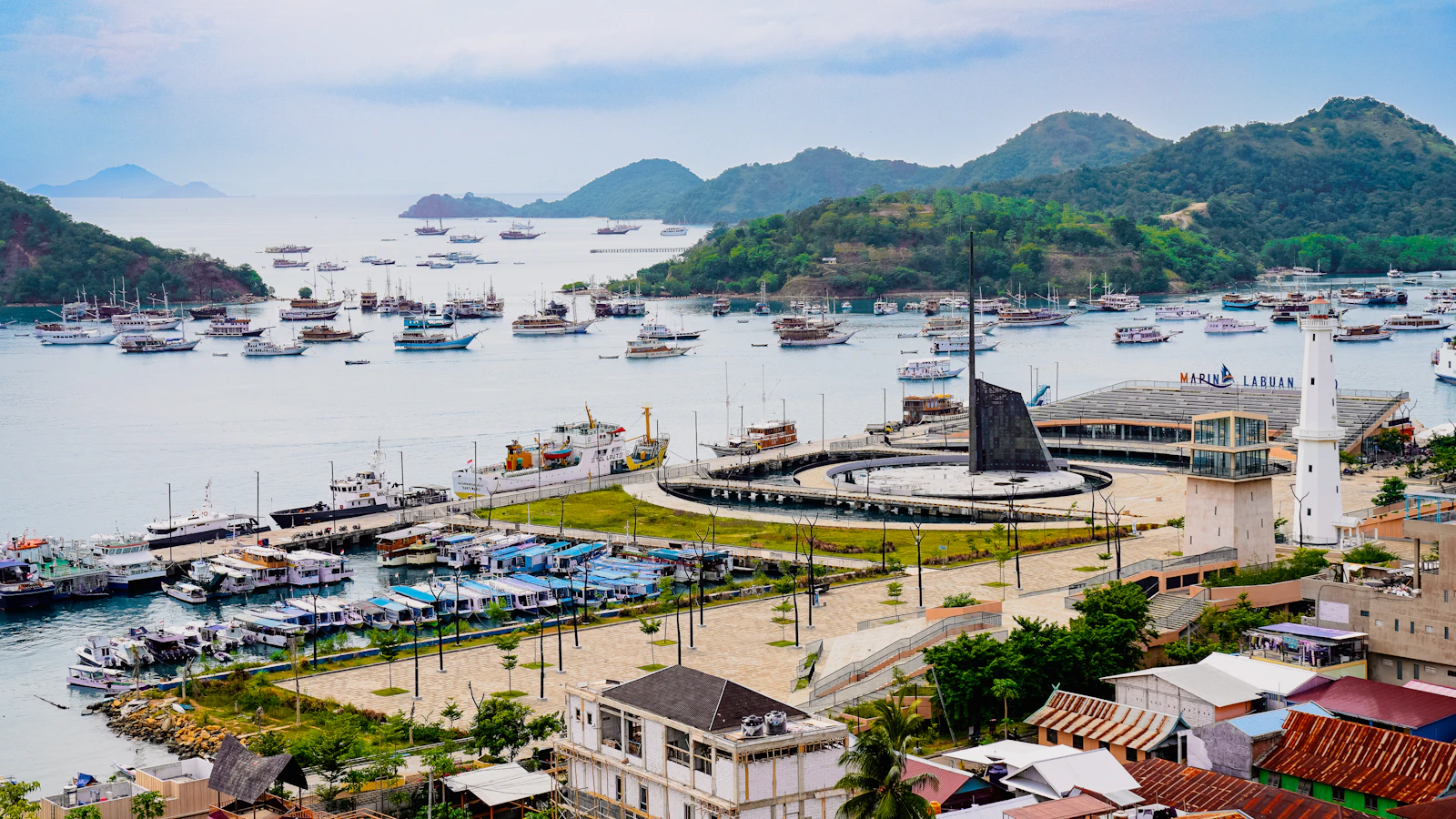
One number here is solid and one is not. The straight-line distance is fixed: roughly 36 km, or 22 miles, measured between Labuan Bajo harbour (-8.4964, 119.8760) and Padar (-8.6136, 119.5719) — the coordinates published on this site, so anyone can recompute it. The sailed distance is not fixed, because no hull travels that line: boats track around Rinca and Komodo, and every skipper picks a slightly different path, which is why published “distance to Padar” figures scatter so widely. We do not print a sailed-track figure, since the park authority has released no chart distance for it. For planning purposes, treat it as “under an hour by fast boat, a few hours by slow boat” rather than fixating on an exact kilometer figure — the boat type matters far more to your actual travel time than the distance does. For the full comparison against arriving from other Indonesian cities, see our complete guide to getting to Padar Island.
What time do boats actually leave, and from where?
Two departure points serve almost all Padar-bound boats out of Labuan Bajo: the main public pier near the town center, and the private marina/jetty strip along Jalan Soekarno-Hatta, where many hotel-affiliated and higher-end charter operators dock. Which one you leave from depends entirely on which operator or hotel arranged your boat — always confirm the exact pier location with your operator the evening before departure, since the two locations are not within easy walking distance of each other, taxi drivers do not always know which one a given boat uses, and turning up at the wrong pier at 4 a.m. can genuinely cost you your boat for the entire day.
Departure times split into two clear patterns:
- Sunrise-focused trips: typically leave between roughly 3:30 and 5:00 a.m., timed backward from local sunrise, which itself shifts from about 05:31 WITA in November to about 06:18 WITA in early to mid-July.
- Standard day trips: more commonly depart between 7:00 and 8:00 a.m., arriving at Padar mid-morning after the earliest boats have already come and gone.
Speedboat vs phinisi/wooden boat: the actual time difference
| Boat type | Typical crossing time | Notes |
|---|---|---|
| Shared/private speedboat | ~60-120 minutes | Fast, private charters at 25–35 knots can be closer to 45 minutes; choppier ride in rough seas |
| Traditional wooden boat (klotok) | ~2-3+ hours | Common on budget open-trip day itineraries; slower but more stable in swell |
| Liveaboard phinisi | Variable — often already anchored nearby overnight | Guests transfer to Padar by tender rather than making a long open crossing that morning |
The gap between these numbers is large enough that it should genuinely drive your booking decision: if your total trip to Labuan Bajo is only one or two days, a speedboat is close to mandatory to leave time for anything beyond the boat ride itself, whereas a longer liveaboard stay makes the wooden-boat crossing time largely irrelevant since you’re not racing a clock.
What happens if the sea is rough?
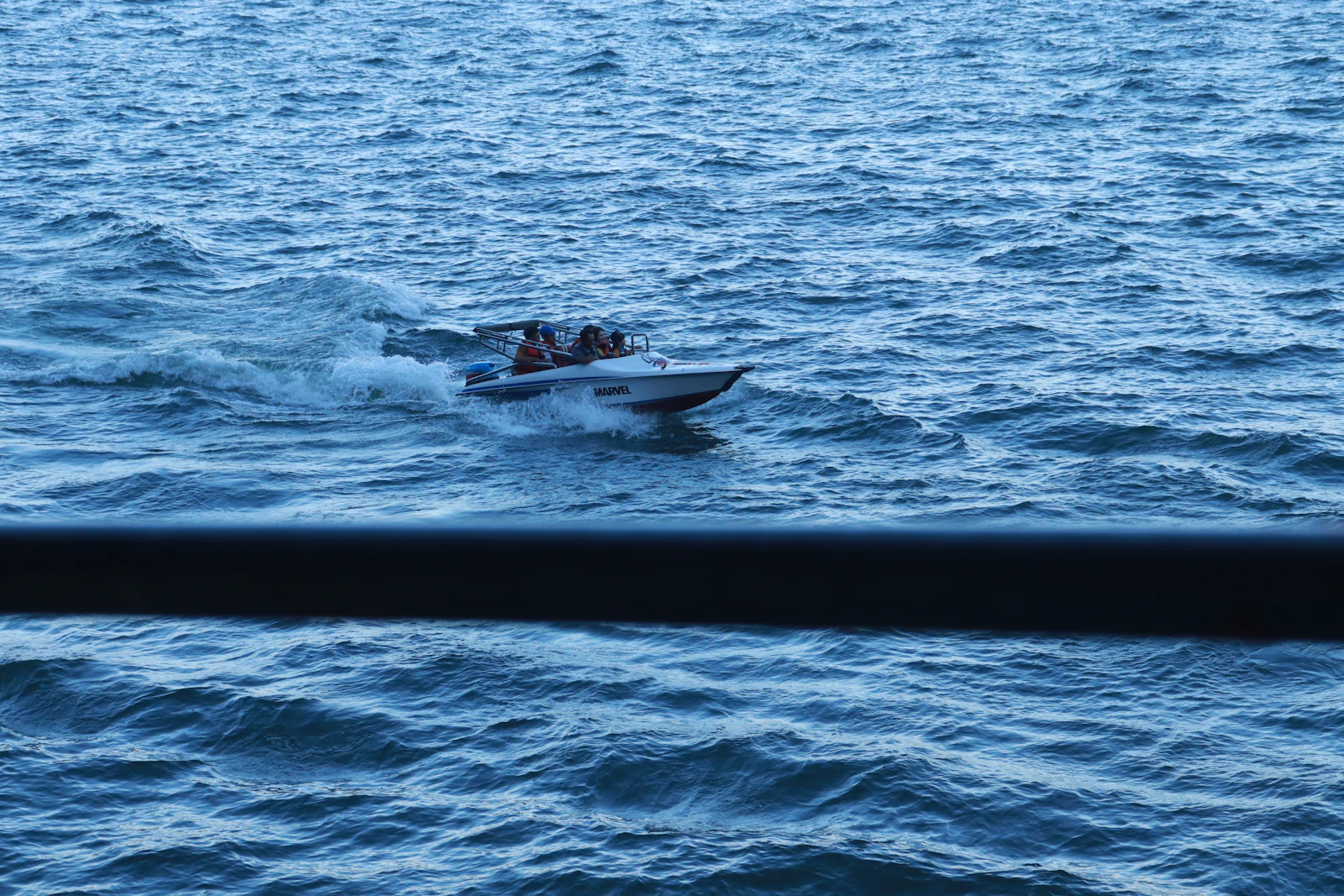
Rough conditions are most common roughly December through March, during the wetter part of the year, though isolated rough days can occur outside that window too. When conditions deteriorate, operators typically respond in one of a few ways: delaying departure by an hour or two to let conditions settle, switching passengers from a speedboat to a more stable wooden boat, or in less common cases, adjusting the day’s route toward more sheltered stops and postponing or skipping the Padar landing if conditions at the specific approach are judged unsafe. This is a legitimate safety decision rather than an inconvenience to push back on — Komodo’s straits genuinely do produce fast currents and sudden chop, particularly around headlands and channel mouths. Confirming your booking a few days ahead, rather than expecting a same-day walk-up boat, gives operators more room to manage these adjustments without simply canceling your trip.
What is the crossing itself actually like?
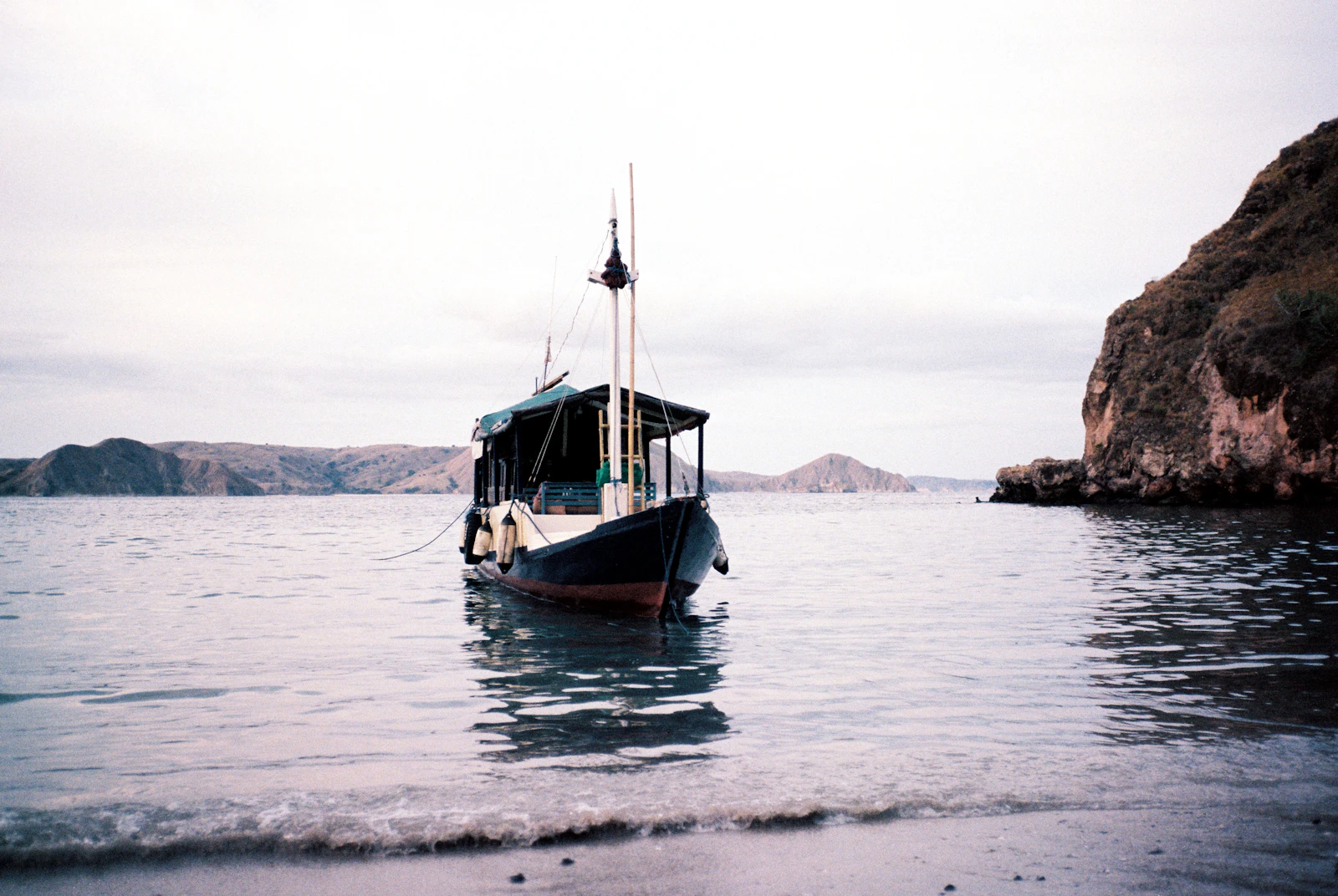
On a speedboat, expect an open or semi-open deck, life jackets provided, and enough spray at speed that a dry bag for phones and cameras is worth packing rather than improvising with a plastic bag. The ride can be genuinely bumpy in a moderate swell, and travelers prone to seasickness should consider taking motion-sickness medication before boarding rather than after symptoms start, since the first 20–30 minutes out of the harbor tends to be the choppiest section before the boat reaches more open, often calmer water. On a traditional wooden boat, the ride is slower and gentler, with more deck space and shade, but less protection from sun exposure over the longer 3–4 hour crossing — sunscreen reapplied partway through the trip, not just before departure, is worth the extra step.
Neither boat type typically has an enclosed toilet suitable for extended use, and drinking water is not always provided as standard, so confirm inclusions with your specific operator rather than assuming.
Does the boat go straight to Padar, or stop elsewhere first?
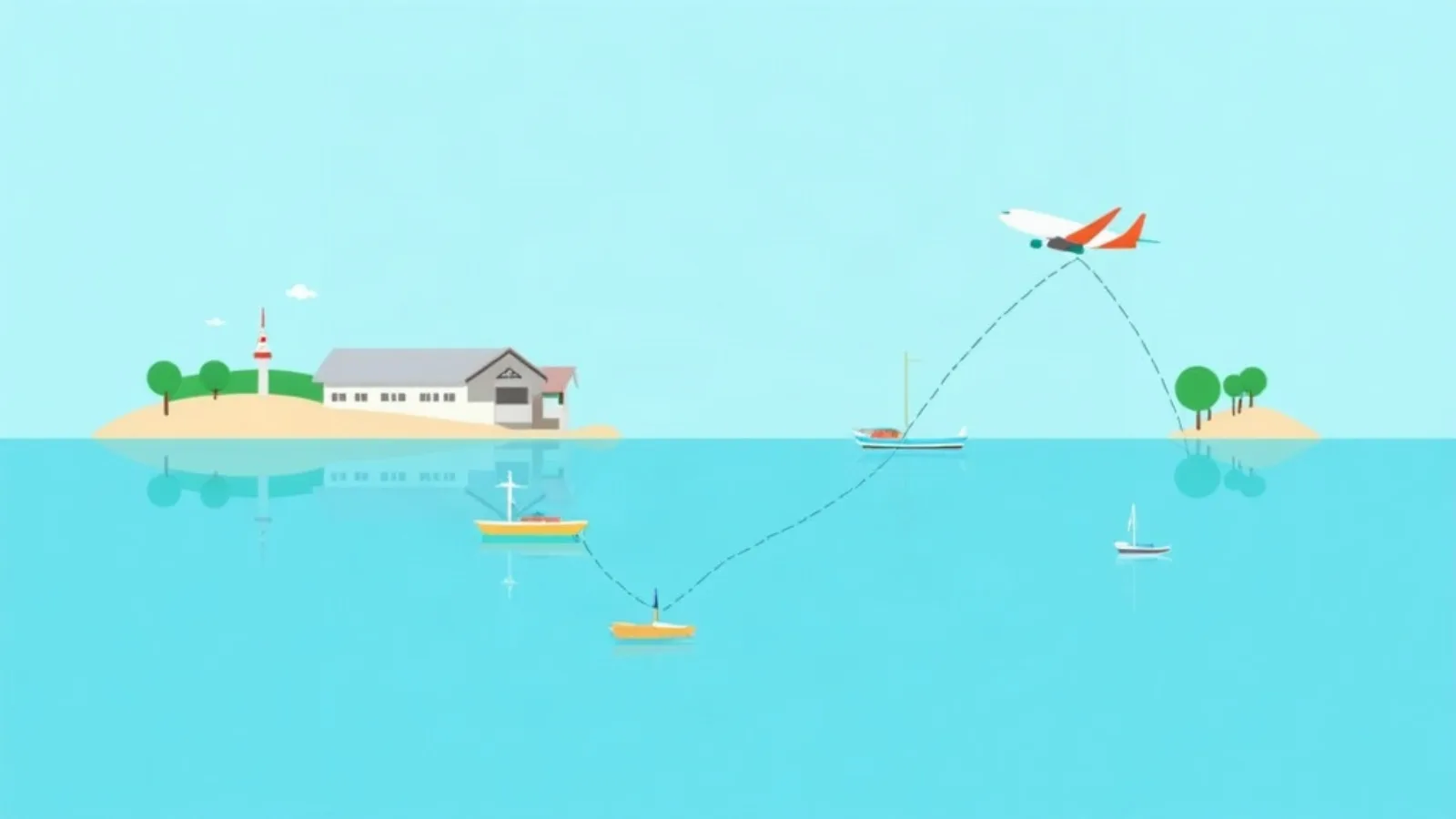
This depends entirely on your specific itinerary rather than any fixed rule. Many day trips combine Padar with Komodo Island, Rinca Island, or Pink Beach in a single day, which changes both your total time on the water and what time you actually reach Padar itself — an itinerary that visits Komodo Island first, for instance, will reach Padar later in the day than a Padar-first route. Our Padar, Rinca and Pink Beach one-day itinerary guide walks through whether these stops realistically fit together in a single day, since the combination is popular but tighter on time than many itineraries advertise.
Shared boat or private charter — does it change the timing?
A shared speedboat runs on a fixed schedule set by the operator, usually the same departure window regardless of how many other passengers are aboard, which means your timing is locked in once you book. A private charter, by contrast, lets you set your own departure time within the boat’s operating hours — genuinely useful if you specifically want a sunrise landing before other boats arrive, or conversely want to sleep in and accept a busier mid-morning viewpoint in exchange for a later start. The trade-off is straightforward: shared boats cost less per person but fix your schedule; private charters cost more overall but hand you control over exactly when you leave Labuan Bajo and how long you stay at each stop.
Coming from further away than Labuan Bajo?
If you’re not yet in Labuan Bajo, this page assumes you already are — for the flight and connection planning from Bali, Jakarta, and other Indonesian cities, see our guide to reaching Padar Island from Bali, Jakarta and beyond. And since Padar has no overnight facilities of its own, if your plan involves more than a single day trip, our guide to overnight options around Padar explains what’s actually allowed once you’re there.

Frequently asked questions
How long does the boat ride from Labuan Bajo to Padar Island take?
About 60-120 minutes by speedboat one-way, or roughly 2-3+ hours by traditional wooden boat or slower phinisi, depending on the specific vessel and sea conditions.
Where do boats to Padar Island depart from in Labuan Bajo?
Either the main public pier in town or the marina/jetty strip along Jalan Soekarno-Hatta, depending on which operator or hotel arranged your boat. Always confirm the exact departure point in advance.
What happens if the boat crossing is cancelled due to weather?
Operators typically delay departure, switch to a more stable boat type, or adjust the day’s route. This is most common during the wetter months, roughly December through March.
Can I go directly to Padar Island without stopping anywhere else?
Yes, a Padar-only or Padar-first itinerary is a normal option to request; whether your specific boat does this depends on the itinerary you book rather than a fixed schedule.
Planning the rest of your route
Once the Labuan Bajo-to-Padar leg is settled, the remaining planning question is usually what else to combine it with and what it costs. Our complete Padar Island access guide covers booking steps and boat-type trade-offs in full, and our Padar Island cost guide breaks down what a speedboat versus wooden-boat trip typically runs.
Booking the crossing you just read about
padarisland.com is an information site and issues no tickets. The crossing itself is sold by our affiliated operator, Komodo Luxury. Departure times from the public pier shift with season and sea state, so the schedule you should plan against is the one an operator confirms this week. Ways to make the crossing: speedboat charters, a Komodo tour departing from Bali, and Labuan Bajo yacht rental.
Working backwards from the light
A genuine summit-side sunrise means leaving Labuan Bajo somewhere between roughly 03:30 and 05:00, and the exact time is set by your boat and the operator’s read of that morning’s conditions. Slower wooden boats have to leave at the earlier end of that window or you will watch the sun come up from the water instead of the ridge; fast boats can afford the later end. The right departure is the latest one that still gets you up the staircase before first light, which is a conversation to have with the organiser rather than a number to look up.
Boat timings are built around the SiORA session windows generally. Sunrise trips arrive inside the earliest slot, day tours target mid-morning or afternoon entries, and departure times also account for tides and forecast wind. Shared tours set a fixed pick-up; private charters can shape the schedule around your session. Operators commonly confirm or fine-tune the exact departure the evening before, once the forecast is clearer, so always check the meeting time the day before rather than relying on the booking confirmation.
Return timings work the same way in reverse. There is no park-wide published last-boat hour, but commercial tours plan backwards from safe daylight sailing and your booked session, and a ranger headcount happens before any boat leaves. Shared trips run to a fixed schedule; on a private charter, agree the latest departure with your captain in advance. Whatever you are on, clarify the last boarding time with your guide when you land, because that number, not the view, decides when you turn around.
On lead time: book the boat as soon as your dates are firm, particularly for a sunrise speedboat or a specific phinisi. There is no rule linking SiORA reservations to boat lead times, but sunrise spaces disappear first, and in high season both the park session and the boat are things to lock in well ahead.
Distance, crossing and comfort
The straight-line distance from Labuan Bajo is about 36 km. Actual sailing routes are longer and deliberately unpublished, which is why everyone plans in time rather than kilometres: roughly 60 to 120 minutes one way by speedboat, two to three hours or more on a wooden or phinisi vessel. Multi-stop tours that fold in Komodo or snorkelling sites stretch the day considerably, so the useful question when comparing itineraries is how many hours you spend on board versus on the island.
Almost all trips leave from the main Labuan Bajo waterfront, either the public pier or one of the nearby marina-style jetties, though some operators board from smaller side-piers — follow the meeting point they give you and leave a buffer for finding the boat and finishing any paperwork. Where you stay affects this more than people expect: a room near the waterfront keeps a pre-dawn transfer short, while lodging further inland means allowing extra time for a departure that happens before the town’s normal traffic patterns start.
Sea conditions are calmer in the dry season but still choppy around tidal changes and through the July–August winds, and the wetter months bring shorter, steeper waves. Speedboats register bumps sharply; larger wooden vessels move more slowly but still roll. If you are sensitive to motion, take a bigger boat, sit toward the stern, medicate before departure, and if your dates are flexible, avoid the windiest weeks.
A private wooden boat is the slower, roomier option — shade, space to move, and the option of a relaxed lunch or snorkel stop — with the cost being a much earlier start if you want sunrise. These are booked through local agencies or online operators and typically offer day-beds, canopies and basic facilities rather than speed. Families and groups who value space over pace often prefer them, but the longer crossing means more exposure to sun and wind, so carry extra water and sun protection. If your schedule is tight, confirm that the itinerary leaves enough island time before the afternoon return.
Large suitcases are usually permitted but awkward across narrow gangways and crowded decks; soft-sided or smaller bags stow more easily and are safer on wet surfaces. If you must bring a big case, check storage in advance and expect to carry it yourself at both ends.
Pregnant travellers join day trips regularly, but the crossing can be bumpy and boarding often involves steps or a narrow gangplank, with no medical facilities on Padar itself. A larger, more stable boat, a calmer season and medical advice beforehand are the sensible precautions.
On arrival, and the shape of the day
Padar’s “harbour” is a ranger-managed jetty with basic facilities, not a developed port. There are no shops, cafés or left-luggage services, so everything you need for the hike and the return crossing should already be on the boat when you leave the mainland.
Queues at the jetty are much shorter than they were before online booking and the daily quota, though you may wait briefly while rangers scan QR codes and form guided groups. Arriving early within your session window gives you a small buffer if several boats reach the dock together.
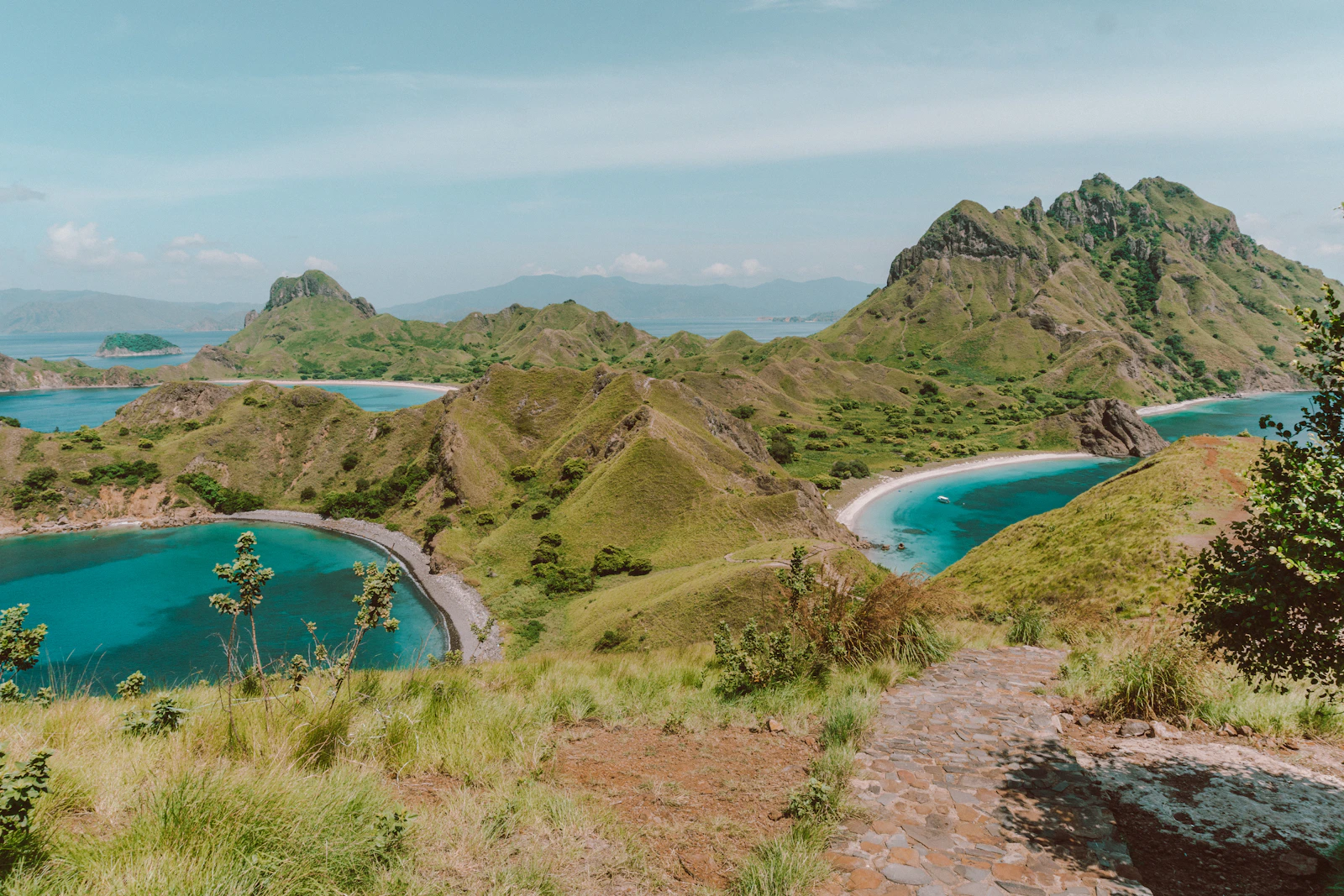
The trail from the jetty to the classic viewpoint is roughly 0.7 to 1.5 km one way, depending on how you count the staircase and platforms, with about 170 to 270 metres of elevation gain and 25 to 45 minutes of steady uphill walking with several places to pause. Moderately fit visitors manage it without difficulty. Total time at sea across a typical day trip includes both the main crossing and shorter repositioning legs if snorkelling or dragon-watching are on the itinerary, so you can spend several hours afloat even though Padar itself is only one to three hours away — worth checking against the outline schedule so you can pace water, snacks and sun protection.
Cost, for two foreign visitors, lands in the low-to-mid seven-figure rupiah range for a practical day once entrance fees, ranger services and a typical boat share are combined. A private charter raises the total substantially while lowering each person’s share of the ranger fee. As always, check what the tour price already bundles.
Two smaller points. Dense fog that obscures the view is uncommon; light mist forms in the cooler months and a hazy or muted sunrise is far more likely than a white-out, and skies usually clear as the morning goes on — so the hike is worth completing even when first light looks unpromising. And from the upper viewpoints you can see the neighbouring islands, but Komodo is beyond useful photographic detail with a standard lens: wide frames show the seascape rather than anything recognisable, and close-up photographs of Komodo need their own boat leg and landing.
Finally, on crowding: Padar concentrates everyone onto a single short trail and viewpoint, so it feels busiest at the sunrise and mid-morning slots. Komodo spreads visitors across several ranger-guided routes and dragon-viewing areas. Both see steady tourism; which feels busier depends entirely on your session and the season.
This guide does not operate boats. Bookings are fulfilled by Komodo Luxury, and this site may earn a referral commission.
Ready When You Are
Ready to book?
Chat directly on WhatsApp with the Komodo Luxury team.
This guide does not operate boats. Bookings are fulfilled by Komodo Luxury, and this site may earn a referral commission.