

Journal
Padar Island with Kids: What Actually Works
Short answer: Padar Island can work well for families, but it depends heavily on the child's age and physical ability, not on the destination itself.
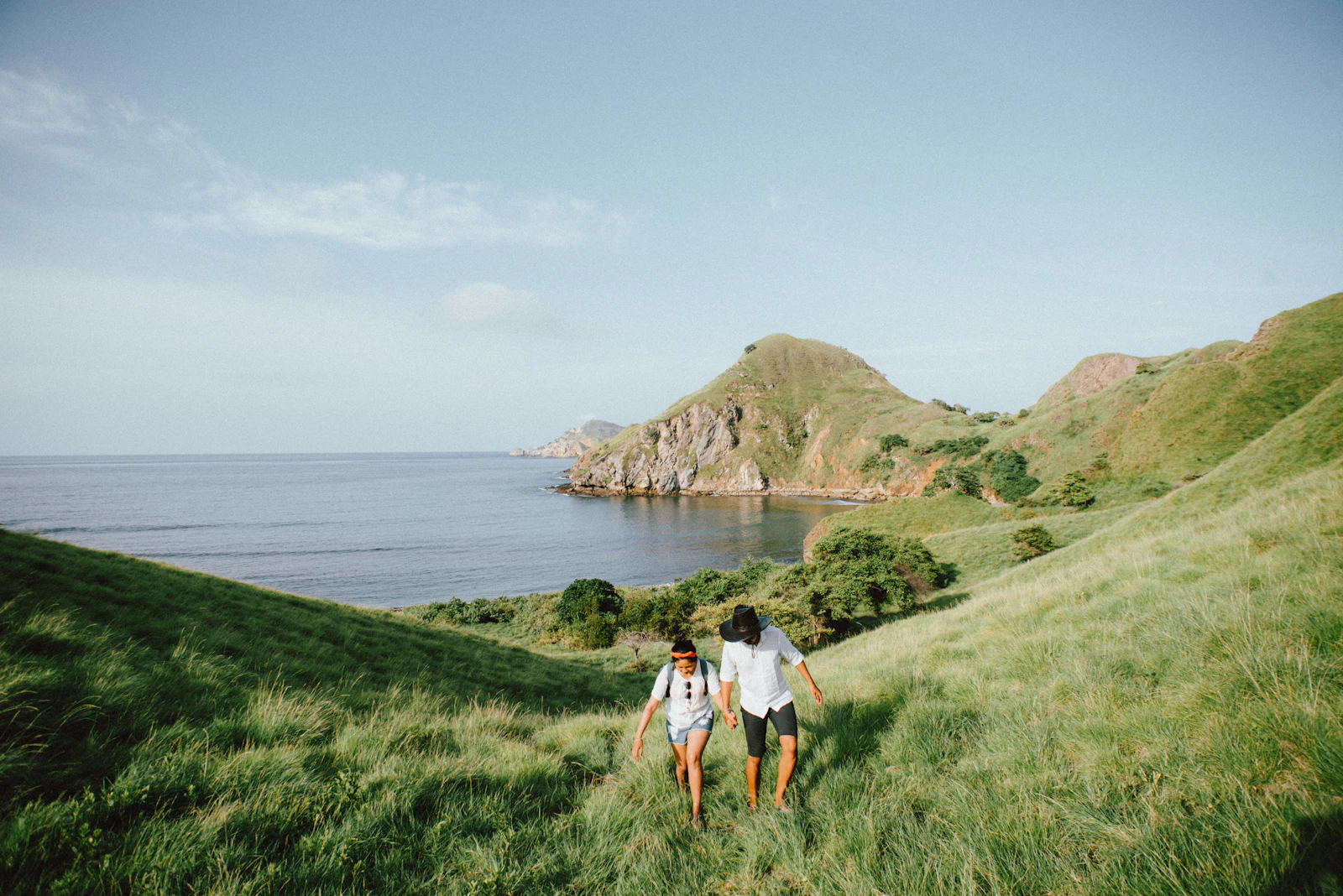
Short answer: Padar Island can work well for families, but it depends heavily on the child’s age and physical ability, not on the destination itself. Children who can comfortably and confidently climb several hundred stairs unassisted generally manage the hike fine with supervision; toddlers, children who need to be carried, and kids who tire quickly on stairs are usually better off staying on the boat and enjoying the bay from the water instead.

Last updated: August 2026.
What age is realistic for the Padar Island hike?
There’s no official minimum age, and no age-based restriction from the park authority — the real constraint is physical capability, not a birthday. As a rough, honest guideline: children roughly 7–8 years and older who are already comfortable walking or hiking for 25–45 minutes without being carried tend to do fine, especially with rest breaks at the trail’s flat landing points (spaced roughly every 50–80 steps). Younger children can sometimes manage with a lot of encouragement and a slower pace, but heat, the lack of shade, and roughly 800–840 steps (no official count published) are a genuinely different proposition for a five-year-old than for a fit ten-year-old. If in doubt, plan to turn back rather than push through — the view partway up is still worthwhile, and nothing about the summit is safe to rush toward with a struggling, overheated child.
What makes the hike harder for kids specifically?
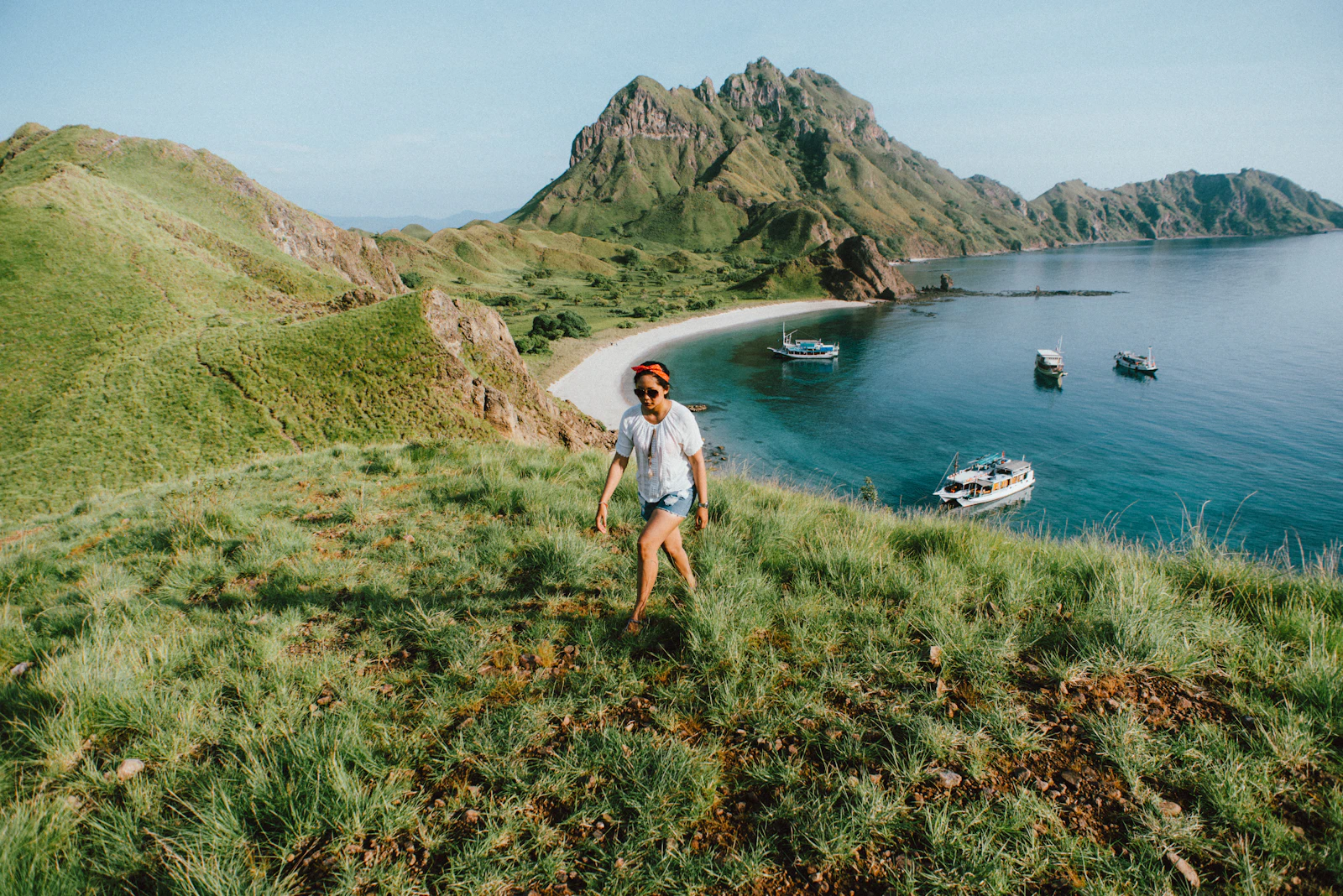
Three things compound for children more than adults: heat (kids can overheat faster and show it less obviously than adults until it’s already a problem), the unfenced ridge sections near the top (a real supervision concern for any child who might run ahead or wander toward an edge), and boredom-driven fatigue on a climb that, while short for an adult, can feel much longer to a child without an adult’s sense of “we’re almost there.” None of these make the hike unsafe for a well-prepared, closely supervised child — they just mean the trip needs more deliberate pacing and hands-on supervision than an equivalent adult-only hike.
Practical tips for hiking Padar Island with kids
- Go early. A sunrise or early-morning departure means cooler temperatures for the climb, which matters more for kids than for most adults.
- Hold hands near the ridge. The upper sections and viewpoint platform have real drop-offs without continuous fencing — keep young children within arm’s reach, not just in sight.
- Pack more water than feels necessary. Kids dehydrate faster in heat and may not reliably tell you they’re thirsty until they’re already uncomfortable.
- Use the rest landings. Don’t push for a fast ascent; the flat landing points every 50–80 steps exist for a reason, and stopping at each one turns the climb into a series of short, manageable stretches instead of one long slog.
- Bring closed shoes, not sandals. Kids are more likely to trip or scuff a toe on uneven natural-rock sections, and grip matters more for smaller feet on steep steps.
- Set a turn-back point in advance. Agree before you start how far you’ll go if a child is struggling, so the decision isn’t made mid-hike under pressure.
What if my child (or I) decide not to do the hike?
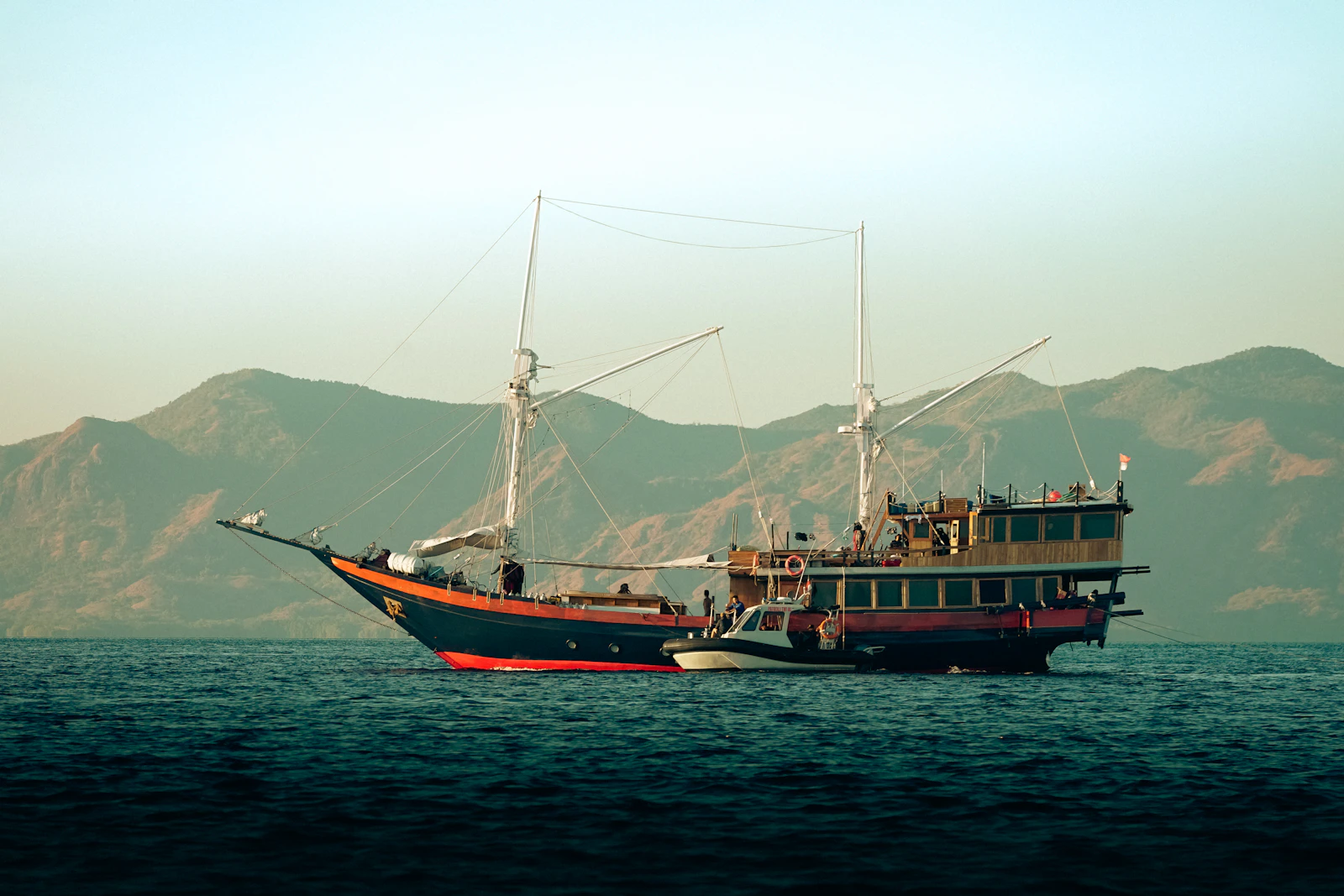
Staying on the boat is a completely reasonable choice, not a consolation prize. The anchored view of Padar’s bay at sunrise is still one of the more striking sights in Komodo National Park, and many boats offer a swim stop or a slower morning at a nearby beach as an alternative for anyone not climbing. If your group is mixed — some hiking, some staying aboard — confirm with your operator that adequate supervision is available on the boat for anyone who isn’t part of the hiking group, particularly for younger children.
Booking considerations for families
Under the current SIORA permit system, every visitor — including children — needs an individual entry record tied to an ID or passport number, so make sure your operator includes every child in the booking rather than assuming young kids are exempt. If your family trip includes multiple activities across a multi-day itinerary, see our 7-day itinerary for how a longer trip can build in more rest days and flexibility than a rushed single-day visit.
Frequently Asked Questions
Is Padar Island safe for young children?
It can be, for children who can comfortably climb stairs unassisted and are closely supervised near the unfenced ridge sections. Toddlers and children who need to be carried are generally better off staying on the boat, given the heat, lack of shade, and roughly 800–840 steps (no official count published) involved.
Is there a minimum age to hike Padar Island?
No official minimum age exists. The practical limiting factor is a child’s physical ability to climb the trail’s stairs and tolerate heat and sun exposure without shade, not a fixed age rule from the park authority.
What should I do if my child gets tired halfway up?
Stop at the nearest flat landing point, offer water and a rest, and reassess — turning back is always an option, and the partway views are still worthwhile even without reaching the very top.
Is Padar Island suitable for children?
It suits children who can already climb hundreds of steps unassisted, with close supervision, especially near the unfenced cliff edges. Toddlers or children who still need to be carried are better left on the boat, given the heat and the almost shadeless trail.
Do children need a separate entrance ticket for Padar Island?
Yes. Under the SIORA system, every visitor, including children, needs their own identity details in the reservation, so make sure your operator registers all family members, including children, in the booking.
For a similar candid look at older or less mobile travellers, see Padar Island for older travellers. For what to pack for the whole family, see our packing guide.
What else can kids do at Padar Island besides the hike?
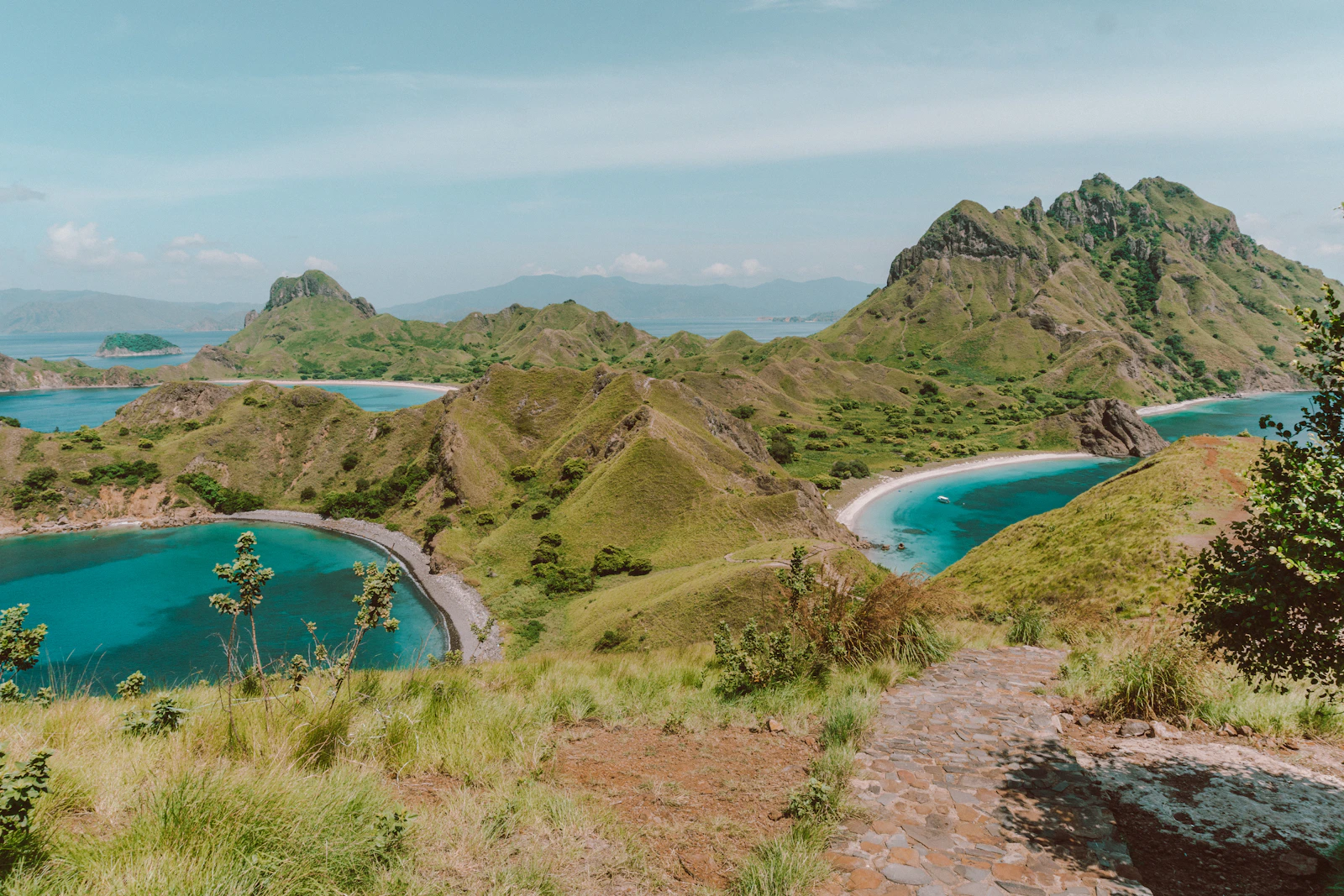
The hike is the headline activity, but it isn’t the only option for a family day near Padar. Many itineraries pair a Padar stop with a swim or snorkel at a nearby beach (Pink Beach is a common combination), which is a lower-intensity, shade-optional alternative that younger kids often enjoy more than the climb itself. If your boat carries snorkeling gear in kid sizes, a shallow, calm-water snorkel with a supervising adult can be the highlight of the day for a child who isn’t up for the stairs, without anyone missing out on a memorable part of the trip.
How to prepare kids mentally for the hike
Framing matters more than most parents expect. Telling a child “we’re climbing a mountain” can sound intimidating; explaining that it’s “a big staircase with rest stops, like a hundred flights of stairs, and we’ll stop whenever you want” tends to set more realistic, less anxious expectations. Letting a child carry their own small water bottle (even a partially symbolic one, refilled from a parent’s larger supply) can also increase buy-in for kids who like having a “job” on family outings. Involve older children in checking the weather and packing list beforehand — see our packing guide for the full list — so the trip feels like something they helped plan rather than something being done to them.
Can babies or toddlers go on the boat trip even if they won’t hike?
Generally yes, provided the boat itself is appropriate for young children (ask your operator about safety rails, shade coverage on deck, and life jacket sizes for small children) and an adult stays with them rather than joining the hike. Many families successfully split the group, with some adults hiking while another stays aboard with younger children.
Booking around nap times, not just tide times
padarisland.com publishes guides rather than tickets. Charters are handled by our affiliated operator, Komodo Luxury. Families almost always need the option to leave someone aboard with a small child, which quietly rules out the tightest shared itineraries. Boats with room to do that include the Deluxe charter tier, the VIP charter tier, and private-trip packages.
Which children this actually works for
There is no official minimum or maximum age; the practical limit is each child’s stamina and balance, assessed informally by rangers and crew. The useful benchmark is whether a child handles school staircases without complaint and follows safety instructions consistently — which usually means old enough to climb several hundred steps unaided and manage at least half an hour of steady ascent. Strong confident walkers cope well, and the challenge is the sustained gradient and heat rather than anything technical.
Below that, treat Padar as a boat-and-beach stop rather than a summit goal. Toddlers and pre-schoolers are more comfortable near the landing area, and one adult staying low while the other climbs is a normal arrangement rather than a failure of planning. Younger siblings can still enjoy the day without going far up.
Padar is child-tolerant rather than child-oriented. There are no playgrounds, food stalls or sheltered rest areas, and the entire focus is the climb and the view. What it offers families is a compact half-day outing that fits neatly into a wider Komodo itinerary — short enough that older children feel genuine achievement, structured enough that everyone knows what is happening.
The risks are heat, fatigue and the unprotected edges at some viewpoints. Steps can be dusty and slippery, handrails do not run continuously, and several upper segments feel noticeably steeper and more exposed — which is exactly where a younger or more nervous child may decide to stop, and those points usefully coincide with intermediate terraces. Supervision and pacing matter far more than equipment.
Rangers expect children to follow the same core rules as adults: stay on the marked trail, respect the barriers, no litter, and obey instructions promptly. Running ahead and climbing on things are the two behaviours that draw immediate correction.
How to walk it as a family
Walk as a tight group rather than letting the fitter members surge ahead. Put an adult at the front setting a slow steady pace and another at the back watching for trip hazards and flagging when someone needs to stop. Most reasonably fit adults and older children reach the main viewpoint in 25 to 45 minutes; with children, plan for the upper end and add time for stops.
Sequence the day so the hike is not the last thing anyone does. A family-friendly order is a short wildlife or snorkel stop while everyone is fresh, then Padar, then a quieter beach — so tired children have something to look forward to rather than a long boat ride home. Many families take the early-morning session, continue to a snorkelling bay and finish on a relaxed beach; others prefer an afternoon landing with the swim first.
Padar’s own landing area is a functional jetty rather than a shallow play beach, and currents vary, so treat the stop as a hike-and-photograph call and save swimming for a bay chosen for it.
For photographs, the classic ridge viewpoint works for family portraits if you arrive early enough to claim a calm corner before the crowd builds. The lower terraces give good angles too, with more room to arrange people. Crowds matter differently with children — the issue is not the wait but the jostling on narrow steps, so a quieter session is worth more than better light.
On the island itself the core activity is the stair hike with viewpoint stops and simple nature watching. Collecting observations along the way — the changing colour of the grass, the shape of the bays, the boats below — gives younger children a reason to keep looking up. The rock here is around 3.2 million years old, shaped by volcanic activity and then eroded into these ridges and bays, which is the kind of fact that lands well with an older child halfway up a staircase.
Boats, bases and what to pack
For day trips many families prefer faster speedboats, which cut the early-morning travel time and limit how long small children have to sit still. Slower wooden or phinisi boats give more space to move around and a gentler motion, which suits children prone to seasickness. The right choice depends entirely on your children’s patience and sensitivity to motion, and shaded seating is worth asking about either way. Some operators group families together on shared boats, which helps children feel less out of place and gives parents allies for staggered hiking; others arrange private charters where you set the pace.
Most families base themselves in Labuan Bajo, which has the widest choice of rooms, family suites and facilities. Liveaboards are possible but need children who are comfortable sleeping aboard. Land-based families can still reach Padar for sunrise by joining an early-departing boat, which does mean waking children well before dawn.
On cost, a family of four budgets the published park entrance and ranger fees plus their chosen boat. Beyond the official tariffs, the boat style and the wider Flores itinerary determine almost everything, and shared speedboat day tours keep the per-person figure lowest. Packages marketed as family deals bundle boat, fuel, simple meals and park logistics into one number, but they rest on the same underlying park tariffs, so compare what is added rather than what is claimed.
Assume you are offline. Reception is patchy at best and appears only briefly near the higher viewpoints; pocket Wi-Fi units relying on the same mobile networks are equally unreliable. Download offline maps and any children’s entertainment before you leave town.
The family packing list is short and non-negotiable: grippy shoes, sun hats, high-factor sunscreen, refillable water bottles and light snacks that survive heat. A small towel or sarong doubles as shade and as something to sit on. Nothing is sold on the island.
Within the park, Padar’s path is one of the more structured short hikes thanks to the staircase and the single clear route — there are no alternative easier trails on the island itself, which is why the turnaround point is the only real variable. Families who enjoy a simple shared outdoor challenge and do not mind the absence of facilities tend to get the most from it: the effort is collective and the reward is visible from wherever you decide to stop.
This guide does not operate boats. Bookings are fulfilled by Komodo Luxury, and this site may earn a referral commission.
Ready When You Are
Ready to book?
Chat directly on WhatsApp with the Komodo Luxury team.
This guide does not operate boats. Bookings are fulfilled by Komodo Luxury, and this site may earn a referral commission.