

Journal
Can You Fly a Drone on Padar Island?
Flying a drone at Padar Island is legal only with a SIMAKSI conservation-area entry permit arranged in advance — no guide, boat captain, or ranger can authorise it on the spot.
Flying a drone at Padar Island is legal only with a SIMAKSI conservation-area entry permit arranged in advance — no guide, boat captain, or ranger can authorise it on the spot. As of 2026, the permit costs roughly IDR 2,000,000 per drone, per day, takes 1–2 weeks to process, and comes with hard restrictions on where and when you can actually fly, even once approved.
What permit do I actually need?
Indonesia’s national parks, including Komodo National Park, prohibit drone flight inside conservation areas by default. The exception is a SIMAKSI (Surat Izin Masuk Kawasan Konservasi — Conservation Area Entry Permit), issued by the relevant park authority, not by your tour operator or boat captain. This is a bureaucratic distinction that matters practically: a captain or guide who tells you it’s “fine, just fly it” is not a source of legal authorization, and drones confiscated for unpermitted flight are a real, documented outcome, not a rare exception.

How much does a Padar Island drone permit cost, and how long does it take?
| Item | Detail (2026) |
|---|---|
| Permit type | SIMAKSI (Conservation Area Entry Permit) |
| Cost | ~IDR 2,000,000 per drone, per day |
| Lead time | 1–2 weeks minimum; same-day walk-in approval is not available |
| Documents typically required | Passport copy, drone specifications (model, weight, serial number), a flight plan with locations and dates, and a short statement of purpose |
Because approval isn’t instant, drone photography needs to be planned into your trip at the same time you book your boat — not decided once you’re already in Labuan Bajo. If a Padar Island trip is built around aerial photography specifically, mention that when you first contact your operator so the permit timeline lines up with your travel dates; see the contact page to start that conversation.

Where on Padar Island can I actually fly, once approved?
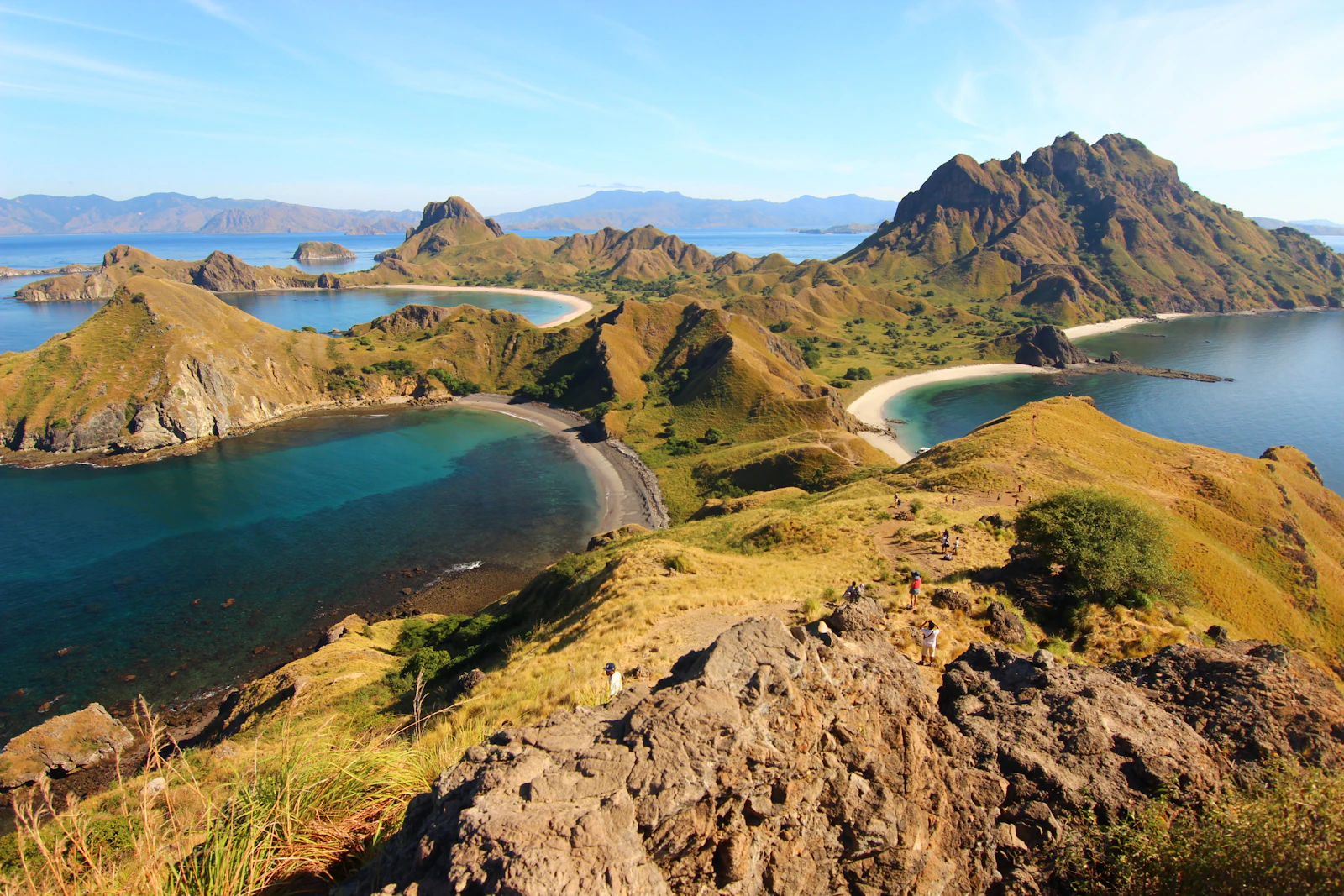
Approval is not a blanket “fly anywhere, anytime” pass. Padar’s viewpoint areas are listed among locations where a drone permit may be approved, but with specific, non-negotiable restrictions:
- No flying over the summit during crowded sunrise hours. The ridge sees its heaviest foot traffic in the first hour after sunrise, and a drone overhead during that window — over other visitors without their consent — is not permitted regardless of your permit status.
- No flying over Komodo dragon trekking zones. This restriction protects both the animals and the ranger-guided groups moving through that terrain, and applies park-wide, not just at Padar.
- No launching at the crowded summit without ranger clearance. Even with an approved SIMAKSI, check in with rangers on-site before launching, since crowd conditions on any given morning may make flight temporarily inappropriate even within permit terms.
In practice, this pushes most approved drone flights to quieter windows — later morning after the sunrise crowd disperses, or specific pre-arranged slots coordinated with rangers — rather than the exact golden-hour minutes most photographers actually want. Plan your shot list with that constraint in mind.
What’s proposed vs. what’s actually in force right now?
Drone and access rules around Komodo National Park have shifted more than once in recent years, and it’s worth being precise about which rules are currently enforced versus which have been discussed or proposed and never fully implemented. What is confirmed and in force as of 2026: the SIMAKSI permit requirement, its approximate cost, and the no-fly restrictions over crowded summits and dragon zones listed above. Broader proposals around park-wide drone bans or blanket restrictions have circulated in Indonesian conservation policy discussions from time to time — treat anything beyond the SIMAKSI framework above as unconfirmed until your operator or the park authority verifies it for your specific travel dates, since policy on this can move faster than travel blogs update.
Do I need to register my drone with Indonesian customs?
Separate from the park-specific SIMAKSI permit, bringing a drone into Indonesia as a tourist can involve general customs declaration requirements that apply regardless of destination within the country. This is distinct from, and in addition to, the conservation-area permit covered above — if you’re flying into Indonesia specifically for aerial photography, it’s worth confirming current customs rules for your entry airport (commonly Bali’s Denpasar or direct into Labuan Bajo) with your airline or a customs broker ahead of travel, since this changes independently of park policy.
Getting aerial-style shots without a drone
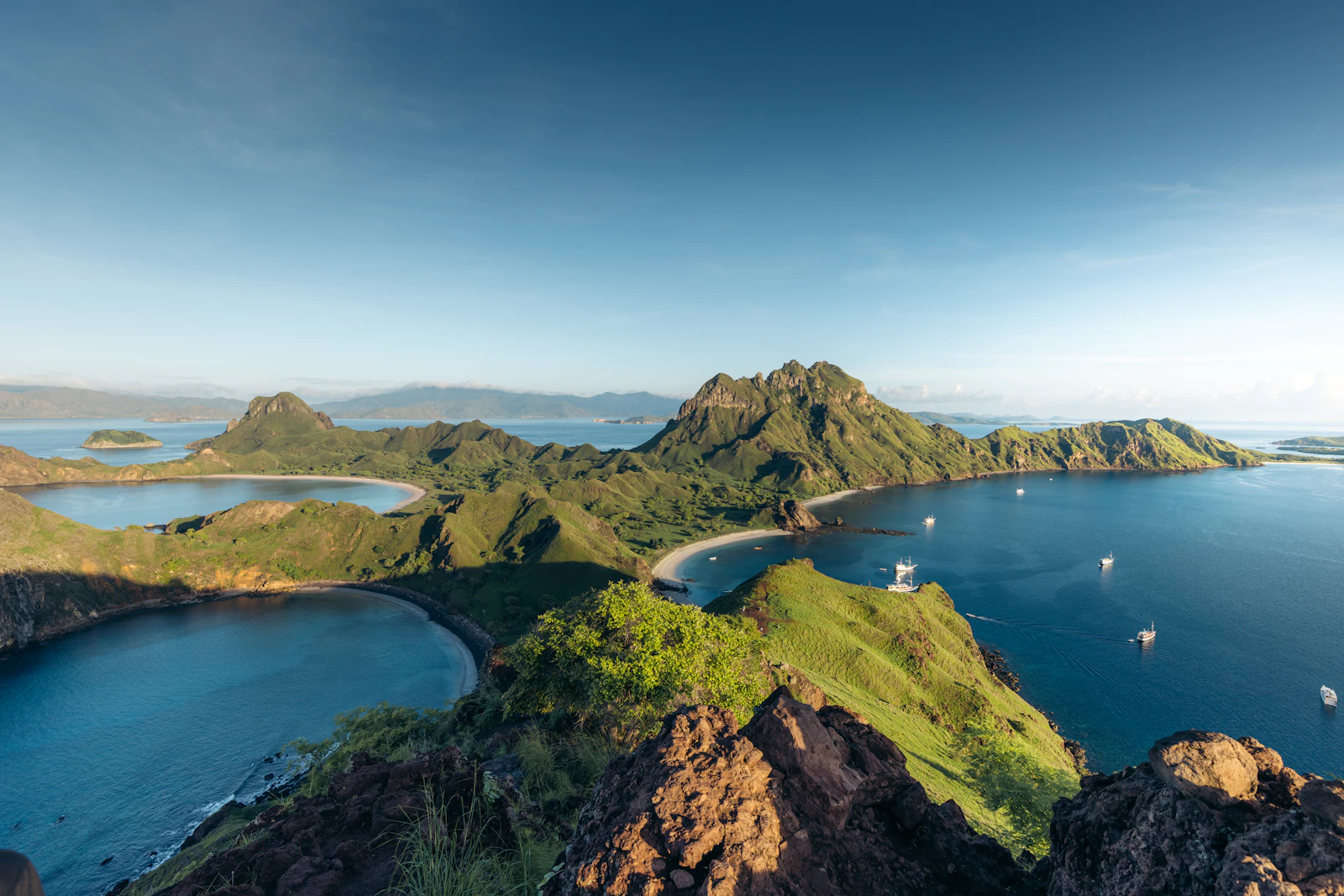
Padar’s summit is high enough (roughly 170–270 m above sea level, depending on which viewpoint is measured) that a well-composed handheld or tripod shot from the marked viewpoint captures most of what a drone would add — the three-bay composition is visible in full from ground level, which is precisely why the location became famous in the pre-drone era of travel photography. A wide-angle lens, a panorama mode, or simply shooting from the highest legally accessible point on the boardwalk gets remarkably close to the “aerial” look many travellers assume requires a drone. For travellers who decide the permit process isn’t worth it for a single stop, this is a genuinely competitive alternative rather than a consolation option.
Which drones are commonly used by permitted photographers here
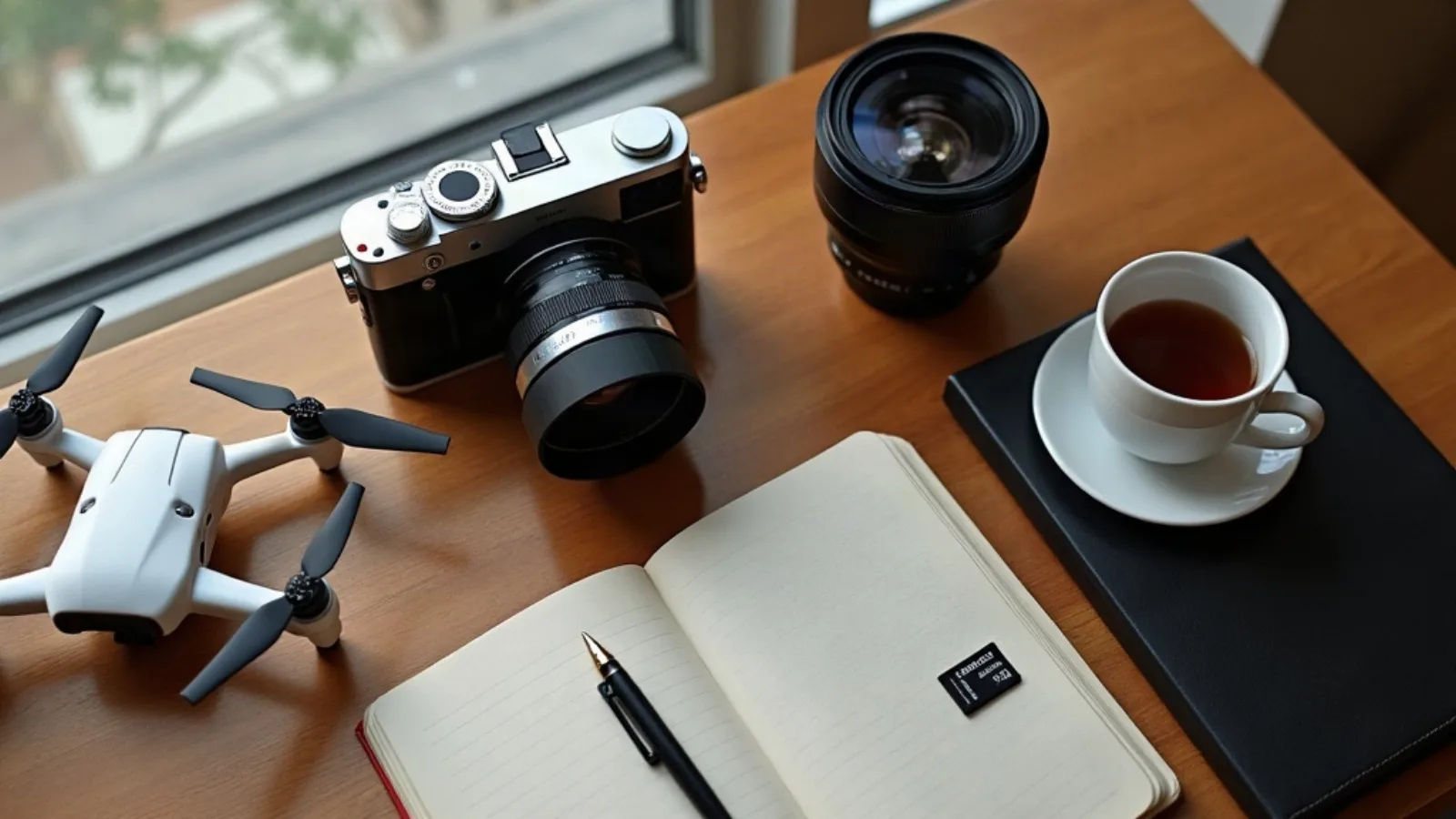
Compact, lightweight consumer drones (sub-250g category models, commonly from DJI’s Mini series) are the most frequently permitted category for tourist photography in Komodo National Park, partly because their lower weight and lower noise profile create less disturbance to wildlife and other visitors than larger professional rigs. If you’re weighing which drone to bring specifically for this trip, a lighter, quieter model both simplifies the SIMAKSI application (weight and specs are part of what’s declared) and reduces the practical risk of a ranger objecting to flight near other hikers on a crowded morning.
Can my tour guide fly a drone for me if I don’t have a permit?
No — the SIMAKSI permit is tied to the specific drone and operator flying it, not transferable informally to a guide on your behalf without the same documentation and approval process.
What happens if I fly without a permit?
Confiscation of the drone is a realistic, documented consequence, separate from any further penalty under Indonesian conservation-area regulations. This is not a soft rule enforced inconsistently — rangers actively watch for unpermitted flight at popular viewpoints like Padar precisely because it’s a common violation.
Is a permit worth it for casual, non-professional drone photography?
For most casual travellers, the cost (~USD 120/day) and 1–2 week lead time make a permit worthwhile mainly if aerial footage is a specific priority for the trip, rather than a “might as well” add-on. A tripod and a wide-angle phone or camera lens from the summit itself captures Padar’s three-bay panorama well without needing airspace clearance at all.
Can I fly a drone from the boat instead of from the island?
The same conservation-area restrictions generally apply to the airspace over the park, not just the land itself — confirm the specific terms of your SIMAKSI permit rather than assuming flying from a boat deck sidesteps the requirement.
Can I apply for a Padar Island drone permit myself, or does it need to go through my tour operator?
You can apply yourself, but an operator is usually faster. Independent travellers can technically apply directly, though most find it far simpler to route the request through an experienced Labuan Bajo operator who already knows the current documentation requirements and processing office — this generally shortens the practical lead time compared to a first-time independent application.
Does the drone permit cost change for multi-day trips?
Yes. Since the fee is charged per drone, per day, a 3-day charter with planned drone use on each day costs roughly three times the single-day rate, so factor this into your total trip budget rather than assuming a single flat permit fee covers the whole itinerary.

For help coordinating a drone permit timeline alongside your boat booking, reach out via the contact page, or start with the standard Komodo boat trip options and add the permit request once your travel dates are confirmed.
Last updated: 24 August 2026. Permit terms can change — always confirm the current status with your operator or the national park authority before departing.
The default is no
Drones are banned inside Komodo National Park unless a SIMAKSI permit says otherwise. Treat Padar as a no-fly zone and assume you cannot launch — not even for one quick shot — without paperwork in your own name. Regular entrance and trekking fees do not cover it, boat captains cannot bundle drone rights into a package, and rangers actively patrol the jetty and lower trail. Unauthorised flights risk equipment confiscation and fines under conservation regulations, and there is no version of this where calling the aircraft a toy helps.
Permission is genuinely possible, just never automatic. A SIMAKSI is issued case by case through the park authority, covering specified locations, dates and times, and it is applied for well in advance with details of the drone, the pilot’s credentials, the flight plan and the purpose. Tour operators can help with logistics, but the legal responsibility stays with the permit holder. The permit is issued to a named individual or organisation and is not transferable to friends or other guests on the same boat; it typically covers one aircraft, so bringing a second drone or swapping pilots without notice breaches its terms. Read the conditions properly — some require post-visit reporting or sharing certain footage with the park.
Because the SIMAKSI covers the wider park rather than Padar alone, you can request a multi-location filming plan in one application. Be realistic about how many sites fit into a day once crossings and light are counted; an over-ambitious plan produces rushed flying, which is where safety compromises start, especially in choppy conditions.
The fee is separate from park entry and ranger charges and is set substantially higher to reflect commercial-type use. Budget for it alongside boat and guide costs if aerial work is essential, and carry receipts along with printed and digital copies of the permit, since different checkpoints may ask for proof.
Flying with a permit still means flying on their terms
Approval defines a window, not an open sky. Sunrise flights are only permitted if your letter explicitly covers that hour and place, and even then rangers can refuse a launch when the staircase and viewpoints are crowded, because prop noise and rotor wash affect everyone else on a narrow ridge. The park generally prefers quieter mid-morning or late-afternoon operations to the sunrise crush. Civil daylight rules still apply — no night flights — and battery swaps and launches all have to fit inside the authorised slot and your boat’s schedule.
At the main viewpoint, launches and landings are often restricted or banned outright simply because the space is small and permanently busy. Expect to be redirected to flatter ground on the lower terraces or nearer the jetty, which is better anyway: more room to recover from a gust and less rotor wash over people. Improvising from steep steps or a crowded platform is how collisions and falls happen. Plan compositions that work from the secondary terraces, and accept that the drone stays grounded while groups are queueing for their own photographs.
Shots over the bays are legal only if your permit covers them, and it may define corridors over water and a maximum altitude. Never fly directly over swimmers, snorkellers or tightly packed boats. Do not linger above groups at the viewpoint, and do not follow wildlife with tracking shots — many permits prohibit flying over nesting or feeding areas outright, and rangers will intervene if your framing creates disturbance even when it sits technically inside the mapped area.
Your park entry limits apply unchanged. A drone permit does not exempt you from the daily visitor quota, the SiORA reservation or your assigned session, so build flexibility into the plan in case sea conditions, crowding or an operational decision shortens your landing window. Coordinate with your captain too, so they understand the filming plan and avoid manoeuvring beneath or close to the aircraft.
Flying safely on a ridge
The terrain here is the hazard. Thermals and crosswinds funnel through the saddles between peaks and will challenge a smaller drone, so keep wide separation from the staircase, the ridgelines and anchored boats, set conservative return-to-home heights so the aircraft clears terrain, and pick landing zones on flat ground near the jetty rather than a tight space on uneven rock. Keep line of sight, run a short test hover to confirm GPS lock and read the wind before committing to a longer flight, and abort when conditions shift. Carry spare propellers, but leave any real maintenance for shore rather than the deck of a moving boat.
Composition benefits from restraint as well. The classic angle is slightly elevated behind the upper viewpoint, looking down the spine of the ridge to the three bays; modest side-slips along the ridge give more depth than a high vertical climb, and moderate altitude preserves the layering of foreground ridge, middle-distance bays and background islands that a top-down view flattens away. Very low passes raise privacy and safety questions, and drifting out over open sea puts you where signal and wind are least predictable. Light turns harsh by mid-morning, so settings that hold highlight detail in the bays matter; wider lenses and gentle movement speeds cope better with gusts, and a quick exposure and horizon check just after take-off saves flight time you cannot get back.
One last safety point that is easy to underestimate: fatigue and dehydration after the climb degrade your judgement of distance and your reaction to a wind shift. Only add drone work to a Padar day if you can do it without rushing.
Ground-based photography, which is what most people should plan for
Handheld stills and video from the marked trail are broadly allowed, provided you respect other visitors and do not block the steps. The restrictions concentrate on aerial devices, commercial shoots and anything that disturbs wildlife. Tripods and sliders can be limited during crowded periods, so work quickly at the popular viewpoints and do not set up a large rig across the staircase. Light stands, big reflectors and drones are all treated as professional gear and attract closer oversight; compact, portable equipment is easier on you and on the groups sharing narrow steps.
For most travellers the practical answer is to shoot Padar from the ground and save the drone for locations outside the park. Planning the hike around light and tide gets you remarkably close to the look of familiar aerial images without the legal and safety overhead. The people who do obtain permits are generally working on documentaries or commercial campaigns with structured shot lists, and even they should hold expectations loosely — weather, light and ranger guidance decide what actually happens.
Kites belong on the same list as drones, incidentally, and for concrete reasons: the airspace above the ridges is already shared, lines can snag hikers and disturb raptors, and a fallen line creates hazards for boats below. Save them for open beaches outside the park.
The trail rules everyone shares
Stay on the staircase and the designated viewpoints. Do not cut switchbacks or scramble onto loose side ridges — this protects fragile vegetation and prevents rockfall onto people below, and repeated non-compliance can end your hike early. Keep right on the steps where you can, overtake at the wider bays rather than in narrow sections, and pause for photographs where there is room. Running, loud music and off-path exploring are discouraged, particularly on the steeper stretches. If you are carrying camera gear, pack it so your hands stay free for the handrails on the descent, and keep any walk-and-talk filming brief and planned so it does not create a bottleneck.
Beyond the trail, the safety rules run from the boat to the summit: life jackets as instructed, careful boarding, no jumping from the jetty, no alcohol before trekking, shoes with grip on dusty steps, and steady hydration in the heat. Stay with your group and follow ranger guidance. The hike is managed as a guided experience with set expectations on pace, photo stops and return times, and the cut-off for leaving the summit exists so boats can depart before conditions change — which is also why any filming plan has to fit inside those fixed windows rather than pressuring a group to wait.
Rules here derive from Padar’s status inside a national park and from Indonesia’s conservation laws, and they cover landing times, permitted activities, waste, smoking and equipment. They evolve as management learns from visitor patterns: by 2026 the most visible changes were the SiORA booking system and firmer enforcement of the daily quota, with drone policy still treating aerial work as exceptional. Assume tighter monitoring rather than looser, and structure your itinerary around checks at the jetty and trailhead.
Official material is published by the park with some English available through notices and visitor briefings, but wording changes without much advance publicity. Listen properly to the ranger briefing at the jetty and treat the instructions given on the day as the operative version, even where they differ from an older brochure or a tour company’s summary. Repeat visitors in particular should not rely on what was informally tolerated last time.
Booking the trip itself
This site documents Padar Island; it does not sell tours. Bookings for the boats and packages described above are handled by Komodo Luxury, the operator within the same group as this publication.
- Komodo one-day trip package — the day-trip format most Padar sunrise visitors book.
- Komodo liveaboard — sleeping aboard so you are anchored near Padar before dawn.
- Komodo private trip — a private boat and schedule for your group alone.
Questions about a specific date or vessel go to WhatsApp +62 811-3823-875 or sales@komodoluxury.com.
This guide does not operate boats. Bookings are fulfilled by Komodo Luxury, and this site may earn a referral commission.
Ready When You Are
Ready to book?
Chat directly on WhatsApp with the Komodo Luxury team.
This guide does not operate boats. Bookings are fulfilled by Komodo Luxury, and this site may earn a referral commission.