

Journal
One Day Padar Island Trip: Hour-by-Hour Plan
A realistic one-day Padar Island trip from Labuan Bajo runs roughly 04:00 pickup to 15:30–17:00 return, built around a pre-dawn speedboat crossing so you land in time for sunrise light…
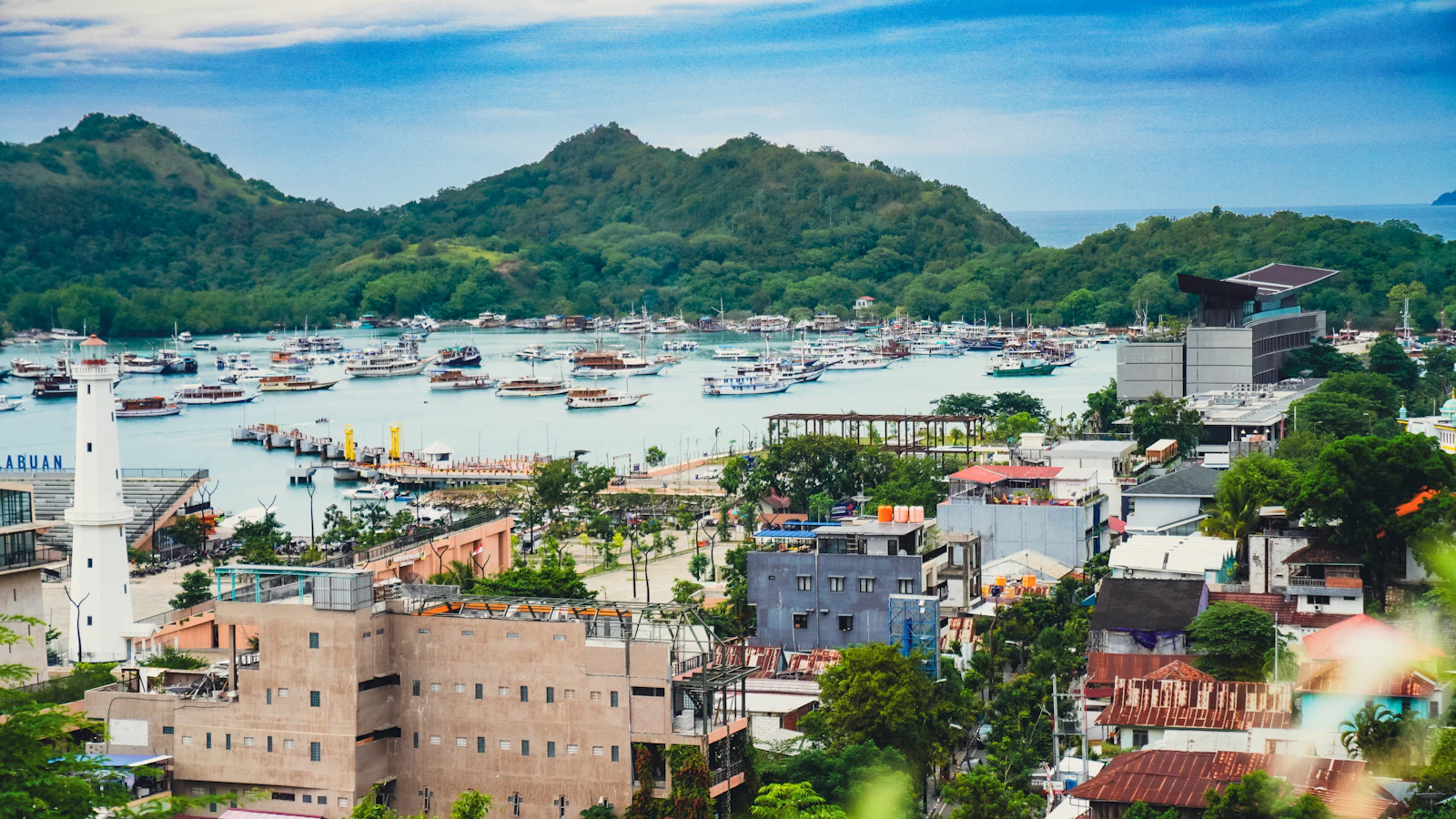
A realistic one-day Padar Island trip from Labuan Bajo runs roughly 04:00 pickup to 15:30–17:00 return, built around a pre-dawn speedboat crossing so you land in time for sunrise light on the summit. The single point most itineraries gloss over: if the boat leaves even 20–30 minutes late, the second stop (usually Pink Beach) is what gets shortened or cut — not the Padar hike itself.
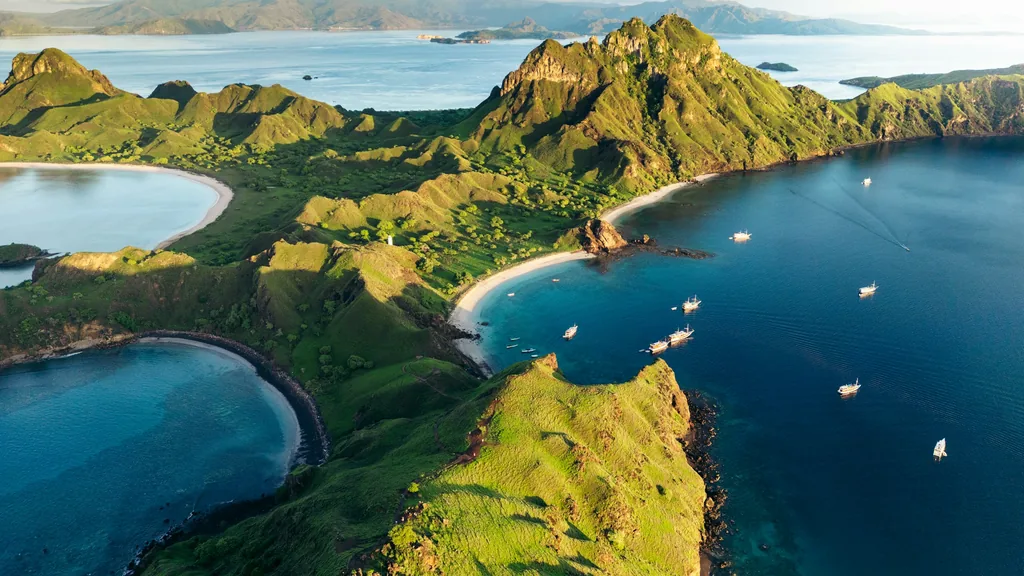
The actual hour-by-hour schedule
This is the schedule used by most Labuan Bajo speedboat operators for a Padar-focused day trip, not a marketing-brochure version:
| Time | What happens | Why it matters |
|---|---|---|
| 04:00–04:15 | Hotel pickup | Padded 15 minutes for Labuan Bajo’s early-morning traffic and finding your driver in the dark |
| 04:15–04:30 | Arrive harbour, board boat | Life jackets and a safety briefing happen here — don’t skip listening even if you’ve done this before |
| 04:30–07:00 | Crossing to Padar (2–2.5 hours by speedboat including weather buffer; a direct nonstop speedboat crossing typically runs 60–120 minutes) | This is the leg most affected by sea conditions; rough water can add 30–45 minutes |
| 07:00–07:15 | Landing, walk to trailhead | First light is often already happening — this is why the 04:00 departure matters more than it sounds |
| 07:15–08:00 | Hike to summit viewpoint (25–45 min at a steady pace) | approximately 800–840 boardwalk steps (no official count published), roughly 170–270 m of elevation gain, the spread reflecting which of the three viewpoints is measured; no shade the entire way |
| 08:00–08:20 | Time at the summit | This is the entire reason for the early start — don’t rush it, but watch your total time budget |
| 08:20–09:00 | Descend, return to boat | Descending is faster but harder on knees; take it slower on the steepest sections |
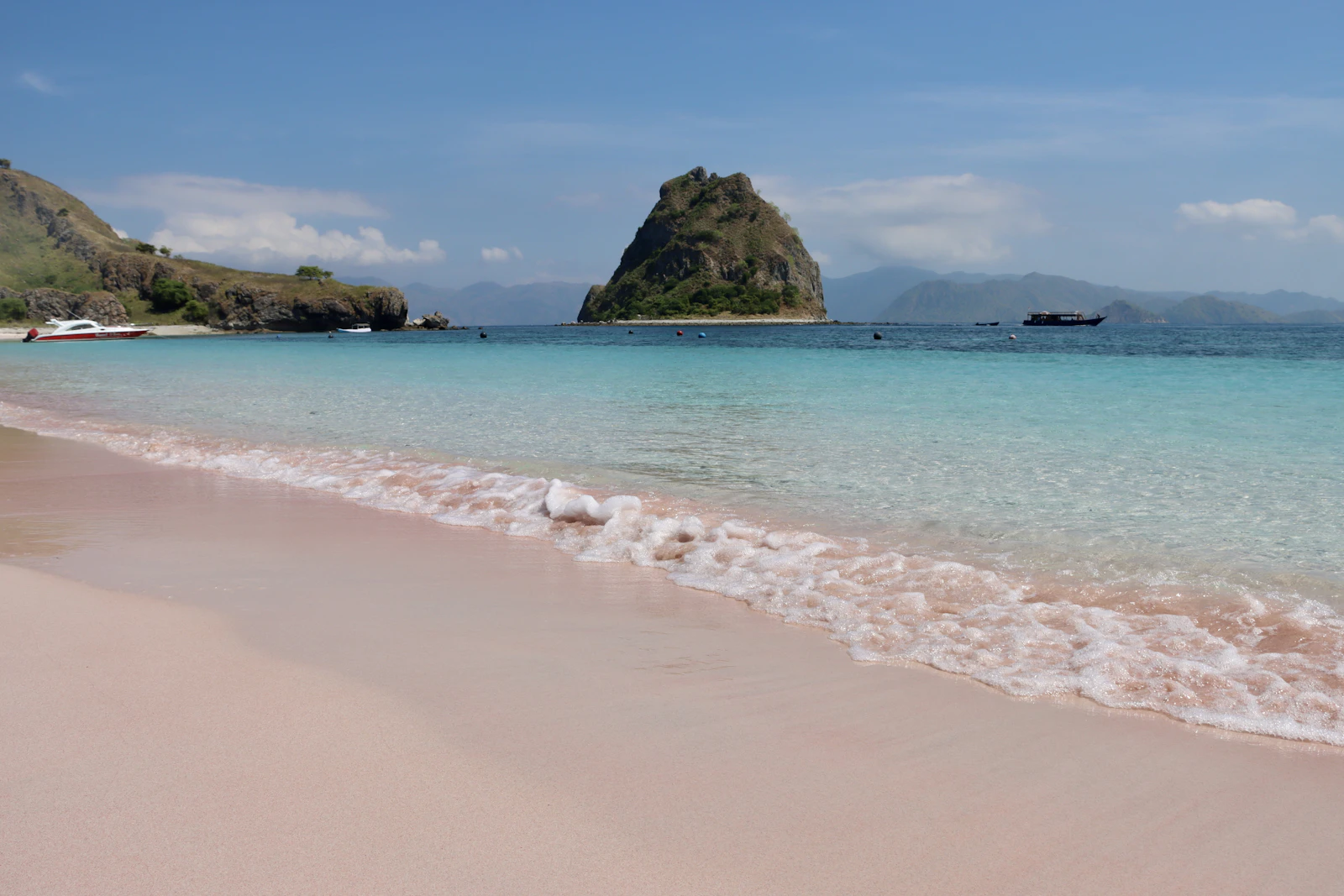
| 09:00–11:00 | Sail to second stop (typically Pink Beach) | This leg is the one that gets shortened first if the morning ran late |
| 11:00–12:00 | Swim, snorkel, or beach time | Often the first real rest of the day |
| 12:00–13:00 | Lunch aboard or on the beach | Confirm with your operator whether lunch is included before departure |
| 13:00–15:30 | Return crossing to Labuan Bajo | Longer than the outbound leg on some routes depending on tide and wind direction |
| 15:30–17:00 | Disembark, transfer back | Build buffer here if you have a same-evening flight out of Labuan Bajo |

What actually gets cut when the boat runs late
Operators protect the Padar hike itself because it’s the reason clients booked the trip — but everything scheduled after it is flexible, and that flexibility gets used. In practice, a late start most often shortens or removes the second stop’s swim time, compresses lunch into a faster on-the-move meal, or occasionally drops a planned third stop entirely. If you have a specific second stop you care about (Pink Beach’s coral, for instance, rather than just any beach), say so explicitly when booking rather than assuming it’s guaranteed on a shared open-trip departure.
The other place time disappears is the hike itself if your group has a wide range of fitness levels — the schedule above assumes a steady 25–45 minute ascent, but a mixed group moving at the slowest member’s pace can take closer to an hour each way, eating into the buffer built around the second stop.
Can you really do Padar Island as a day trip from Bali?
Not comfortably in the true sense of flying in and out same-day — Bali to Labuan Bajo is roughly a 1-hour-15-minute flight each way, and the earliest useful arrival plus the boat schedule above doesn’t fit into daylight hours without an overnight in Labuan Bajo first. Most “Padar Island from Bali” itineraries are actually two days: fly in, sleep one night in Labuan Bajo, do the day trip above, fly out the next afternoon or the day after.
What to bring for this specific schedule
- Headlamp or phone flashlight — the 04:15 boarding and pre-dawn landing both happen in the dark.
- 1.5–2 litres of water — there’s no vendor on Padar, and the exposed hike has zero shade in a climate whose daily highs sit around 28–33°C, and the unshaded steps feel considerably hotter by mid-morning.
- Closed-toe shoes with grip — the boardwalk steps get slippery with morning dew in the first hour of daylight.
- Reef-safe sunscreen applied before boarding — you won’t want to stop and apply it once the hike starts, and the second-stop swim needs it too.
Weather contingency: what happens if the crossing gets rough
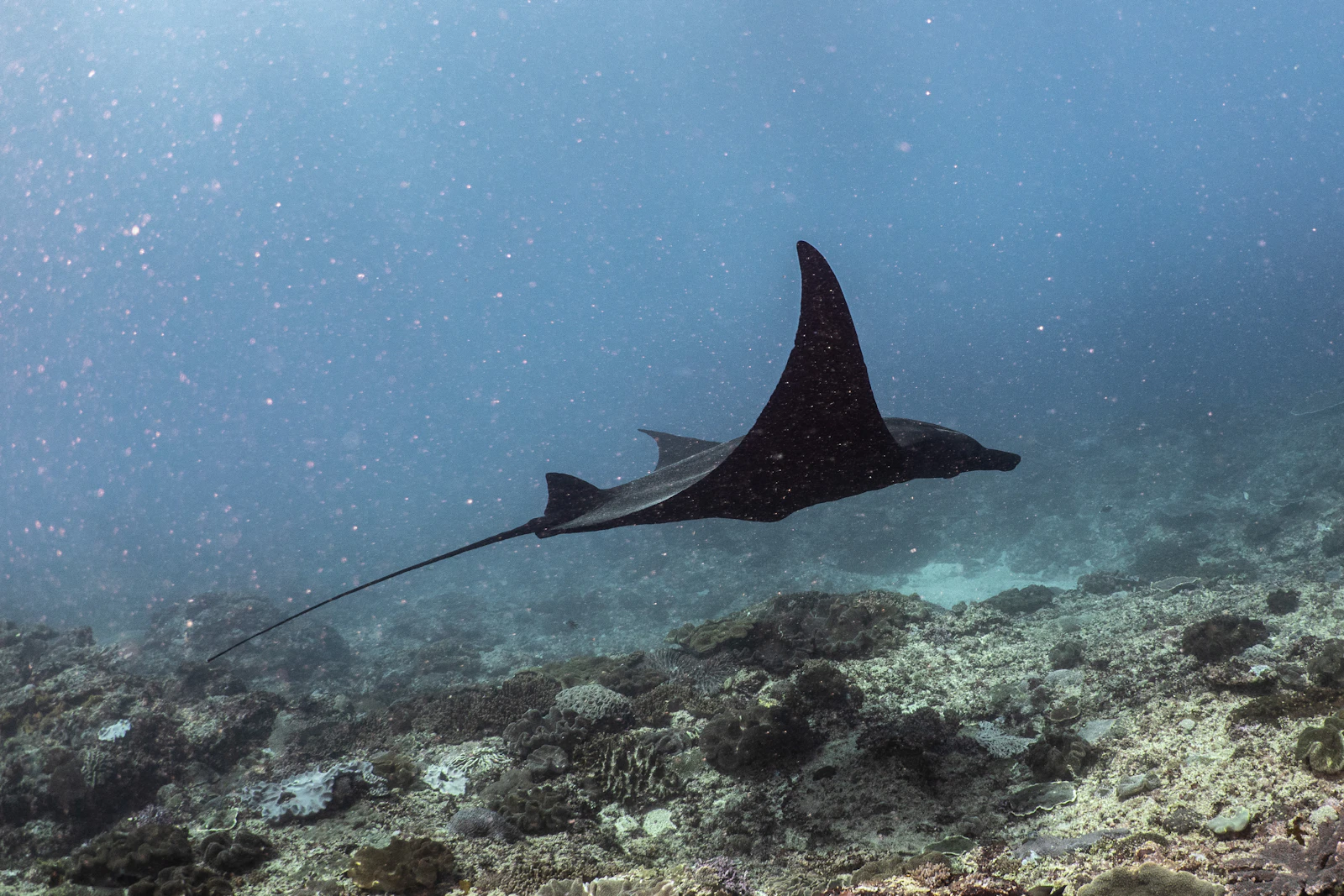
Speedboat crossings to Padar happen across open water, and wind or swell can add real time to the schedule above — sometimes 30–45 minutes each way in marginal conditions, occasionally a full reschedule in genuinely rough weather. Dry season (April–November) carries lower risk of this than the December–March wet season, but it isn’t zero in either period. A well-run operator will make the call to slow down, adjust the route, or reschedule entirely rather than push a fast crossing in poor conditions — treat a delayed or adjusted departure as the system working correctly, not a service failure. Build at least a half-day of buffer into your Labuan Bajo stay if your onward flight is same-day.
Getting the most out of the schedule photographically
The 07:00–08:20 summit window in the schedule above is built around first light, but the light itself keeps shifting through that window — the flattest, most saturated colour on the three bays typically appears in the first 15–20 minutes after the sun clears the horizon, before the light gets harsher and more directly overhead. If photography is a priority, spend your first few minutes at the summit shooting rather than resting, and save the slower, more relaxed viewing for after you’ve captured the shot you came for. A wide-angle lens or phone panorama mode captures the three-bay composition better than a standard zoom framing.
How this schedule compares across different operators
Not every Labuan Bajo operator runs an identical version of this timeline. Some budget shared open-trip departures push the wake-up call earlier (03:30–03:45) to guarantee first-light arrival with margin for slower boats; some private charters offer a slightly later, more comfortable 04:30–05:00 departure by using a faster boat that closes the gap. When comparing quotes for what looks like the same “one-day Padar trip,” ask for the actual departure and return times rather than assuming they match — a 45-minute difference in departure time can be the difference between catching genuine sunrise light and arriving after the best 20 minutes have passed.
What time should I actually arrive if my hotel pickup is scheduled for 04:00?
Be ready 5–10 minutes early. Labuan Bajo pickup drivers run tight, multi-hotel routes before dawn, and a late guest can push the whole boat’s departure back — which then cascades into the second-stop time getting cut, as covered above.
Is the one-day trip worth it, or should I do 2D1N instead?
The one-day trip is worth it specifically if Padar’s sunrise is your main goal and your schedule is tight. If you also want a proper Komodo dragon trek at Rinca or Komodo Island, that generally doesn’t fit into the same single day without cutting Padar’s own time short — see the full itinerary guide for how a 2D1N or 3D2N version balances both.
Do all one-day Padar trips include a second stop?
Most do, typically Pink Beach, but not all — confirm the exact route when booking rather than assuming. A day trip advertised simply as “Padar Island tour” without a named second stop may be Padar-only.
What if I miss the boat’s departure time?
Speedboat day trips generally cannot wait for a late arrival beyond a few minutes, since the entire schedule is built around catching sunrise light at the summit — missing departure typically means rebooking for a different date rather than a delayed same-day start. This is the practical reason the buffer built into the pickup time above matters more than it might seem for a “just a few minutes” delay.
Should I eat breakfast before the 04:00 pickup?
Yes, something light. Most one-day schedules don’t serve a proper meal until after the hike, closer to 09:00–11:00 at the second stop, and climbing 800+ steps on an empty stomach in mid-30s heat is harder than it needs to be.
Is this schedule the same for a private speedboat charter?
Broadly yes, though a private charter can shift the departure time by 15–30 minutes in either direction to suit your group, since it isn’t coordinating multiple hotel pickups for unrelated passengers the way a shared open-trip does.
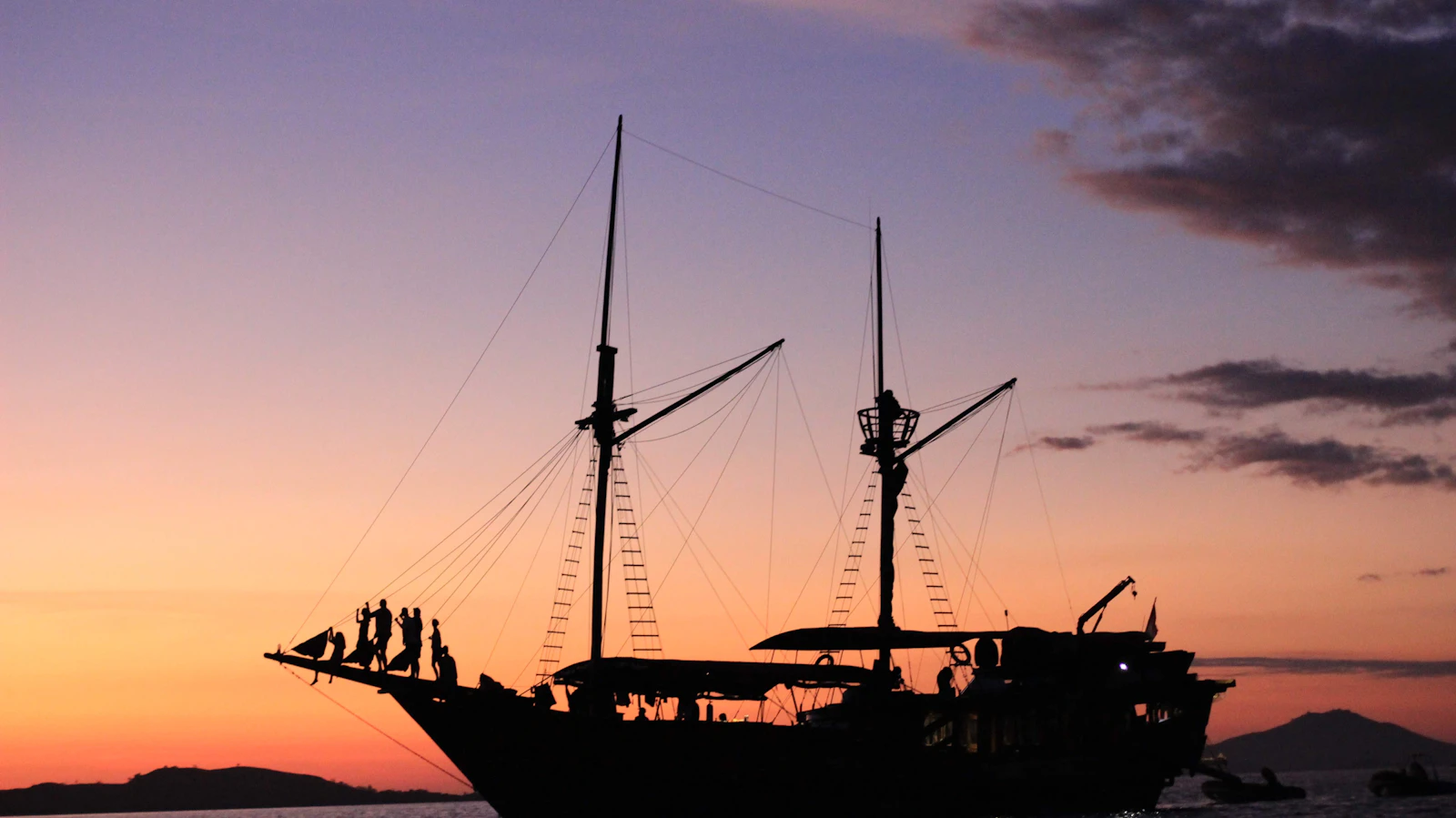
For current one-day and multi-day boat options with confirmed Padar stops, see Komodo Luxury’s boat trip page, or check the full cost breakdown for what a day trip like this typically costs by boat class.
Last updated: 24 August 2026.
The one decision the whole day hangs on
Fix the hike start time and everything else falls into place: wake-up, breakfast, which SiORA session you hold, when the boat leaves, when you check out of the hotel. Get it the other way round — booking a boat and hoping a session fits — and the day starts compressing before it begins.
The earliest organised departures exist to put people at the trailhead before sunrise, working inside the 05:00–08:00 park session. They board in the dark and land as the sky starts to lift, and they book out sooner than later slots, so lock in both the tour and the SiORA reservation before you travel rather than after you land. Confirm boarding and departure times the evening before, because operators fine-tune them against the morning’s conditions. Boarding itself usually starts a few minutes before the advertised time for briefings and seating, and on early crossings crews move guests down the jetty as soon as everyone has arrived; being late does not delay the boat so much as it eats your time on the island or forces a later stop to be cut.
The return time is the other bracket. Skippers set it against sea state, fuel range and the last activity on the schedule, and a sensible buffer before dark lets them slow through rougher stretches, rinse gear and still get you back for an evening meal. Tides mostly affect how workable the jetty is and how much swell you feel stepping on and off, so operators pick slots when the dock behaves and sometimes reorder stops around Padar to suit the water. Follow the crew when moving between boat and pier, especially at low tide or in chop.
One piece of honest advice about arrival day: if you land in Labuan Bajo late at night, do not book Padar for the next morning. Fatigue makes both the pre-dawn crossing and the staircase noticeably harder, and the trip is better spent on your first properly rested day.
What actually fits in a single day
A Padar day trip works comfortably by speedboat. The crossing and the climb still leave room for one or two additional stops — Pink Beach, a snorkel site — provided the boat leaves early and does not idle in harbour. Wooden boats can do it too, but the slower crossing eats into your time on the island. The standard shape is: cross, anchor, hand over to the ranger team, climb immediately so your viewpoint time falls inside the session, descend, then one or two short water stops, and back in town by late afternoon depending on conditions.
Padar and Komodo Island together in one day is feasible and genuinely rushed. It needs an early speedboat, a disciplined climb, and enough margin for the ranger-led dragon walk before the afternoon exodus of boats. Expect very little beach or snorkel time and a schedule that feels tight throughout. If you only have one day and have to choose, Padar gives the ridge panorama and a short climb; Komodo gives dragons with rangers. Attempting both compresses each.
Two days on a liveaboard or charter changes the character completely. You can take one climb at sunrise and another in the softer afternoon light, use the extra hours for snorkelling or quieter bays, and spread the crossings so nothing feels forced. Over three days, the usual pattern folds Padar into a wider loop: Padar and nearby snorkelling on day one, Komodo or Rinca dragons plus beaches on day two, manta or reef sites before returning. Build it around your genuine priorities and pick a shared phinisi or a private charter depending on how much control you want over timing.
On cost, a standard one-day trip runs roughly IDR 400,000–525,000 per person for a foreign visitor, covering official park entrance and typical ranger charges but not premium private charters — the variation is mostly boat class and group size. Savings come from sharing rather than chartering and from travelling outside peak local holidays, since the park fee itself is fixed. Check what a quote genuinely includes: ranger fees, a simple lunch, snacks, snorkel gear and hotel transfers are the items that quietly close the gap between a budget tour and a mid-range one.
There is no public ferry timetable to work from. Trips run on tour and charter schedules aligned with the park sessions and with daylight, clustering around sunrise crossings and mid-morning or early-afternoon departures. Private charters are more flexible but still bound by park hours, ranger availability and the requirement to leave Padar before dark.
Timing for light, and timing for people
Sunrise is the most sought-after slot: milder temperatures, softer light, and the best conditions for photographs. Late afternoon works nearly as well, provided you leave enough margin to descend safely and meet the boat. Midday is hotter and harsher on the eyes, so if that is your only option, carry more water and take sun protection seriously.
For a photography-led day, that means either a pre-dawn speedboat or a later charter reaching Padar by mid-afternoon. Talk to the operator about exact landing and departure times, ask explicitly whether you can stay longer at the summit, and settle the drone question against SIMAKSI rules before you travel rather than at the jetty. Once up there, use the session to work different angles along the ridge instead of camping on the first platform, and agree with your guide how long you can reasonably stay before it starts eating later stops. Pack lens cloths, dry bags for spray on the crossing, and a light tripod only if your boat allows it.
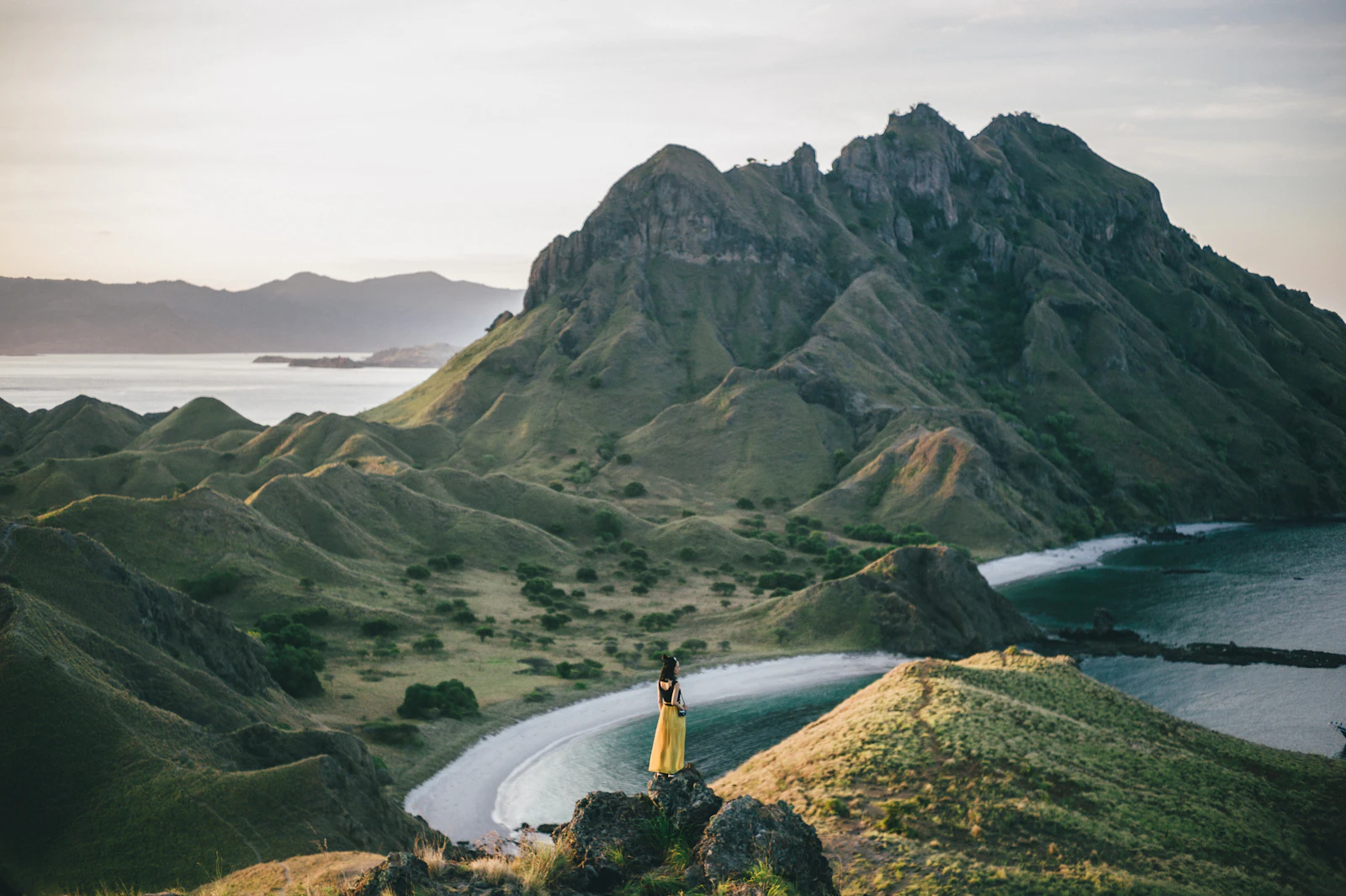
The classic summit frame comes from angling slightly along the ridge so two or three curving bays fill the background. Early light gives softer colour, late afternoon throws shadow across the hillsides, and simple contrasting clothing keeps a person legible against the muted tones. Be patient about taking turns at the popular spots — everyone is working the same few metres.
Cloud is not a lost morning. An overcast dawn still gives moody light and a clear read on the island’s contours, and it is considerably kinder on slower hikers than direct sun. Ask your guide whether to wait at the top in case it breaks, or to put the time into snorkelling later instead.
Older travellers generally do best in the cooler hours just after sunrise or in the later afternoon, which cuts heat stress and allows frequent breaks. Allow more than the usual 25 to 45 minutes, bring poles if balance is a concern, and agree in advance how far each person wants to go so nobody feels pushed on the steps. The second viewpoint, partway up the staircase, is the useful compromise: the three bays already start to align there, the climb to it is much gentler, and at peak moments it holds fewer people than the top.
If you want to arrive better prepared, a few weeks of regular stair-climbing or uphill walking before the trip does more than anything else — steady pacing rather than intervals, since the challenge is sustained gradient in heat rather than speed. The trail alternates staircases with short earthen stretches and has handrails in the steeper zones; leave room for people moving at different speeds and step to the edge when you stop for photographs.
Two calendar notes. Padar does not close for Eid, but demand spikes and the park-wide quota fills quickly, so book the session as early as you reasonably can and expect busier viewpoints. And after dark the risks are real — poor visibility on steep ground, loose gravel, and the difficulty of coordinating with boats in low light. Rangers discourage being on the trail at night, and there is no lighting and no emergency service beyond the basic post, so plan to be off the viewpoint well before dusk.
Finally, if your only free slot is an evening in town, Labuan Bajo’s own viewpoints are the sensible answer rather than a rushed Padar attempt: easy to reach, good for sunset silhouettes over the harbour islands, and free of logistics. Padar is the more dramatic landform, but it is a boat trip and a park entry, and it wants a proper morning.
Booking the trip itself
This site documents Padar Island; it does not sell tours. Bookings for the boats and packages described above are handled by Komodo Luxury, the operator within the same group as this publication.
- Speedboat charter — the fastest crossing from Labuan Bajo.
- Private boat charter — whole-boat hire with your own schedule.
- Komodo liveaboard — sleeping aboard so you are anchored near Padar before dawn.
Questions about a specific date or vessel go to WhatsApp +62 811-3823-875 or sales@komodoluxury.com.
This guide does not operate boats. Bookings are fulfilled by Komodo Luxury, and this site may earn a referral commission.
Ready When You Are
Ready to book?
Chat directly on WhatsApp with the Komodo Luxury team.
This guide does not operate boats. Bookings are fulfilled by Komodo Luxury, and this site may earn a referral commission.