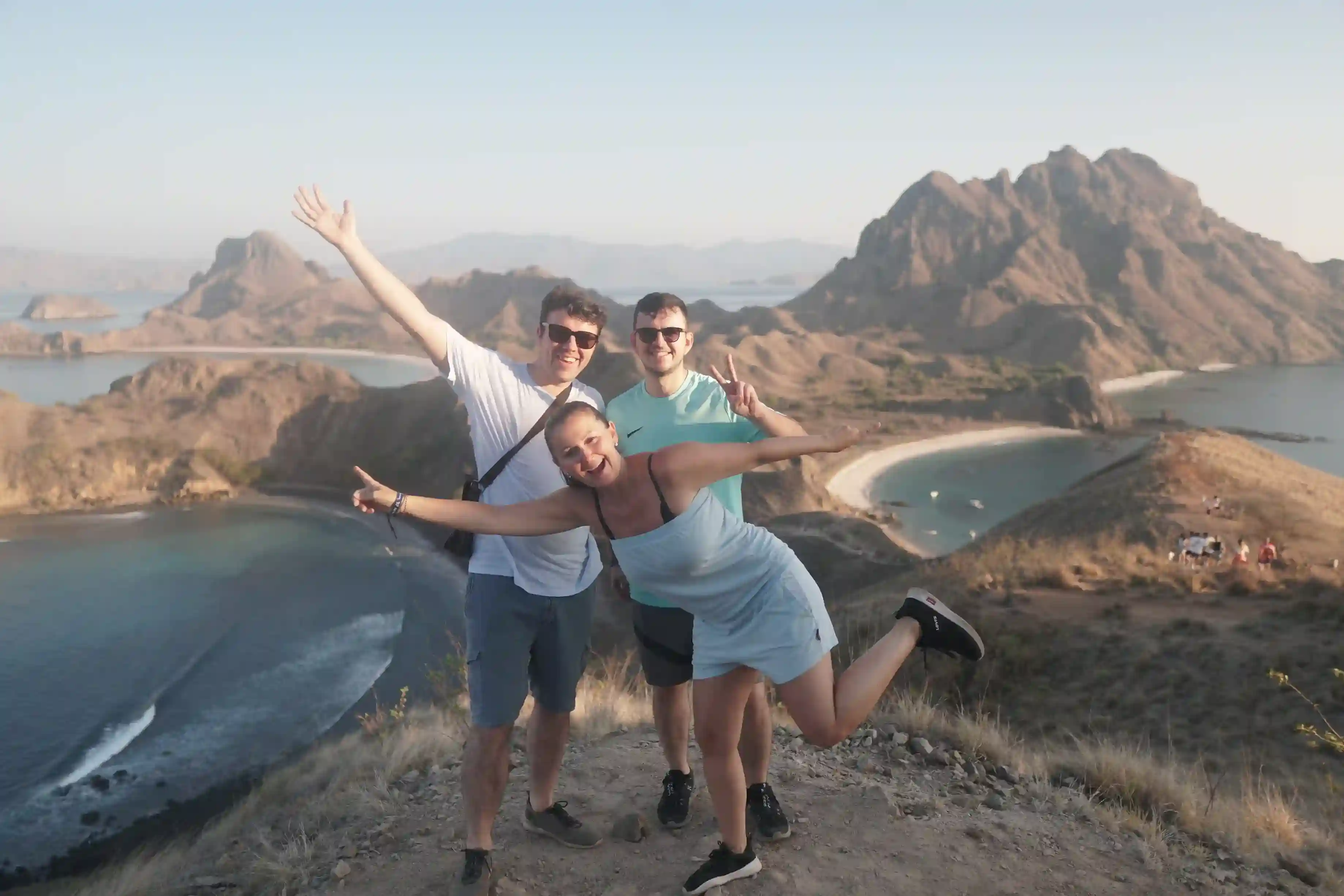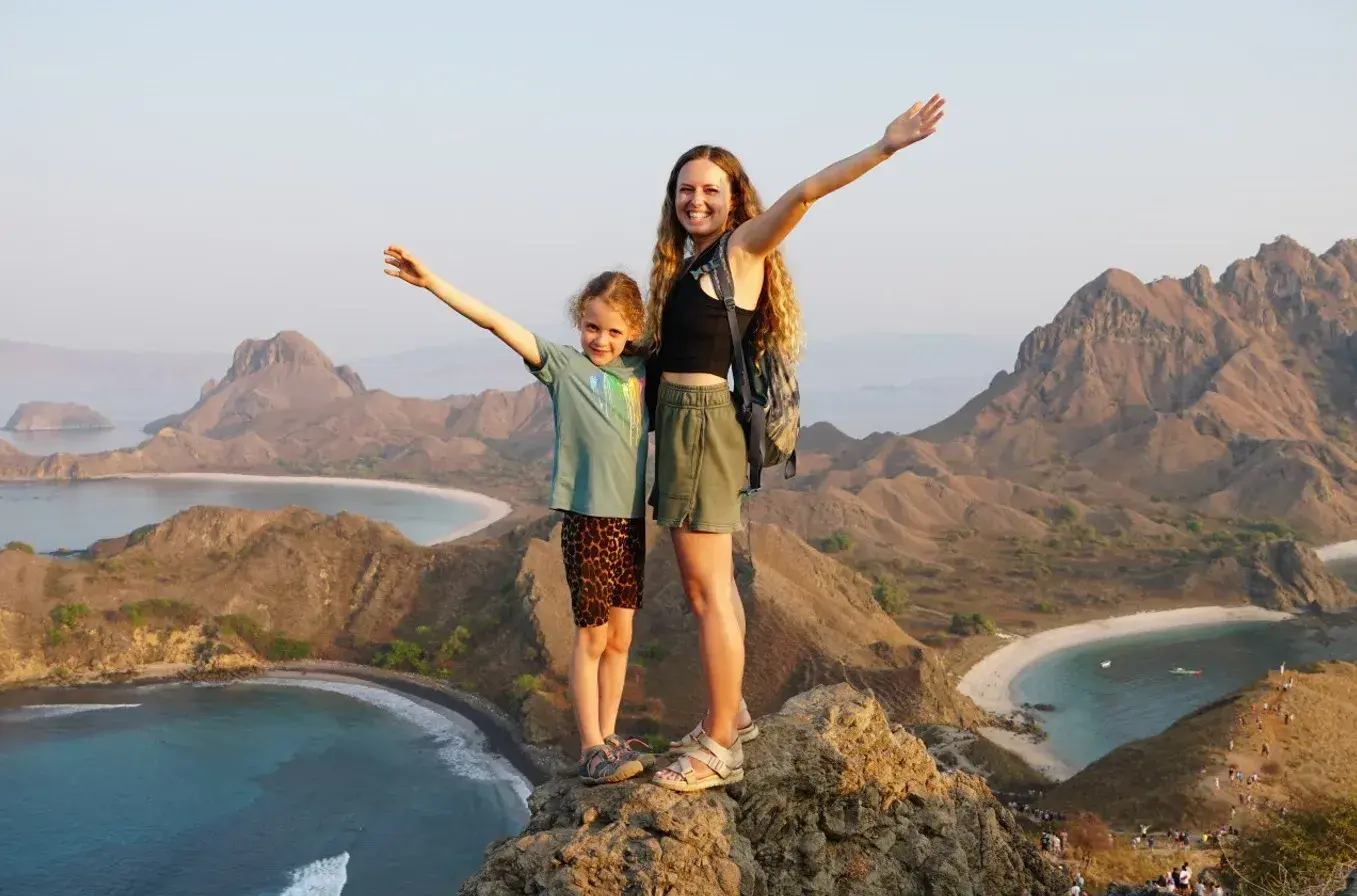

Short answer: Most healthy children aged 7 and up, and most active seniors well into their 70s, complete the Padar Island hike comfortably at a slow, paced climb using the trail’s six rest points — but the trail itself is stone-and-wood steps with no wheelchair access and no easy alternative route to the summit view. Non-swimmers can join the boat trip without issue since the hike itself requires no swimming at all. Details on what to actually expect, by group, below.
Last updated: August 23, 2026.

Can kids hike Padar Island?
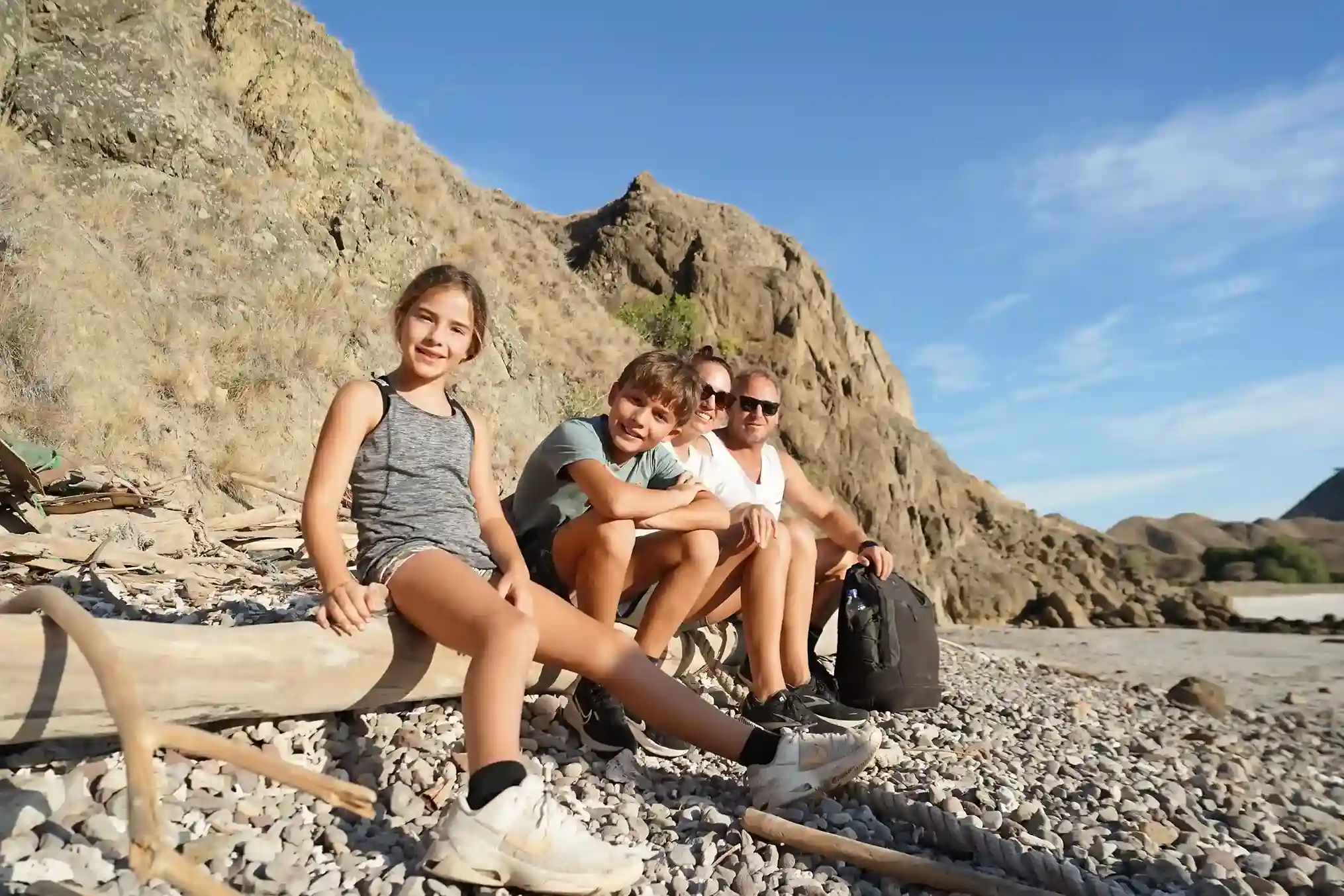
Yes, with real caveats. Children as young as five have completed the climb according to operator and traveler reports, but age alone isn’t the right filter — a fit, motivated seven- or eight-year-old who’s used to walking often manages the roughly 800–840 steps (no official count published) more easily than a reluctant ten-year-old. What matters more than age is whether the child can sustain 20 to 40 minutes of intermittent stair-climbing in tropical heat without a stroller, carrier, or shade. Practical notes for families:
- Do the hike as early as possible — the 5:00–8:00 AM slot avoids both crowds and the worst heat, which matters more for kids than adults.
- Carry more water than you think you need; kids dehydrate faster and show it later than adults do.
- Use the six rest points deliberately rather than pushing through — turn a rest stop into a “spot the beach colors” game rather than a forced pause.
- Have a clear turnaround plan. Not every child needs to reach the very top for the trip to be worthwhile; the view improves steadily well before the final viewpoint.
- A soft carrier works for toddlers who won’t walk the whole way, but there’s no stroller-friendly surface anywhere on the trail.
Can seniors hike Padar Island?
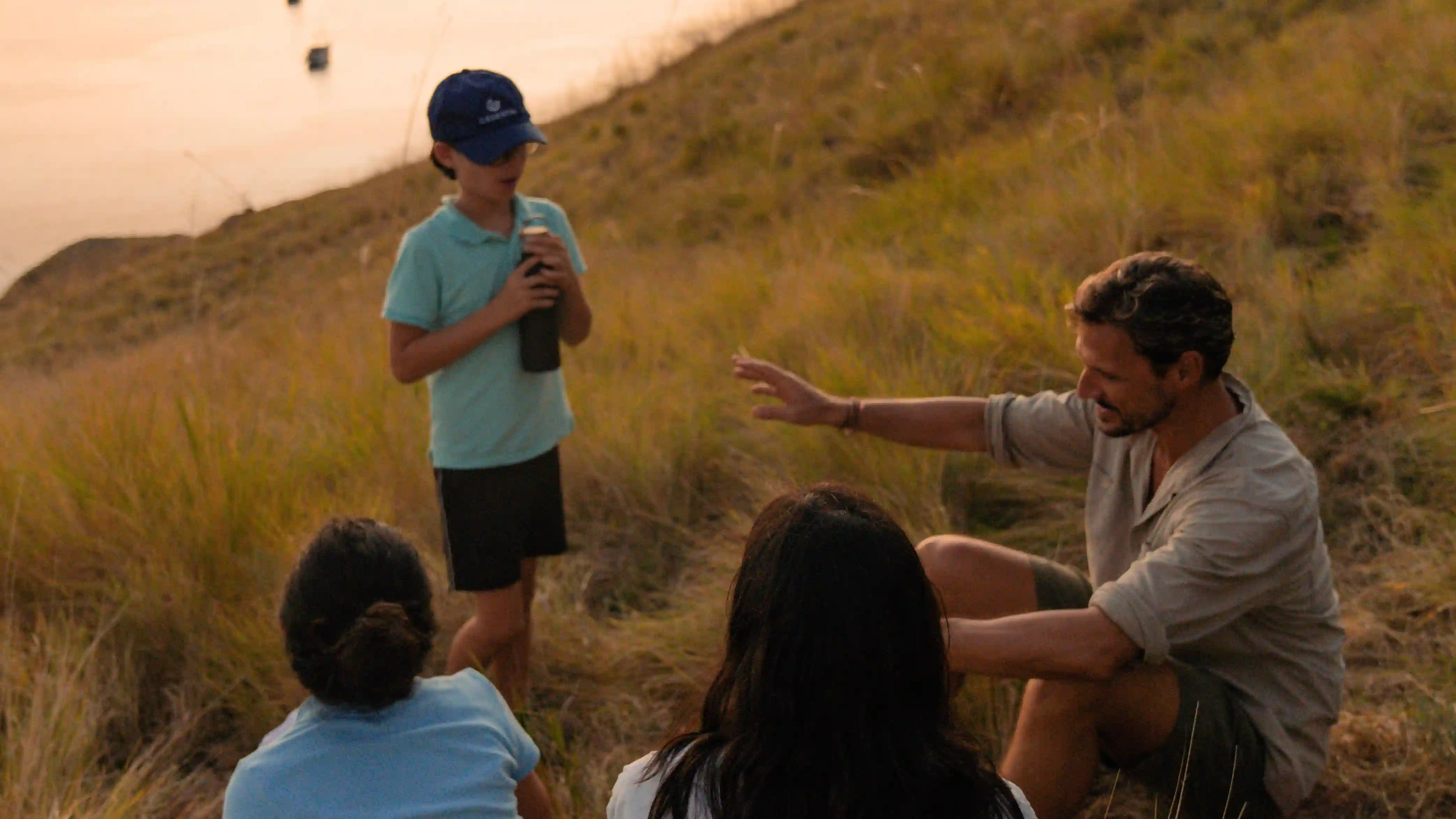
Yes, and it’s one of the more common questions we get precisely because Padar has a reputation (not entirely accurate) as an extreme trek. Travelers in their 70s have completed the climb at a slow, steady pace using the trail’s rest points, typically taking two breaks and moving noticeably slower than younger hikers in their group — and arriving at the top just as satisfied. The trail’s upper section has handrails on the steeper concrete steps, though the lower wooden-plank section does not have continuous rails. The realistic advice for older travelers: set your own pace from step one rather than matching a guide’s default speed, use every rest point rather than skipping ahead, and tell your ranger in advance if you’d like a slower group pace — this is a completely normal request and rangers accommodate it routinely.

Do you need to be able to swim to visit Padar Island?
No. The Padar hike itself involves zero swimming — you’re climbing a dry, dusty trail from a boat landing to a viewpoint. Swimming only becomes relevant if your itinerary also stops at Pink Beach, Manta Point, or another snorkeling site on the same day, and even then, participation is optional. Non-swimmers can stay aboard the boat, wear a life jacket and wade in shallow water at the beach stops, or simply enjoy the deck time while others snorkel. The one place swimming ability genuinely matters is the tender transfer itself in rough seas — life jackets are standard equipment on reputable operators’ tenders regardless of swimming ability, and you should confirm they’re provided before boarding.
Is Padar Island wheelchair or mobility-device accessible?
No, and it’s worth being direct about this rather than vague. The trail to the summit viewpoint is a continuous sequence of stone, wood, and concrete steps with no ramp, no paved path, and no mechanized alternative — there is currently no wheelchair-accessible route to Padar’s main viewpoint. Travelers with significant mobility limitations, recent injuries, or conditions affecting balance and stamina should treat the summit hike as unlikely to be feasible rather than assume accommodations exist on-site. The realistic alternatives are: staying aboard the boat while the rest of your group hikes (many operators build this in without complaint), enjoying the approach views from the boat itself as it circles Padar’s bays before or after the group’s hike, or substituting a flatter, lower-effort stop such as Pink Beach or a Kanawa Island beach day in place of the summit climb on that leg of your trip.
Quick reference: who manages the Padar hike comfortably
| Traveler profile | Realistic expectation | Best adjustment |
|---|---|---|
| Fit adults, teens | Standard 25-45 minute climb, no special accommodation needed | None required |
| Children 7+, active | Manageable with encouragement and breaks | Early departure, extra water, turn rest stops into games |
| Children under 5 | Difficult to sustain the full climb unassisted | Soft carrier for the youngest, or one parent stays back with them |
| Active seniors (60s-70s) | Achievable at a slow, paced climb | Request a slower group pace in advance, use every rest point |
| Seniors with cardiac/respiratory conditions | Consult a doctor before attempting; not guaranteed feasible | Medical clearance first, or opt to stay aboard the boat |
| Non-swimmers | No impact on the hike itself | Life jacket for any tender transfer or beach stop with water |
| Wheelchair users, significant mobility limitations | Summit trail is not accessible; no on-site accommodation exists | Stay aboard the boat, or swap Padar for a flatter stop like Pink Beach |

What if only part of your group wants to hike?
This is more common than most first-time visitors expect, and operators are used to it. A typical arrangement: the hiking portion of the group takes the first tender ashore with a ranger while non-hikers either stay aboard the main boat or take a shorter tender ride to view Padar’s bays from the water without landing. Nobody is required to justify sitting out, and boats do not shorten the on-site time simply because part of the group opted out — the schedule is built around the hikers’ return, not the other way around. If this arrangement matters to you, mention it when booking rather than assuming it’s automatically offered; most operators accommodate it without extra charge, but it helps them plan tender logistics in advance.

How to adapt a Padar Island visit for a slower-paced group
- Tell your operator before departure, not on the trail. A heads-up the night before lets your ranger plan a realistic pace and timing for your group specifically.
- Book the earliest available slot. A 05:00–08:00 sunrise session means cooler temperatures for the entire climb, which matters far more for a slower pace than for a fast one.
- Split the group if needed. It’s common and accepted for part of a group to hike while others wait at the boat or a lower rest point — ask your ranger about a reasonable midpoint waiting spot.
- Plan for double the “average” time. If typical climbers take 25–45 minutes, budget 45–70 minutes each way for an older or younger group, and confirm your boat’s schedule has that slack built in.
- Use trekking poles if balance is a concern. They help more on the descent than the ascent, where footing on loose gravel is the main hazard.
- Have a firm turnaround point. Agree in advance on a rest point beyond which the group won’t push further if someone is struggling — the mid-trail views are still genuinely worthwhile even short of the summit.

What about heat and sun exposure for vulnerable travelers?
Padar’s trail has almost no shade, which is a bigger factor for young children, older travelers, and anyone with a heat-sensitive medical condition than the steps themselves. A wide-brim hat, light long sleeves, and sunscreen reapplied before starting (not just once at breakfast) make a measurable difference over a 25–45 minute climb in direct tropical sun. If anyone in your group has a cardiac or respiratory condition, get medical clearance for strenuous activity before the trip, and make sure your ranger knows in advance — see our Padar Island safety and rules guide for what rangers can and can’t do if someone needs to turn back partway.
Frequently asked questions
Can elderly travelers hike Padar Island?
Yes, at a slow and deliberate pace using the trail’s rest points. Travelers in their 70s regularly complete the climb; the key is pacing, not age itself.
Is the Padar Island hike suitable for children?
For most children aged 7 and older in reasonable walking fitness, yes, especially on an early, cooler departure. Younger children have completed it too, but tolerance for sustained stair-climbing in heat varies widely by child.
Do you need to be a strong swimmer to visit Padar Island?
No. The hike itself requires no swimming. Swimming only comes up at separate beach or snorkeling stops elsewhere on your itinerary, and it’s always optional there too.
Are the Padar Island steps slippery?
They can be, particularly on the upper loose-gravel sections and any time rain has recently fallen. Closed shoes with real tread reduce this risk significantly compared with sandals.
Do you need to be physically fit to hike Padar Island?
Reasonable fitness helps, but “fit” is less important than pacing. Unfit but determined travelers who go slowly and use the rest points generally succeed; fit travelers who rush in the heat sometimes struggle more.
Is Padar Island good for a family trip?
Yes, for families with children old enough to walk the full distance independently. It works less well as a stroller-and-infant destination given the lack of any flat or paved alternative route.
Can someone with a disability still enjoy a Padar Island trip even if they skip the hike?
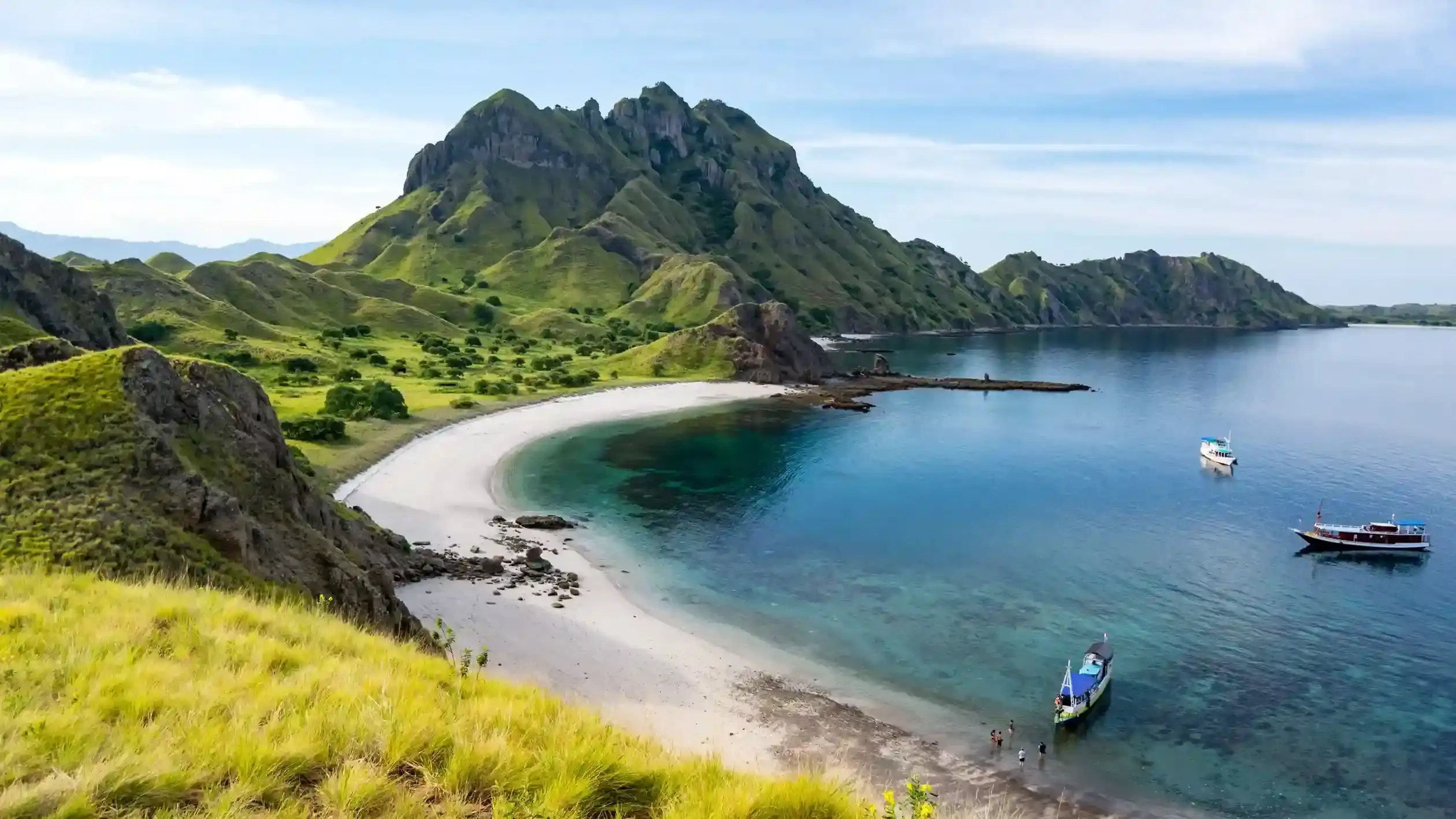
Yes. The boat portion of the day — the approach past Padar’s bays, time on deck, and any beach or snorkeling stop elsewhere on the itinerary — remains fully accessible regardless of whether someone hikes. Many travelers who skip the summit climb still describe the boat views of Padar’s three-colored bays as worthwhile on their own.
What should I tell my tour operator in advance about accessibility needs?
Be specific rather than general. Mention exact mobility limitations, whether anyone in your group needs extra time, whether a wheelchair or walking aid will be aboard the boat (and whether the boat’s own layout, ladders, and tender transfer can accommodate it), and any medical conditions relevant to heat or exertion. Operators can plan around known needs far better than they can react to surprises at the trailhead.
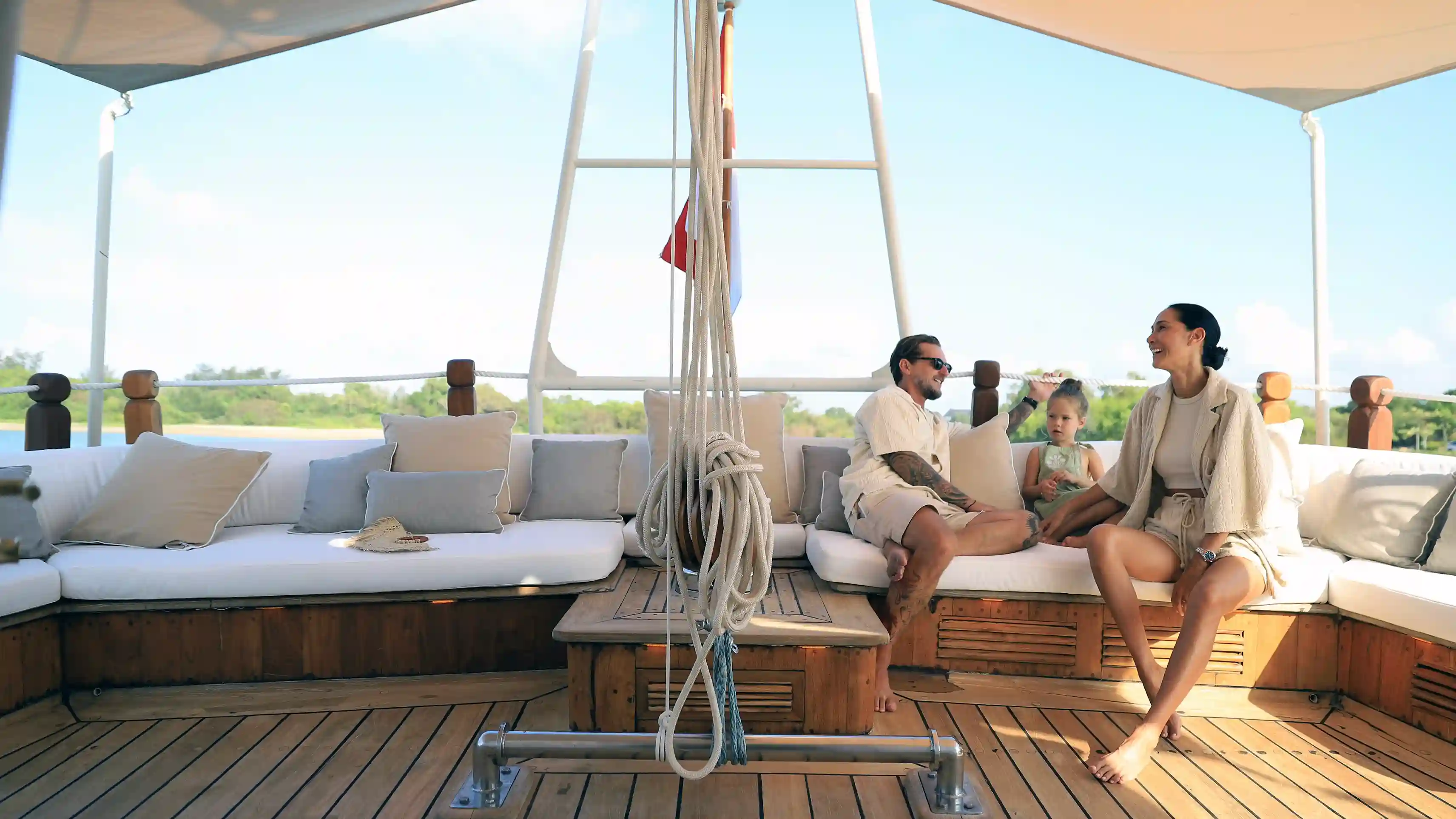
Families and slower-paced groups often find a smaller, flexible Komodo boat tour easier to adapt in real time than a large fixed-group departure, since the crew can adjust timing around your group specifically. If privacy and pacing control matter most, a private yacht charter or a dedicated private trip package lets you set your own schedule around rest stops rather than following a shared group’s pace, and travelers prioritizing comfort over a packed itinerary sometimes prefer a wellness-focused yacht charter that treats Padar as one relaxed stop among several rather than the day’s main physical challenge. A standard Komodo boat trip remains the simplest option if your group is a mix of paces and you’d rather split up for the climb than change the whole day’s plan.
What the island offers, and what it does not
Access to Padar means a boat journey, a jetty, and a stepped trail with no vehicle support and no paved path. There are no wheelchairs, lifts or mobility aids for hire, and the only shelter is the ranger post. The route from jetty to viewpoint is uneven stone and wooden steps at a sustained gradient with no ramps and no alternative path, and the beaches are soft sand or rock. Padar is not wheelchair accessible, and anyone who cannot manage stairs should plan on enjoying the crossing and the views from the lower jetty area rather than expecting to reach a terrace.
That fixed constraint is easier to work with than to fight. The realistic way to build an accessible day is to change the itinerary around Padar rather than Padar itself — pairing it with a gentler stop such as Kanawa or a calm snorkelling reef, so the energetic members of a party take the viewpoint while everyone else has something genuinely enjoyable to do. For families whose main interest is easy snorkelling and beach time, Kanawa is simply the better fit: easier terrain, a more relaxed schedule, and none of the heat and drop-offs the Padar climb involves.
Boat accessibility deserves its own conversation with the operator. The details that matter are how high the step is from pier to deck, whether there are handrails on stairs between levels, and how the crew handle boarding when the water is moving. Most standard tour boats suit reasonably mobile seniors — steps, narrow gangways and occasionally wet landings are normal, and anyone who can manage a short climb between decks and steady themselves underway copes fine — but if balance or joints are a concern, settle the boarding arrangements in detail before you pay rather than discovering them on the day.
The climb, and the freedom to stop
Reaching the absolute summit is optional, and it is worth saying so plainly: many visitors stop at one of the lower terraces and still take home the classic three-bay panorama. The steps get steeper and more exposed toward the top, so turning back is a legitimate decision for anyone tired, dizzy or unsteady, and rangers are entirely used to groups splitting and rejoining at the rest points.
Those rest points matter more than they look. The staircase is broken by a series of small terraces where you can pause, breathe and photograph, and since shade along the steps themselves is patchy, they are what makes the climb workable for children, older visitors and anyone still adjusting to the heat. Rangers encourage groups to regather there rather than on the stairs. Beyond the main terraces, small side paths near the lower sections lead to slightly different perspectives over individual bays — rangers often point people to them when the main platform is crowded, and they give steadier footing and wider space for a tripod or a family portrait, at the cost of marginally less elevation.
On fitness: everyday fitness is enough if you are comfortable with a steady 25 to 45 minute stair climb. The path is essentially a long staircase with few flat sections, so knees, ankles and balance matter more than cardio, and the useful self-test is whether you can climb several flights without distress and walk on uneven ground. Going slowly, resting in what shade there is and starting well hydrated makes it manageable for most people. If you are unused to hills, you can still attempt it — start slowly and be prepared to turn round the moment it stops feeling enjoyable or safe.
Active seniors who walk regularly, with stable blood pressure and joints, commonly complete the climb at a gentle pace. The real issues are the staircase itself, the heat exposure and the sections without railings; trekking poles or a sturdy stick help with balance, frequent breaks help with everything, and avoiding the hottest hours helps most of all. Stopping at an earlier platform while fitter companions go higher is a normal outcome, not a concession.
Asthma does not rule the hike out, but it wants planning: reliever inhaler on your person rather than in a bag, avoid the hottest and dustiest part of the day, and start near the front of the group so you can set your own pace. Unstable or severe asthma is a question for your doctor before you travel. The same applies to anyone with a history of serious heat illness, or with pre-existing heart or joint conditions — rangers can give basic first aid, but medical facilities are back in Labuan Bajo, not on the island, which is why honest self-assessment beforehand carries real weight here.
Heat, sun and injuries
The trail is exposed and shade is limited, so unprotected skin burns quickly, particularly through late morning and early afternoon. High-SPF sunscreen reapplied during the session, plus cover for shoulders, neck and the backs of the knees, is the baseline; a hat and UV-protective clothing reduce how much you have to rely on sunscreen alone. If you burn easily or overheat quickly, take the earliest or latest session, wear a wide-brimmed hat and long breathable clothing, drink steadily before and during the climb, and plan on the lower terraces rather than forcing the top.
On genuinely hot days, steep steps plus full sun raise the risk of heat exhaustion and dehydration in a way the short distance disguises. Drink steadily, protect yourself from the sun, and be willing to turn back at the first sign of dizziness, nausea or a pounding headache. Booking the first or last session is by far the most effective single measure.
The injuries rangers actually see are minor and predictable: slips on dusty steps, twisted ankles, grazes from a fall on rocky ground. They cluster around rushing, overtaking on narrow sections, and unsuitable footwear like loose sandals. The descent is where it happens most, when tired legs meet dust and poor grip. Supportive trainers, smaller steps, one hand free for balance, keeping children close, and refusing to race another group down are what prevent almost all of it. Muscle soreness or mild knee pain afterwards is common enough among occasional hikers to be worth expecting.
The worst time to visit is the peak of the wet season, when rain, low cloud and rougher seas disrupt boat schedules and leave the steps slippery, and midday in the hottest months runs it close, especially for children and older visitors. If your dates are fixed, take an early or late session and leave slack in the plan in case boats are cancelled.
On clothing for a sunrise start, a light layer is useful rather than essential. The boat can feel cool before dawn, especially if you are damp from spray, but the climb warms you quickly — a thin windbreaker or long-sleeved top that packs small and ties to a bag is right, and a heavy jacket becomes a burden the moment the sun is up.
Children, water and life jackets
Padar suits school-age children far better than toddlers. Toddlers tire quickly, are unpredictable near edges, and cannot safely manage the stairs alone; there are no railings anywhere and no fenced space, and the gaps beside some steps make constant supervision non-negotiable. Most parents either carry them in a secure child carrier or stay at the lower viewing area while others climb. A stroller is not practical in any form — the route is almost entirely steps, and even a light travel buggy becomes something to carry. If you bring a toddler, plan a deliberately conservative day: short time ashore, no pressure to climb far, clear roles for supervising adults, and attention to heat and nap timing.
For older children the honest approach is to make a lower terrace the goal rather than the summit, and to combine that with a cooler session. The route starts at the jetty, where a short boardwalk leads to the first stairs; that transition zone can have uneven sand and stone with puddles or slippery patches left by the tide, so closed shoes with grip earn their place before the climb even begins.
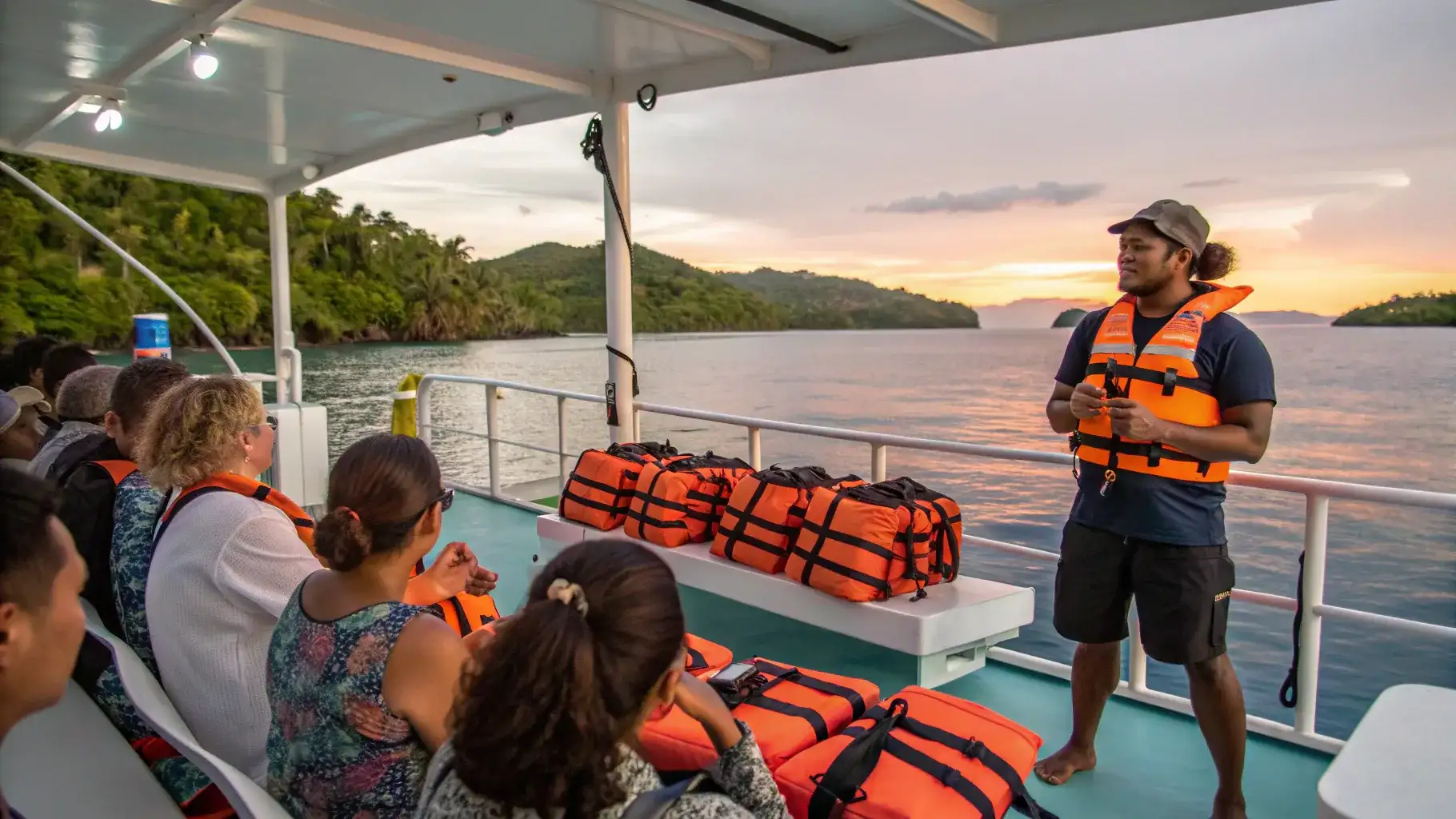
Life jackets are the point where families should be firm. Licensed boats serving the park are expected to carry one per passenger, and reputable operators issue them during crossings, but enforcement of actually wearing them varies. Check when booking and again as you board: ask where the jackets are stored, look at buckles and straps, and raise anything damaged or missing with the crew immediately — a responsible captain will move you to a safer seat or vessel. If a boat clearly lacks adequate safety equipment, refuse to sail and ask for a different one. Children’s sizes are not always plentiful, so confirm availability in advance and consider bringing a certified one from home. Insist that children and weak swimmers wear a jacket for the whole open-water leg rather than only when the crew ask, and if you are a nervous adult, put yours on at the harbour instead of fumbling with it underway. Smaller boats often carry basic but functional jackets; larger ones tend to have more comfortable standardised gear.
If your tour includes free time near the beach, treat the sea with caution. Swimming off Padar’s bays is sometimes possible but should never be assumed safe without checking the day’s conditions — currents and waves shift with tide and season, there are no lifeguards, and nothing marks depth changes or safe zones. Non-swimmers should stay in shallow water close to shore with a life jacket on; confident swimmers should still remain within easy sight of the crew, since currents strengthen quickly away from the shoreline.
Group tours climb at a moderate stop-start pace and slow whenever the path narrows or someone needs a break. Rangers keep the line moving but will not push slower walkers past their comfort. If you know you are slower, start near the front, where you can pause without feeling pressure from behind.
Two final practicalities. Most visitors base themselves in Labuan Bajo, which has the airport, the harbour and the widest choice of hotels and guesthouses, and makes joining a shared speedboat or phinisi straightforward; sleeping aboard is a comfort choice rather than a requirement. And you need no special filter to photograph Padar — modern phone cameras handle the light well, a polariser optionally cuts glare on a dedicated camera, and starting early or staying late does far more for your images than any piece of glass.
This guide does not operate boats. Bookings are fulfilled by Komodo Luxury, and this site may earn a referral commission.