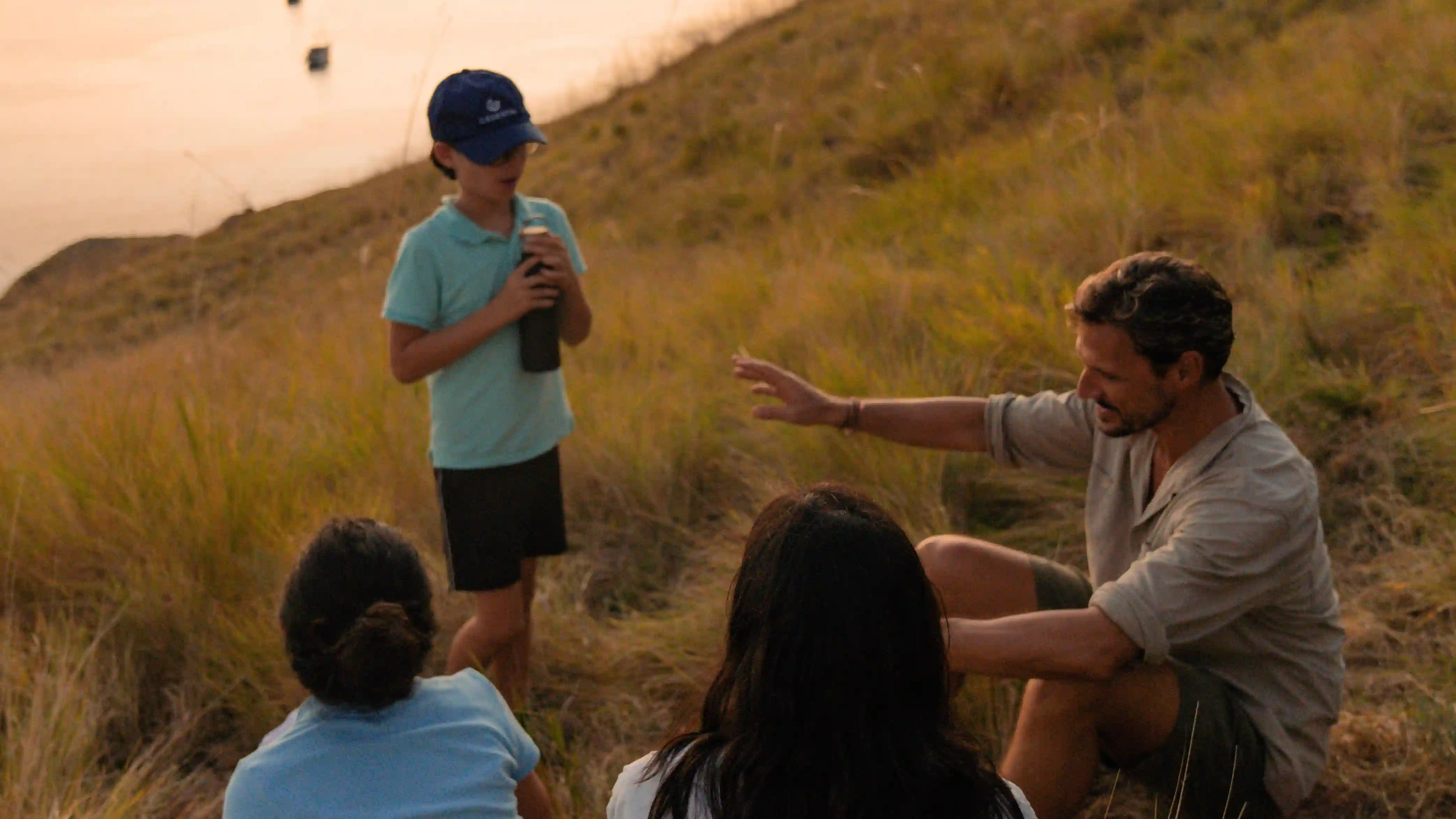

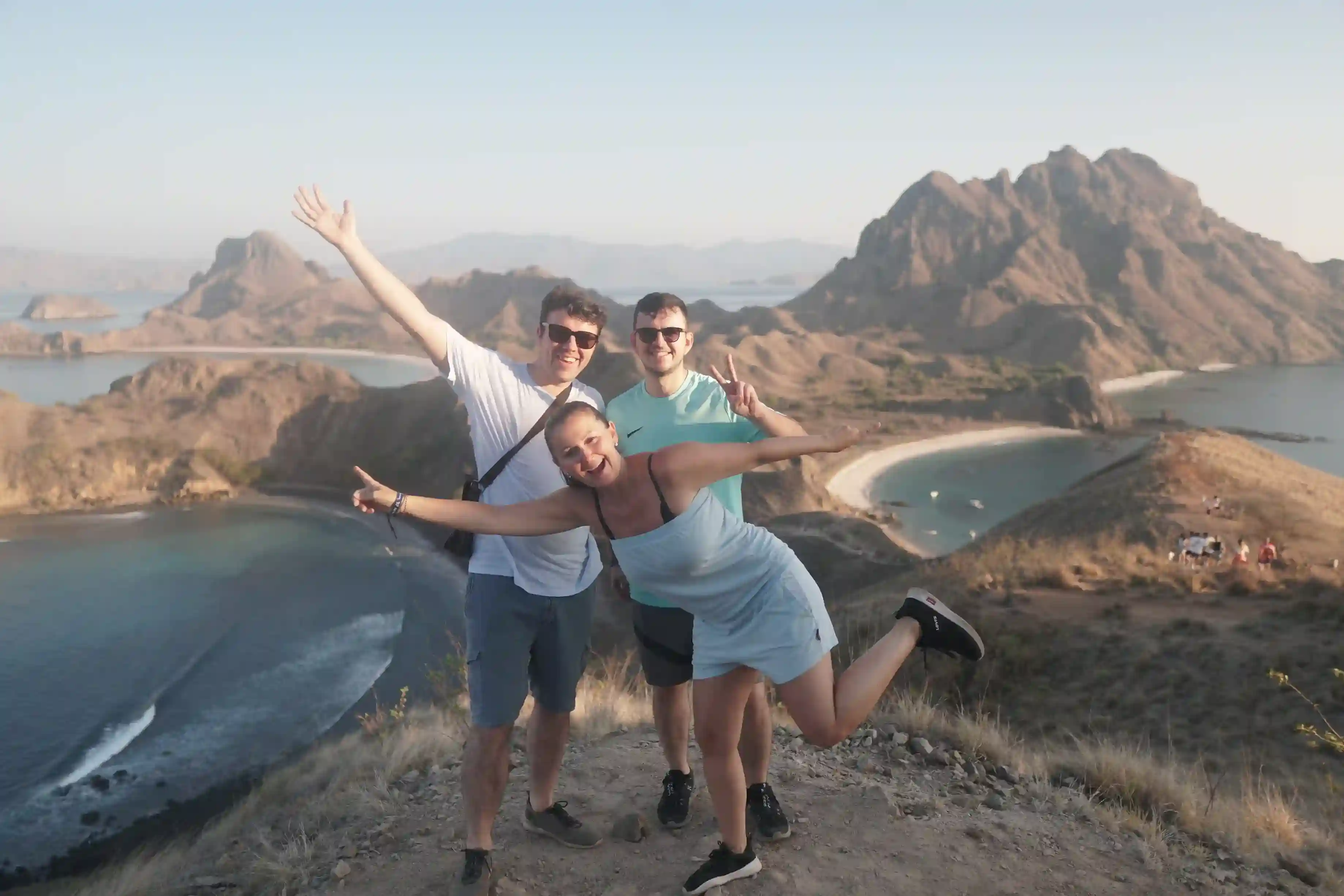
Golden hour light over savanna ridgeline hills and a bay in Komodo National Park
Photo: Alex Lvrs on Unsplash.

Things to Do on Padar Island

Last updated: 23 August 2026

The main thing to do on Padar Island is the sunrise viewpoint hike, but a full visit also includes swimming near the landing beach, snorkeling at nearby reef spots, drone and handheld photography, and simply spending unhurried time on the boat around the island’s three bays. Because most visits last only 1.5–2.5 hours onshore, realistic planning means picking two or three of these rather than trying to fit in everything.

A visitor walking up the staircase trail toward Padar Island's main viewpoint
The hiking trail to the three-bay viewpoint, the main activity on Padar. Photo: Wayan Parmana/Unsplash.

1. Hike to the Three-Bay Viewpoint

This is the reason almost every visitor comes to Padar. A constructed staircase of roughly 800–840 wooden-and-concrete steps climbs about 170-270 meters over a one-way distance of 0.7-1.5 km to a ridge viewpoint overlooking three curved bays at once — one lighter sand, one with a pink tint, one darker. Most hikers reach the top in 25–45 minutes and descend in 20–30. There is essentially no shade for the entire climb, which is the main reason sunrise departures dominate the schedule. Full mechanics — segment-by-segment step counts, rest points, and who should think twice — are on the Padar Island viewpoint hike page.

2. Photography — Viewpoint, Golden Hour, and Beyond

Padar’s viewpoint is one of the most photographed single vistas in Komodo National Park, and the reason is compositional: nowhere else in the park do three distinct bays sit in one frame from a single fixed point. The first hour after sunrise is the sharpest light window, with long shadows across the savanna ridge and the water still calm enough for clean reflections. Later in the dry season (June–October) the hillside’s gold-brown color intensifies the contrast against the blue water; during the wet season the same hillside turns green for a different, less commonly seen look.

Beyond the classic wide shot from the main viewpoint, photographers with more time (typically liveaboard guests rather than day-trippers) sometimes continue along the ridge to secondary viewpoints for a different bay angle, though this adds meaningfully to the hike time and isn’t standard on a fixed day-trip schedule.

A panorama of Padar Island's three bays at sunrise, seen from the ridge viewpoint
A favorite photo moment: golden hour at the Padar viewpoint. Photo: Monteverdo Barnsley/Unsplash.

3. Drone Photography

Padar’s ridge-and-bay geometry is a natural fit for drone shots, and it’s a common request on private charters. Indonesian national park airspace rules apply, and drone use inside Komodo National Park is subject to permit and registration requirements that change periodically — confirm current drone rules with your operator or the park authority before flying rather than assuming a blanket allowance, since enforcement and permitted zones have shifted more than once in recent years.

4. Swimming Near the Landing Point

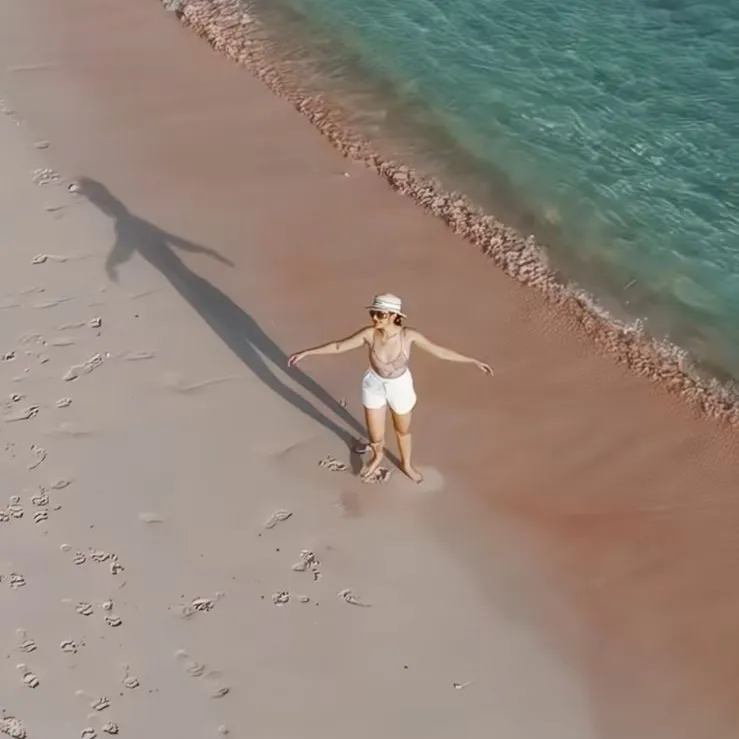
The small beach coves near where boats land at Padar are swimmable, with calm, clear water typical of the sheltered bays inside the national park. This is a realistic add-on for travelers who find the hike itself enough exertion and want to cool off afterward rather than immediately reboarding, though most fixed day-trip schedules only allow a short window for this before moving to the next stop.

A calm-water bay near Padar Island's boat landing point where visitors swim
A shallow bay near the landing point, good for a relaxed swim. Photo: Johnny Africa/Unsplash.

5. Snorkeling Around Padar’s Bays and Nearby Sites

Padar itself is not typically marketed as a standalone snorkeling destination the way Pink Beach or Manta Point are, but its surrounding waters are part of the same reef system that makes Komodo National Park globally known for marine life, and many itineraries pair a Padar stop with a snorkel session at a nearby site on the same day. For dedicated reef time, most operators schedule it as a separate stop rather than at Padar’s own landing beach — check your itinerary for which specific site is included.

Snorkelling over colourful coral reef in Komodo National Park
Snorkelling in the waters around the Komodo area (illustration of a general location). Photo: Nott Peera/Unsplash.

6. Boat Time Around the Three Bays

Because most itineraries only allow a short window onshore, a meaningful part of “what to do at Padar” for many travelers is simply the approach and departure by boat — circling close enough to see all three bays from the water before or after the hike, which is also the easiest way to photograph the island’s shape for anyone who skips the climb.

A phinisi boat anchored calmly in a bay in the Labuan Bajo area
Cruising past Padar’s three bays by boat before or after the hike. Photo: akhmad ravaell/Unsplash.

Best Time of Day for Each Activity

ActivityBest timeWhy
Viewpoint hikeSunrise (06:00–08:00)Coolest temperature on a shade-free staircase; softest light for photos; fewer boats at the top
Photography (wide viewpoint shot)First hour after sunriseLong shadows and warm light across the ridge; water calmer for reflections
Swimming at the landing beachMid-morning, after the hikeSun higher and warmer; most schedules build in time here before departure
Drone flightsEarly morning, calm windWind picks up later in the day, and early light gives the most usable footage

Guided vs. Self-Guided on Padar

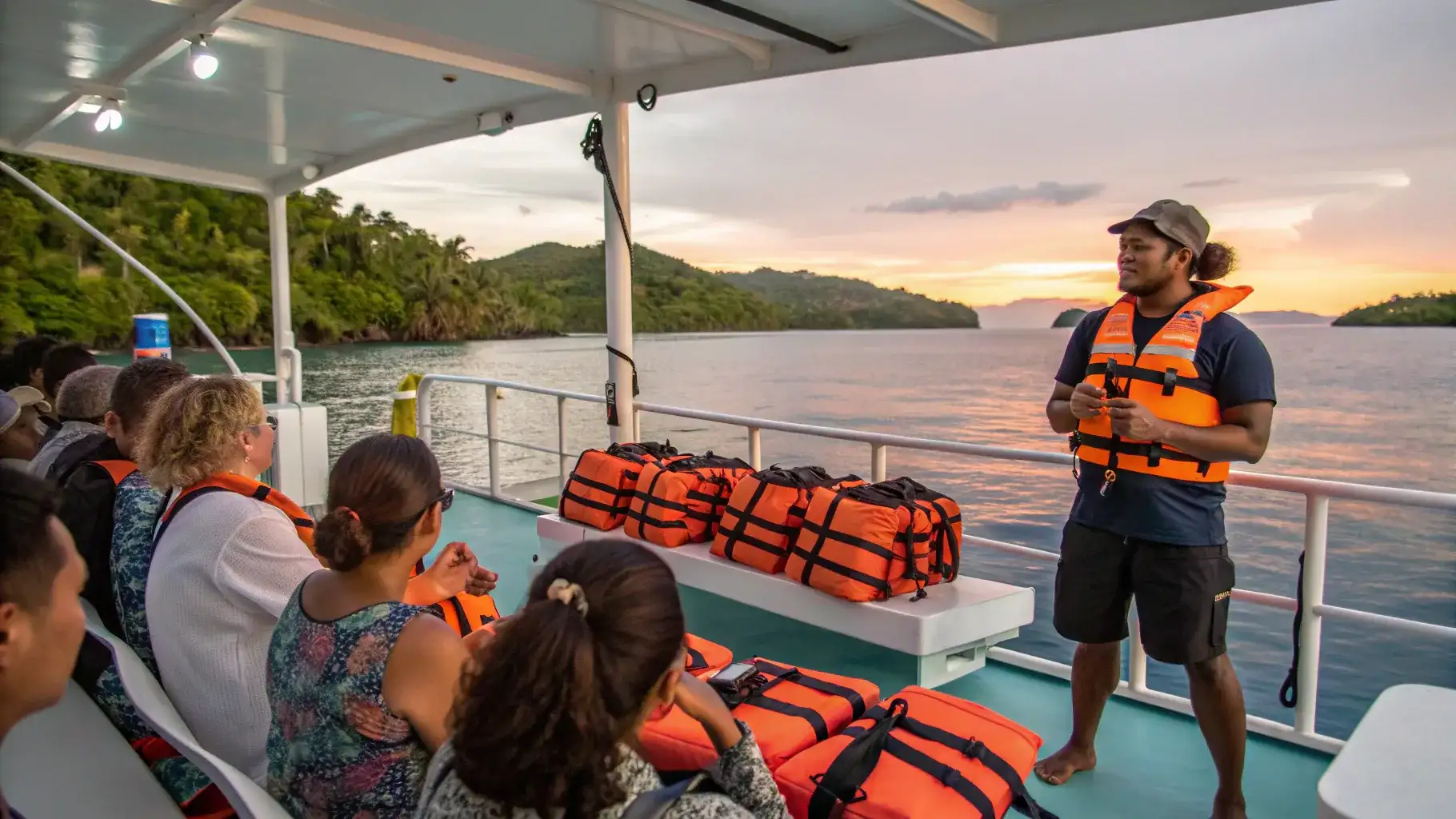
Every legal visit to Padar goes through a licensed boat operator and, at the landing point, a ranger checkpoint — there is no scenario where an independent traveler arrives and explores unaccompanied the way one might on a mainland trail. In practice this means “guided vs. self-guided” is less about whether you have a guide and more about how much a guide actively walks with you: some operators send a crew member up the staircase with the group, pointing out rest points and photo angles, while others simply confirm everyone’s return time and let visitors set their own pace on a single, unambiguous staircase route. Either way, the route itself has no navigation difficulty — it is one staircase to one viewpoint — so the value of a more hands-on guide is mainly safety pacing and photography tips rather than route-finding.

Safety Notes for Padar’s Activities

  • Heat, not the stairs themselves, is the main risk on the hike. Carry water, wear a hat, and pace yourself rather than racing other boats’ groups to the top.
  • Footing on the staircase can be uneven in places despite the constructed steps — flat sandals are a common cause of minor slips.
  • Swimming areas near the landing are generally calm, but always check with your boat crew about current conditions before entering the water, since conditions can shift with tide and season.
  • Drone flights require awareness of other visitors and wildlife in the area, in addition to any permit requirements — fly conservatively rather than assuming full freedom of movement.

What Makes Padar’s Activity List Different From Komodo or Rinca

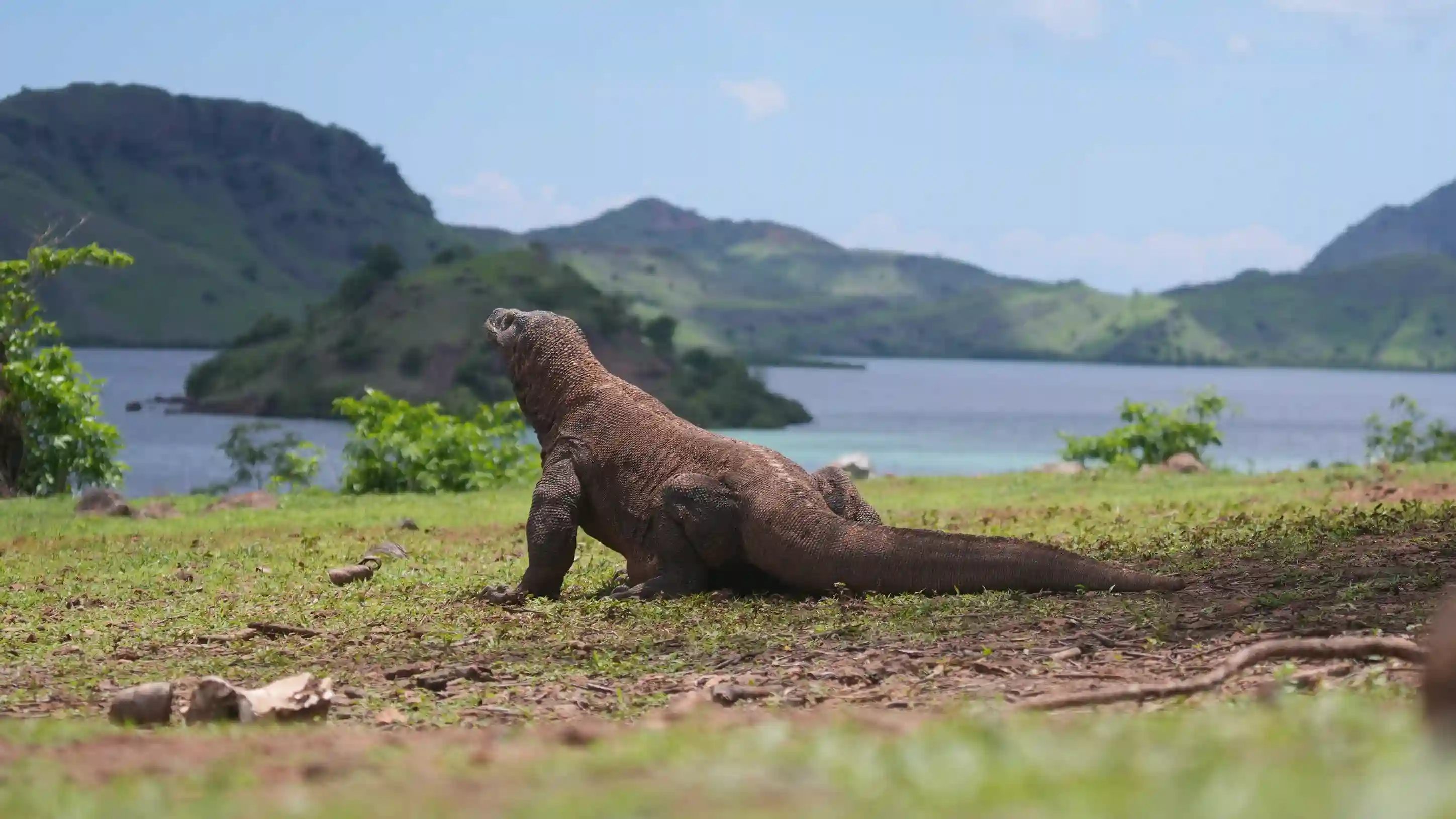
Komodo Island and Rinca Island itineraries are built around a guided walking trek to look for dragons, with the activity spread across a longer, flatter route and a ranger narrating wildlife behavior. Padar has no equivalent wildlife-trekking component — its entire activity list is built around a single fixed geographic feature (the viewpoint) reached by a single fixed route (the staircase), which is why most visitors treat it as a shorter, more self-contained stop compared to the longer dragon-trekking islands on the same itinerary.

What You Cannot Do on Padar Island

  • See Komodo dragons. Padar is zoned for viewpoint hiking, not dragon trekking — that’s exclusively Komodo Island and Rinca Island on the same broader itinerary.
  • Stay overnight on the island. There is no accommodation of any kind on Padar; see the where to stay for Padar Island page for the liveaboard and Labuan Bajo alternatives.
  • Buy food or bottled water on the island. Bring what you need from the boat or from Labuan Bajo.

Can You Swim at Padar Island? Quick Answer

Yes, at the sheltered coves near the boat landing — the water is generally calm and clear, though it is not the park’s primary snorkeling destination and most operators treat swimming here as a short add-on rather than the main activity.

Suggested Activity Combinations by Trip Length

Trip typeRealistic combination at Padar
Half-day / one-day multi-island tripSunrise hike + photography, brief swim, then move to next island
2–3 day liveaboardSunrise hike + photography + swim, possible drone session, more relaxed boat time around the bays
4–7 day liveaboardAll of the above, potentially a second visit or extended viewpoint time if weather allows a schedule change

For full multi-day itinerary structures that build in this kind of extra time, see the 5-day itinerary and 7-day itinerary pages, or start from the Padar Island travel guide for the full trip-planning framework.

Packing for Padar’s Activity List

Because the activity list is short but physically varied — a steep dry-land climb followed by a possible swim — the packing priorities differ from a purely beach-focused island stop. Closed-toe shoes with grip matter more than swimwear for most of the visit, since the hike happens before any water time. A reusable water bottle filled before boarding, reef-safe sunscreen applied well before the sun is directly overhead, and a dry bag for a phone or camera during the swim segment cover the core list; a lightweight rash guard doubles as sun protection on the climb and swimwear in the water. The full packing list, organized by season and trip length, is on the Padar Island packing guide.

Things to Do on Padar Island: Quick FAQ

Is one visit to Padar Island enough?

For most travelers, yes — the viewpoint hike and a short swim cover the realistic activity list in the 1.5–2.5 hours most itineraries allocate. Liveaboard guests with more flexible schedules sometimes add a second stop for different light or calmer conditions.

What should I bring for activities on Padar Island?

Closed-toe shoes for the staircase, reef-safe sunscreen, a hat, drinking water, and a dry bag if you plan to swim — see the full Padar Island packing guide for the complete list.

Can you dive at Padar Island?

Padar is not a standard scuba diving site within the park’s usual dive circuit; divers on a Komodo liveaboard typically dive at dedicated sites elsewhere in the park and visit Padar specifically for the viewpoint hike.

Do I need a guide to hike to the Padar viewpoint?

You need to arrive via a licensed boat and pass through the ranger checkpoint at the landing, but the staircase itself is a single, well-marked route to one viewpoint, so once past the checkpoint most visitors climb at their own pace, whether or not a crew member walks with them.

Is there anything to do at Padar Island besides the hike?

Yes — swimming near the landing, photography beyond the main viewpoint shot, and (where permitted) drone flights are all realistic additions, though the hike remains the primary reason most itineraries include Padar at all.

How much time should I budget for activities on Padar Island?

Plan for 1.5–2.5 hours total onshore for a standard day-trip stop, or longer on a liveaboard itinerary that isn’t racing to a second island the same day.

The complete FAQ, including permit and safety questions, is on the Padar Island FAQ page.

A traditional Flores wooden boat commonly used to carry visitors to Padar Island
A traditional wooden boat, one way of reaching Padar. Photo: Shaqyl Shamsudheen/Unsplash.

Book a Padar Island Activity Trip

Most of the activities above are included as standard stops on a Komodo boat trip rather than booked individually. See current Komodo boat tour options, which combine the Padar viewpoint hike with swimming, snorkeling, and photography stops across a single day or multi-day itinerary.

The viewpoints, and choosing between them

The staircase serves several informal viewpoints on the way up, plus the main ridge that most people aim for. The upper ridge is the classic position, giving the three-bay panorama and long sightlines toward Komodo and Rinca. The lower platforms are better in strong wind, or if you dislike heights, or if the climb is more than you want — and they still open onto the bays. You do not need to reach a separate summit for each bay: shifting a few metres along the ridge changes which one dominates the frame.

Most people take 25 to 45 minutes to reach the main ridge depending on fitness, heat and photo stops, with a quicker but more careful descent. Early morning and late afternoon are the comfortable windows for both the climb and the light; midday is hotter and harsher in contrast. Across the year, the dry season from roughly April to November gives clearer skies and more reliable boat conditions, with the shoulder months offering the best balance.

Golden hour softens the sharp ridges and gives more forgiving contrast on the bays, which helps phone sensors as much as cameras. Blue hour is moodier and demands a tripod or a higher ISO. Low sun throws long shadows across the folds of the hills, so the same viewpoint looks genuinely different at dawn and in late afternoon, and strong backlighting in the early morning is something to work with rather than avoid. Padar rewards a mix — wide landscapes, tighter frames on the patterns in the ridges, simple portraits against the bays — and none of it needs advanced equipment, only a steady stance.

Beyond the hike, the visit is essentially watching the light change from different terraces, photographing, and observing the tide and the boats in the bays. The landing beach is generally kept reasonably clean by rangers and crews, though floating plastic still washes up after storms or strong currents, and you should not expect a manicured shoreline.

Stargazing is realistically limited to a liveaboard anchored offshore or a very early pre-dawn arrival, since there is no accommodation. Light pollution is minimal once the boats settle.

Drones: permitted, but narrowly

Drone flying requires proper permission and is not a casual activity here. Recreational visitors should expect to keep drones packed unless a permit has been arranged through their operator. Mapping and surveying flights count as commercial work, needing a SIMAKSI and a clearly stated project purpose, with approval far from automatic — apply well in advance.

Where flying is authorised, launches normally happen from the main landing area, on or just behind the beach, under ranger supervision, which keeps aircraft away from hikers on the staircase. Open, level sand near the jetty works; a flat section of the lower trail may be permitted if a ranger explicitly approves it. Rocky outcrops and narrow steps are unsuitable because of crowding and the risk of a bad landing. Altitude limits follow Indonesia’s general aviation and park-protection rules, so assume conservative caps rather than testing your drone’s ceiling.

Fines for unpermitted flight are set at national-park level and can be significant, though exact figures are not publicly itemised for Padar; rangers may also confiscate equipment. For professional video, schedule outside the peak public sessions to keep crowds out of frame, since operators can sometimes arrange early or late movements. Hyperlapse work is difficult here — long steady flight paths conflict with other aircraft and hikers, so shorter sequences from safer holding positions above the bays fit the environment better.

Ordinary personal photography needs nothing beyond your park entry, and handheld cameras are treated no differently from phones. Larger commercial productions trigger separate permissions.

Permits, check-in and who can manage the climb

Every visitor holds a valid Komodo National Park ticket, booked through SiORA rather than bought on arrival, and the permit is session-based — it ties you to a specific window. Since April 2026 all visits must be pre-booked, either by your operator or by you directly, with walk-in ticketing at harbours no longer offered, so a last-minute plan depends entirely on remaining quota. One ticket covers your Padar landing and other same-day stops such as Komodo or nearby reefs, and daily quotas are enforced across all entry points.

On arrival your operator presents the booking details and QR codes at the check-in point, and rangers verify session times and headcounts. There is no separate turnstile fee for the viewpoint itself; the hike sits inside your park entry and the ranger escort charge.

There is no fitness test attached to a permit, and tickets are not restricted to the athletic. What exists instead is ranger judgement: they can advise someone to turn back if they appear unwell or in difficulty. The staircase is short but steep, so basic cardiovascular fitness and comfort on uneven steps matter more than any hiking skill — anyone used to climbing several flights of stairs is equipped for it. Active seniors into their seventies often complete the hike by pacing themselves, carrying minimal gear and treating the sustained stair-climbing as the challenge it is; heat and humidity usually cost more than the gradient does.

Water is the one supply with no backup. There is nothing to drink on the trail, so each person carries their own — one to two small bottles covers a standard ascent and descent for most people, more in the hottest months or if you tire easily.

Safety comes down to staying on the staircase, following ranger directions and not overtaking aggressively on the narrow stretches. The constructed path removes most of the slip risk that a dirt trail would carry.

Covid-specific rules in Indonesia have generally eased, but health protocols can change with little notice, and masks on crowded boats or in closed cabins may still be encouraged by individual operators.

Proposals happen here regularly and are entirely allowed — the request is simply that you keep them brief and low-key out of respect for the people waiting to use a narrow viewpoint. Treat it as a personal moment rather than a staged production, tell your crew so they build in enough time at the top, and consider a private boat or a less popular session if you want space.

Padar lies inside Komodo National Park in East Nusa Tenggara, roughly between Komodo and Rinca, uninhabited and volcanic with steep ridges dropping into three bays. Its central position in the park is why so many itineraries reach it easily from both the dragon-viewing sites and the popular reefs.

Finally, on snakes: as a natural, uninhabited island Padar can host them, but visitors rarely report a close encounter on the main staircase. Staying on the built path and boardwalk reduces the likelihood to near nothing.

Booking the trip itself

This site documents Padar Island; it does not sell tours. Bookings for the boats and packages described above are handled by Komodo Luxury, the operator within the same group as this publication.

Questions about a specific date or vessel go to WhatsApp +62 811-3823-875 or sales@komodoluxury.com.

This guide does not operate boats. Bookings are fulfilled by Komodo Luxury, and this site may earn a referral commission.

Scroll to Top
Book with Komodo Luxury →
💬

Additional photo credits on this page: Wayan Parmana, Monteverdo Barnsley, Johnny Africa, akhmad ravaell, Nott Peera, Shaqyl Shamsudheen, Alex Lvrs on Unsplash.