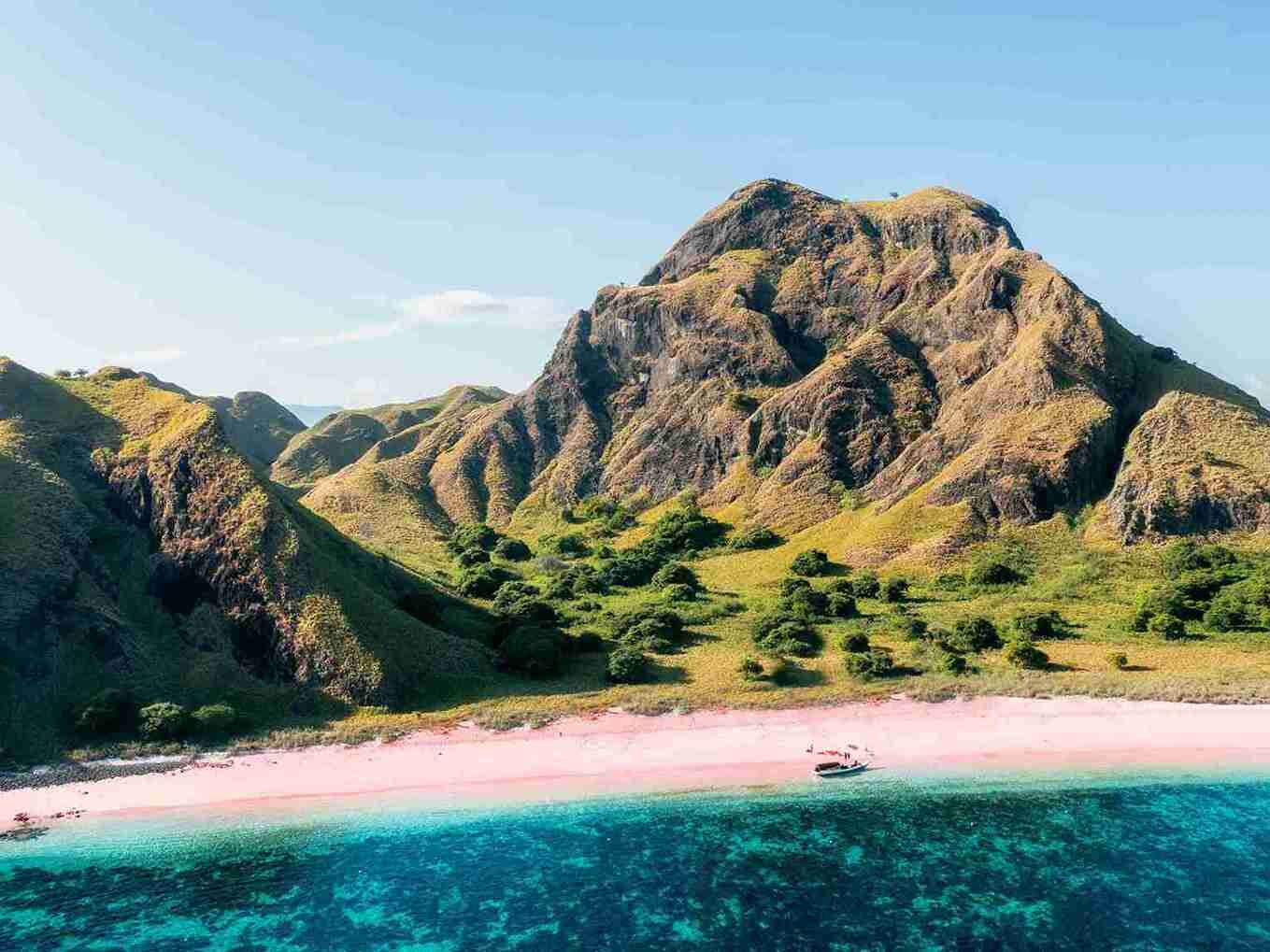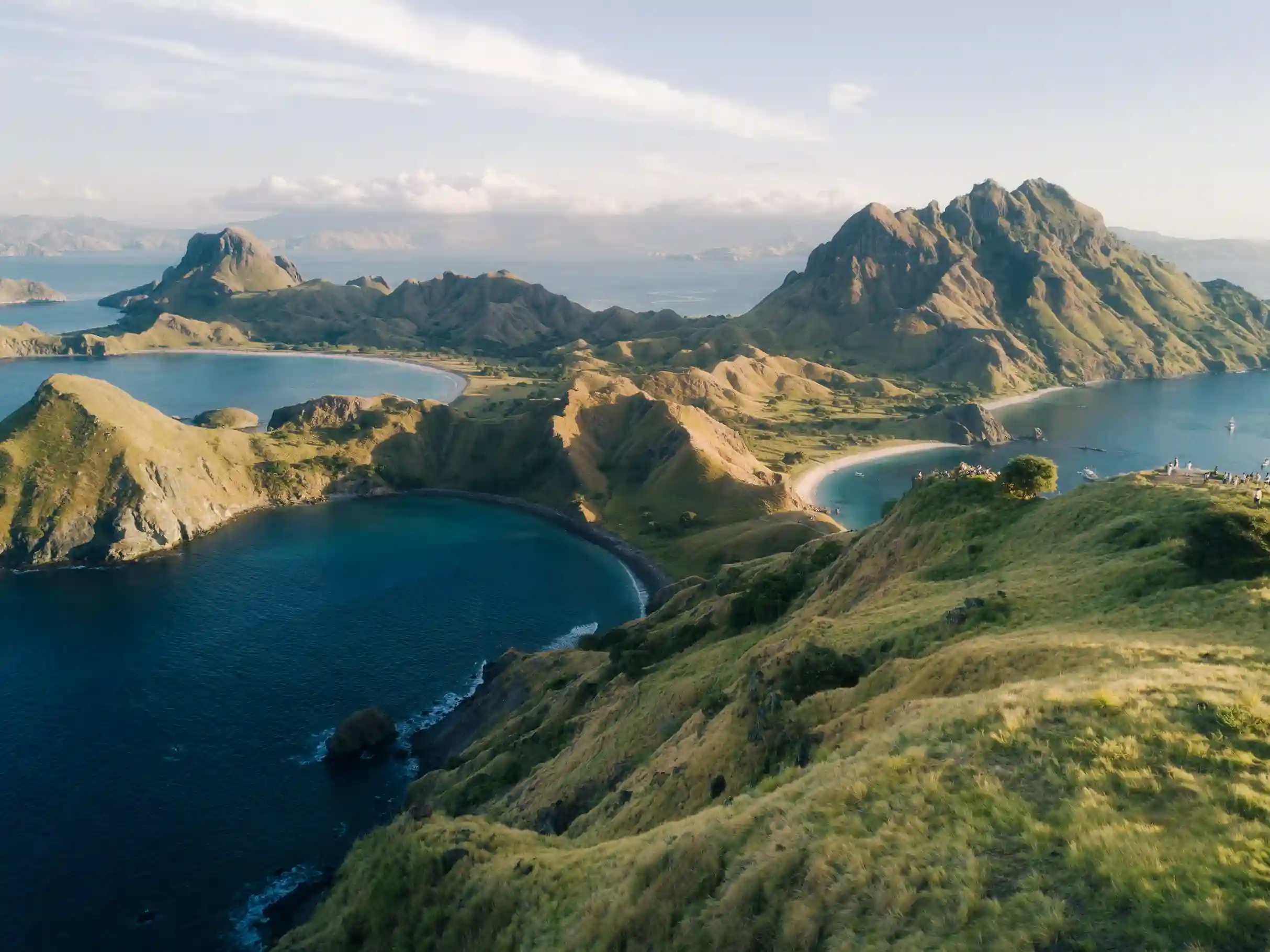

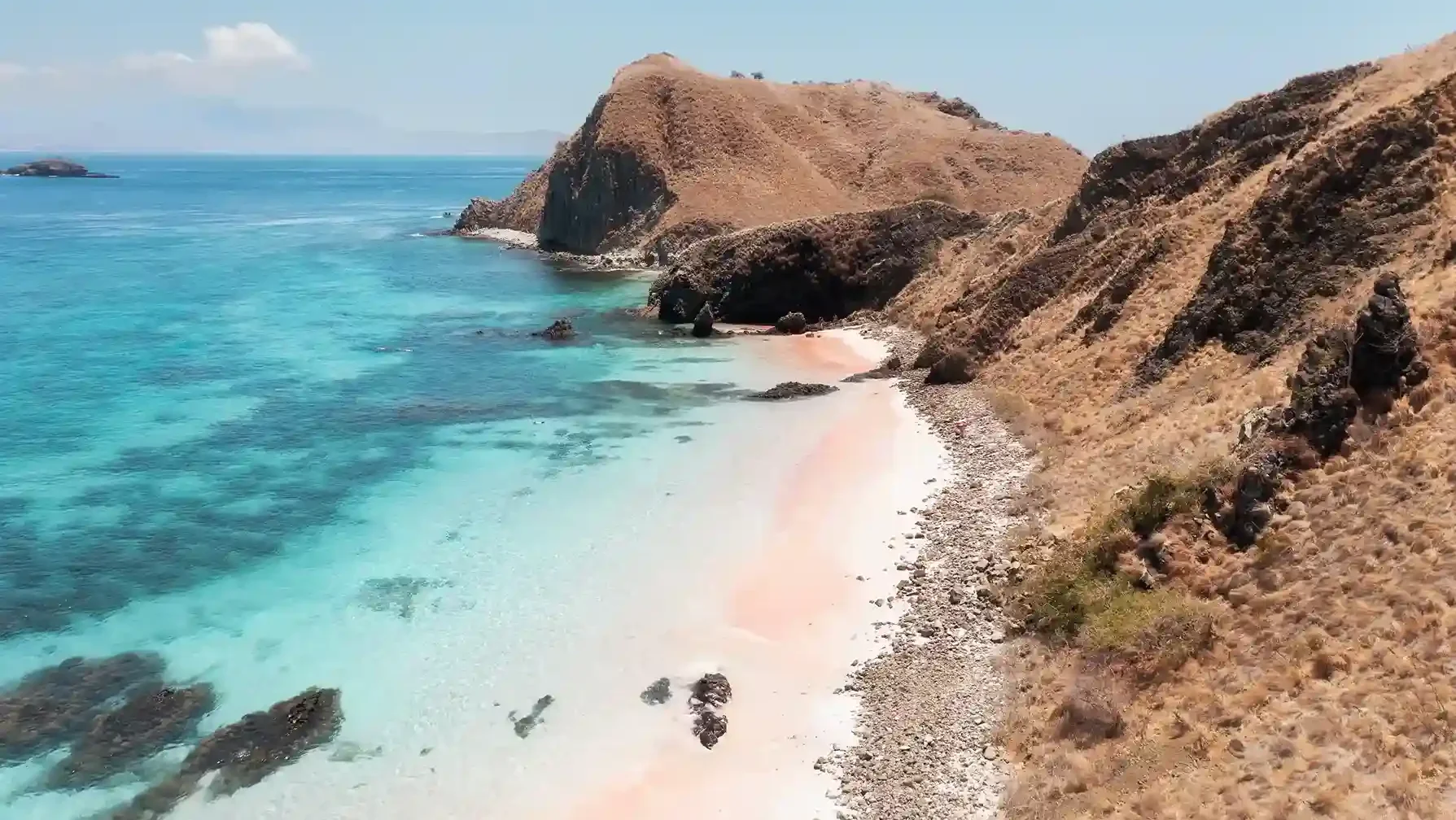
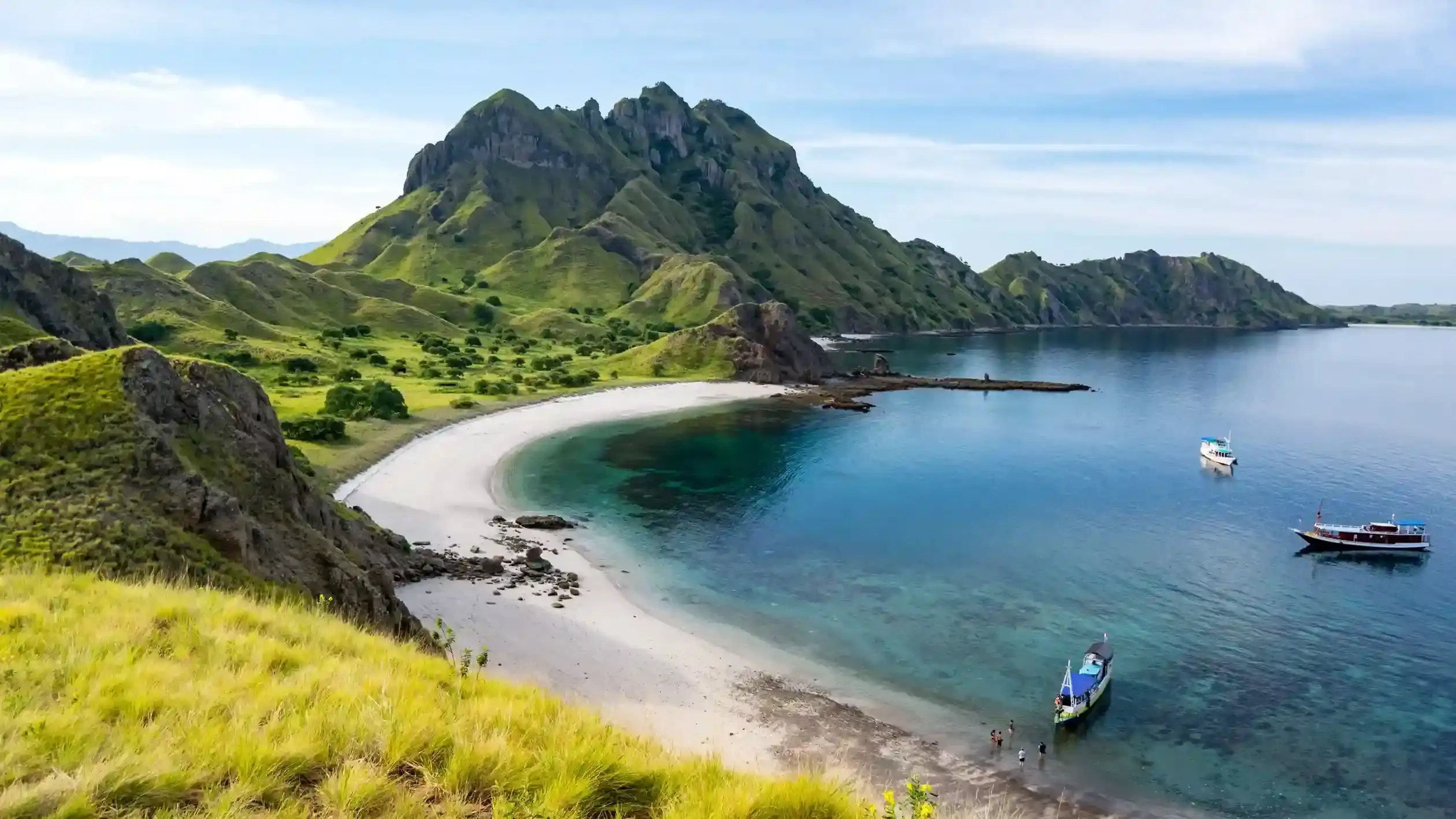
Pink-tinged sand beach in Komodo National Park meeting clear turquoise water
Photo: Hongbin on Unsplash.

Padar Island Beaches: Three Bays Explained

Quick answer: From Padar Island’s summit viewpoint, you can see three separate bays at once, each with a different sand color: a white-sand bay near the landing dock, a pink-sand bay to the south, and a black volcanic-sand bay to the west. The colors come from three different sources of sediment — coral fragments, crushed red organ-pipe coral mixed with white sand, and eroded volcanic rock — sitting side by side, which is why they don’t blend into one shade.

Padar Island Editorial Desk · Last updated August 2026

How many beaches does Padar Island actually have?

The iconic panorama photographed from Padar’s summit shows three named bays. Some guides mention a small fourth cove elsewhere on the island’s irregular coastline, but it is not part of the classic three-bay view and is rarely visited, so for practical planning purposes, Padar is a three-beach destination: one white, one pink, and one black.

Padar sits within Komodo National Park at approximately 8.61°S, 119.57°E. The summit viewpoint rises roughly 170-270 m above sea level, the spread reflecting which of the three viewpoints is measured, reached by a trail of roughly 0.7-1.5 km from the ranger dock — a climb of 25–45 minutes for most visitors, covered in detail in our Padar Island sunrise guide and hiking-focused posts.

The three bays at a glance

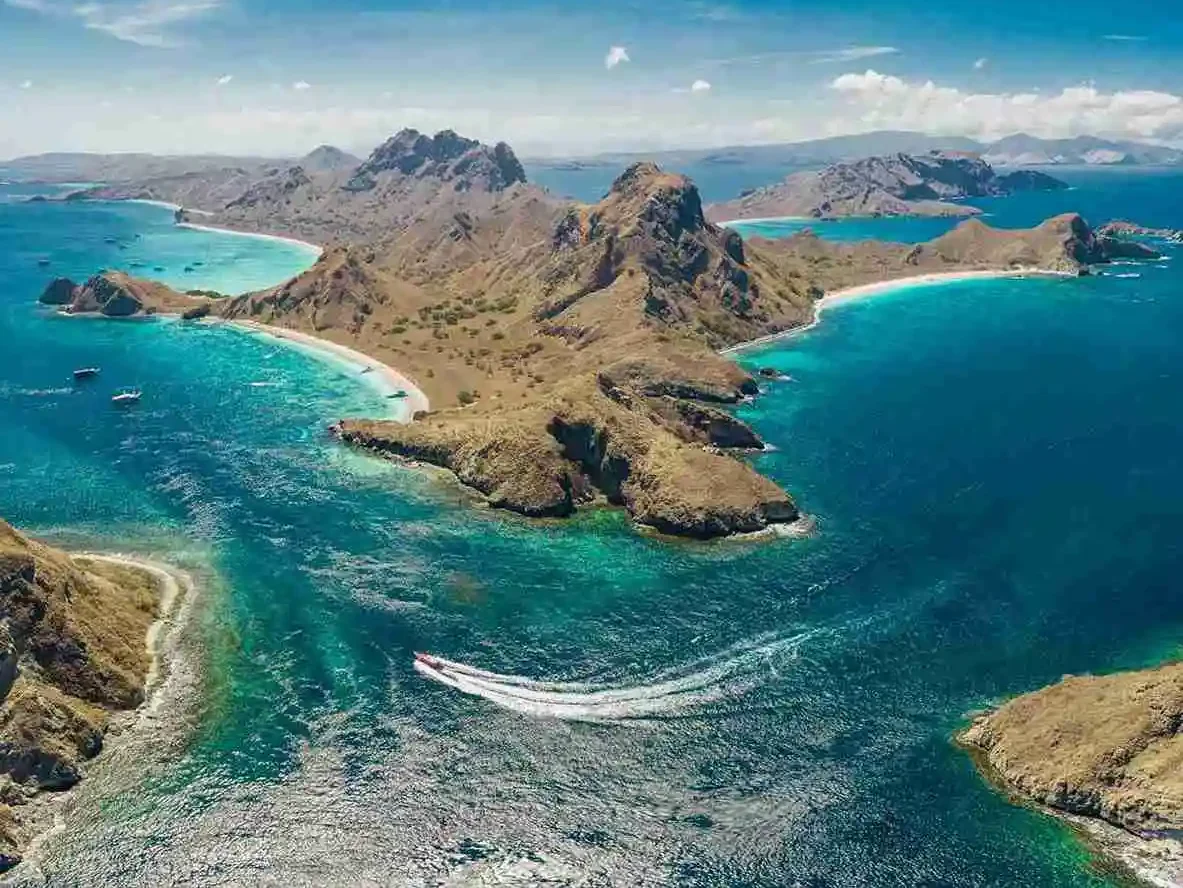
Aerial panorama of the turquoise water and green hills around Padar Island's bays
Padar Island’s hills and water framing the bays visible from the summit viewpoint. Photo by Simon Spring on Unsplash.
BayLocation from summitSand sourceTypical use
White-sand bayNortheast (landing/dock side)Broken coral fragmentsMain landing, calmest swimming
Pink-sand baySouthRed organ-pipe coral mixed with white sandPhotography, occasional swim stop
Black-sand bayWestEroded volcanic rockViewpoint photography, less-visited swimming

The white-sand bay

A small sandy beach with Padar Island's hills in the background
A small sandy bay backed by Padar’s hills — one of the island’s several coves near the main landing area. Photo by Bagus Dwi Ananda on Unsplash.

The main landing bay, on the northeast side near the ranger dock, has classic white-cream sand formed mainly from broken-down coral fragments and marine sediment — the same process that creates white beaches throughout the Coral Triangle. This is the bay most boats use to land, so it is also the most visited of the three, though the water here is generally calm and well-suited to a short swim or snorkel before or after the hike.

The pink-sand bay

Pink Beach in Komodo National Park with clear water and rose-tinted sand
Pantai Merah (Pink Beach) near Komodo Island — a separate, similarly pink-tinted beach that gets its color from the same organ-pipe coral process as Padar’s own pink bay, and is often confused with it. Photo by Hongbin on Unsplash.

To the south of the summit lies Padar’s pink-sand bay. The pink tint comes from a specific mixture: red organ-pipe coral (Tubipora musica), which breaks down into tiny red-pink fragments, blending with the ordinary white coral sand of the beach. Seen from a distance or in photographs, the ratio of red fragments to white sand is what determines how strongly pink a particular stretch appears — some sections read as a clear rose-pink, others as a subtler blush, depending on wave action and how recently fresh coral fragments have washed ashore. This is a distinct, separate bay from the better-known Pink Beach (Pantai Merah) near Komodo Island itself; both get similar pink coloring from the same organ-pipe coral process, but they are different locations. Our Padar, Rinca and Pink Beach one-day itinerary guide explains how the two commonly get combined — and confused — in trip planning.

The black-sand bay

On the western side, a narrower bay holds Padar’s volcanic black sand, formed from eroded basaltic and volcanic rock rather than coral. This bay tends to see fewer visitors than the white-sand landing bay simply because it sits further from the main dock and is not always included in shorter tour stops, though it is fully visible — and often the most visually dramatic of the three — from the summit viewpoint itself. The dark sand also absorbs and radiates heat more than the lighter beaches, so if you do walk it at midday, footwear matters more here than on the white or pink stretches.

Why are all three colors sitting next to each other?

Padar’s compressed geography is the real explanation. The island itself is small, and its coastline was shaped by a combination of volcanic activity — common across the Lesser Sunda Islands, which sit on the Pacific Ring of Fire — and the coral reef growth typical of the surrounding Flores Sea. Because the bays are physically close together but separated by ridgelines and headlands, each one developed its sediment largely in isolation: coral debris settling in one sheltered curve, volcanic rock eroding into another, and organ-pipe coral fragments concentrating in a third. The result is three chemically and geologically distinct beaches within a single short hike of each other, which is unusual even within Komodo National Park and is the main reason the summit view reads as three-toned rather than as one blended coastline. For the island’s fuller volcanic and geological backstory, see our Padar Island history and geology guide.

Does the time of day change how the colors look?

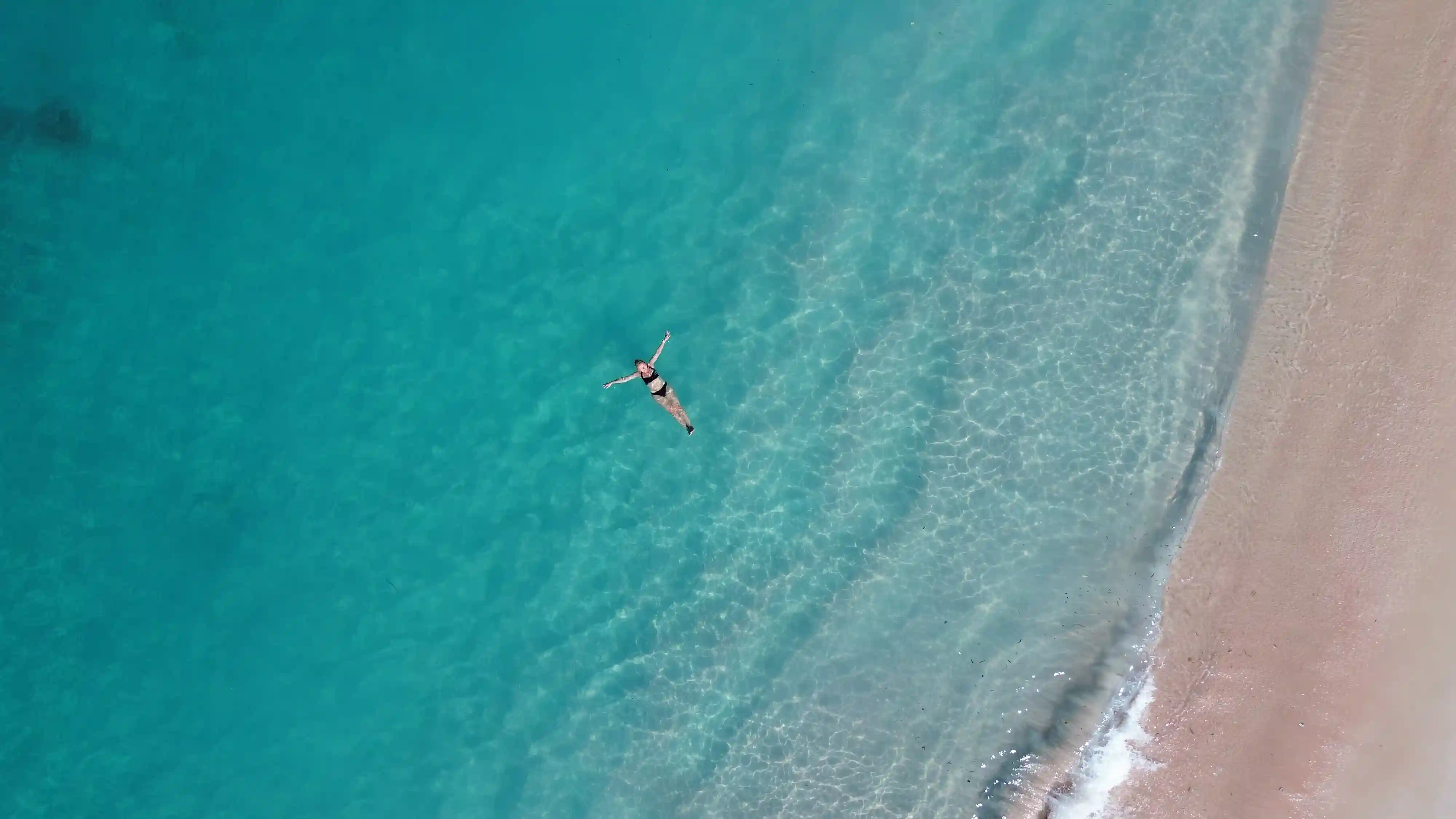
View of the lagoon and beach in one of Padar Island's bays
Calm lagoon water in one of Padar Island’s bays. Photo by Johnny Africa on Unsplash.

Yes, noticeably. Under the flat, high overhead light of midday, all three bays photograph reasonably well and the color contrast is still visible, but it reads as more muted than most of the photos that circulate online. Early morning and late afternoon light, striking the sand and shallow water at a low angle, brings out a stronger color separation between the three bays — the pink bay in particular tends to look more saturated in the hour or so after sunrise than it does at noon, because the low sun angle emphasizes the reddish coral fragments against the surrounding white sand rather than washing them out. This is one reason sunrise trips are marketed so heavily for Padar specifically, beyond just cooler hiking temperatures — see our sunrise timing guide for exact departure planning, and our photography guide for which viewpoint angles capture the color contrast most clearly.

Etiquette and conservation around the three bays

Padar sits inside Komodo National Park, a UNESCO World Heritage Site, and the same conservation rules that apply to the rest of the park apply here: no removing sand, shells, coral fragments, or rocks as souvenirs, no littering, and no stepping on or handling live coral if you snorkel near any of the three bays. The pink sand in particular is a frequent target for small-scale souvenir collecting by visitors who don’t realize the color comes from a living reef process rather than a mineral deposit — removing it in any quantity depletes the very feature that makes the bay worth visiting, so resist the temptation even for a small handful. Reef-safe sunscreen is strongly preferable to standard sunscreen if you plan to swim, since standard formulations contain compounds known to damage coral tissue on contact.

Can you swim at all three beaches?

Conditions vary. The white-sand landing bay is generally the calmest and most commonly used for a swim or snorkel stop, since it is sheltered and closest to where boats moor. The pink-sand bay can have livelier currents depending on tide and season, and the black-sand bay, being more exposed on the western side, is more current-prone and less frequently used for swimming on standard tours. None of the three has facilities, shade structures, or lifeguards, since Padar is uninhabited — bring your own water, reef-safe sunscreen, and any snorkeling gear you want, and confirm with your boat crew which bay(s) your specific itinerary actually stops at before assuming you’ll get time in the water at all three.

How does Padar’s three-bay view compare to other Komodo viewpoints?

Komodo National Park has several worthwhile viewpoints — including spots on Komodo Island and Rinca Island focused more on wildlife-viewing than on beach panoramas — but Padar’s summit is the one specific location in the park where three differently colored bays are visible in a single unbroken frame without needing to move between separate lookout points. That combination of geological variety and hiking accessibility (a 25–45 minute trail rather than a multi-hour trek) is the main reason Padar, rather than a wildlife-focused stop, tends to anchor most one-day Komodo itineraries. If you’re weighing Padar against other islands in the park for a limited-time trip, our Padar Island comparison guide breaks down what each island is actually best for, rather than treating them as interchangeable stops.

What else is there to do around the three bays?

Beyond the summit hike and a swim, most visitors combine the beaches with photography from the ridgeline viewpoints — our Padar Island photography guide covers the specific vantage points that frame two or three bays in a single shot — and with snorkeling stops at nearby sites that many boat itineraries bundle into the same day, since Padar itself is usually one stop among several rather than a full-day destination on its own.

Frequently asked questions

How many beaches are visible from the Padar Island viewpoint?

Three: a white-sand bay near the landing dock, a pink-sand bay to the south, and a black volcanic-sand bay to the west, all visible in a single panorama from the summit.

Why is Padar Island’s beach sand different colors?

Three sediment sources sit in three neighbouring bays. The sand differs by source: white from broken coral fragments, pink from red organ-pipe coral mixed with white sand, and black from eroded volcanic rock — sitting in separate, sheltered bays close enough together to be seen from one viewpoint.

Is the pink beach on Padar Island the same as the famous Pink Beach near Komodo Island?

No. They are two separate locations that both get their pink tint from the same organ-pipe coral process. Padar’s pink bay is part of the island’s own three-bay panorama; the well-known Pink Beach (Pantai Merah) is a separate site near Komodo Island, often visited on the same multi-stop day trip.

Can you swim at the black sand beach on Padar Island?

Yes, but it is more exposed and current-prone than the white-sand landing bay, and it is less frequently included as a swim stop on standard tours. Check with your boat crew about current conditions before swimming there.

Are there four beaches on Padar Island instead of three?

Some sources mention a small additional cove elsewhere on Padar’s coastline, but the classic, most-photographed panorama from the summit shows three bays. For planning purposes, treat Padar as a three-beach destination.

Can I take home sand or coral from Padar’s pink beach as a souvenir?

No. Padar sits inside a national park and UNESCO World Heritage Site, and removing sand, coral fragments, or shells is prohibited. Beyond the rule itself, the pink color specifically comes from a living reef process, so removing material in any quantity contributes to degrading the feature visitors come to see.

The short version

Three bays, three sand colors, three separate causes: coral debris, organ-pipe coral fragments, and volcanic rock, each settled into its own sheltered curve of a small, geologically busy island. None of it requires a geology background to appreciate from the summit trail, but knowing why the colors differ tends to noticeably change how closely most people look at each individual bay once they’re actually standing above them, rather than simply photographing the wide view once and moving straight on to the next stop on the itinerary.

Plan the boat trip around the three bays

Tour boats in the water near the beach and hills of Komodo National Park
Tour boats near a beach and hillside inside Komodo National Park, the kind used to reach Padar’s bays. Photo by Hongbin on Unsplash.

Not every Padar itinerary stops at all three bays, so it’s worth confirming this at booking rather than assuming. Komodo Luxury’s Komodo boat tour packages typically build in time at the landing bay and a swim or snorkel stop, and their Komodo boat trip page compares formats if you specifically want more beach time versus a faster hike-and-go visit. Travelers wanting a slower, more private look at all three bays without a large group nearby often opt for the luxury phinisi Komodo charter, which allows more flexible time at each stop than a fixed-schedule shared boat.


Why the three bays ended up different colours
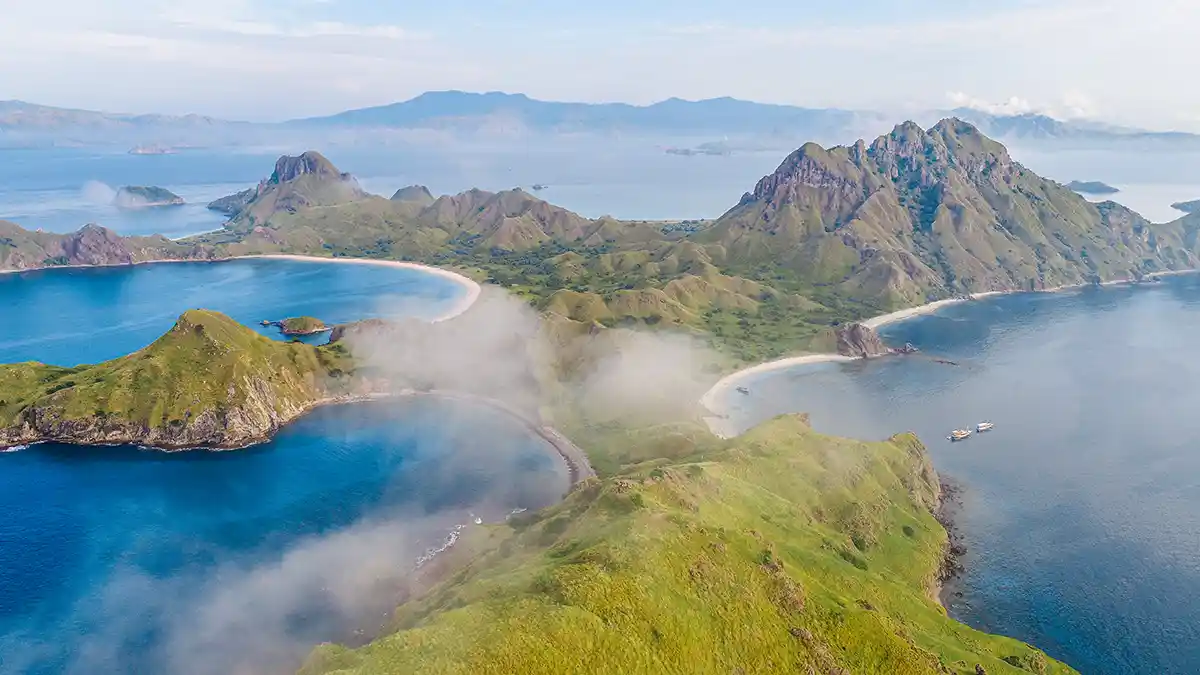
The island’s shape came first. Padar is old volcanic rock that has been uplifted, weathered and cut into over millions of years: waves worked at weak points in the cliffs until separate inlets opened along different fault lines, and rainwater carved steep gullies down the slopes between them. What survives is a compact island of narrow high spines and small pocket beaches rather than one continuous shoreline — and, critically, three coves each with its own orientation to wind and swell.
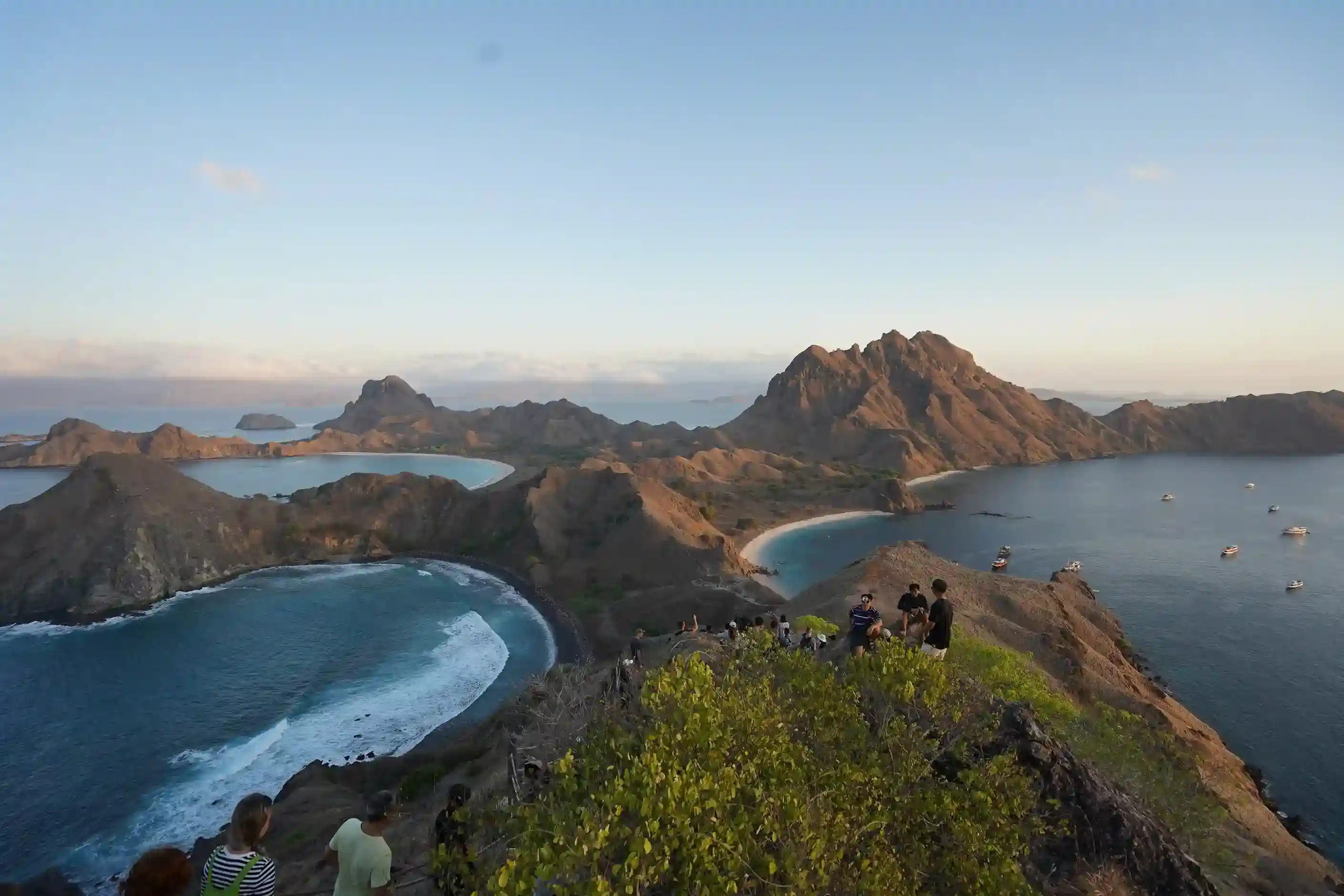
That isolation is what preserves the colours. Each bay sits against a different rock and reef source, so each receives its own blend of sediment: pale coral fragments in one, eroded basaltic grains in another, crushed red coral mixed with lighter sand in the third. Currents inside the bays are gentle enough that the sediment settles where it lands instead of mixing into a single average shade. Standing at the waterline you can pick the components apart by eye — pale coral chips, dark volcanic grit, and in places tiny pink flecks — which makes the summit panorama much easier to read afterwards.

The pink comes from broken red corals, usually described as organ-pipe coral, ground down by waves and washed ashore among lighter material. It is strongest near the water and in calm, bright conditions; under overcast skies or after heavy swell the same beach reads as a muted beige rather than pink. The dark bay is backed by more exposed volcanic rock, which pushes the proportion of basaltic sand up and gives a charcoal or dark-grey tone rather than a true black. On hot days that surface gets genuinely uncomfortable underfoot, so sandals are worth having if you plan to walk along it.

Which bay you can actually swim in

In practice, one. The white-sand bay by the landing jetty has the gentlest entry, the fewest rocks, the clearest shallows and direct sightlines from the boat, so crews normally keep swimming to that bay and watch from the water. It is also the most forgiving underfoot at mid-tide, when submerged rocks are easiest to see. Jellyfish appear seasonally even there, so the crew’s warning before anyone gets in is not a formality.

The pink bay is mostly a photography stop — access involves a steeper scramble over rockier ground. The darker western cove is the one operators discourage outright: more exposed, stronger swell and surge, and shore access that depends entirely on the day’s conditions. Most visitors see it from the ridge or from a passing boat rather than on foot. Reef sharks do live in these waters, but they are shy and stay clear of busy shallows; sightings from the swimming bay are brief and distant, usually by snorkellers over coral. The usual precautions cover it — no dawn or dusk swims, stay in a group, follow the crew.

Beyond the famous three, Padar’s irregular coast hides smaller coves that standard day trips never touch. Most are backed by steep slopes or rock walls, so landing safely needs calm seas and an experienced crew. On a private charter it is worth raising, but access always comes down to conditions and park rules on the day. Camping is not among the options: the island has no water, no shelter and no authorised campground, so every itinerary bases itself in Labuan Bajo or on a boat.

Shooting the bays from the ridge

The staircase from the landing beach runs straight up to a series of signed terraces. It is short, steep and almost shadeless, so most people pace themselves and stop on the way; footing is firm on the built steps, but where the path spills onto natural ground near the top, loose gravel makes the descent the part to concentrate on.

The ridge above the landing bay looks east and south across all three inlets, which is where sunrise photographs come from. First light grazes the surrounding islands and picks out Komodo’s profile in the distance, and the palette stays soft — pale blues, pinks and golds on the water and ridgelines, with the bays showing tonal contrast between sand and sea rather than strong individual hues. As the sun climbs, shadows shorten and the scene flattens, so the window worth arriving for is brief. Start the climb promptly after landing.

The white bay’s curve is the natural anchor for a composition, its light tone sitting between the dark hills and the sea, and the earlier sessions leave time to try several terraces before the light hardens. Seasonally the background changes more than the sand does: dry-season hills fade to brown and gold and the contrast turns stark, while the wetter months green up the grasses for a softer frame. Sand colour stays broadly constant, though flat rainy-season light does mute it in photographs.

For wildlife, keep expectations calibrated. Padar rewards landscape and seascape work far more than animal encounters. From the boat you may see sea birds, the occasional raptor and passing dolphins — a light telephoto earns its place — but terrestrial wildlife is limited and rangers keep visitors focused on the hike rather than tracking.

Connectivity, finally, is not something to plan around. Mobile data is patchy to absent once you leave the Labuan Bajo area, and while a weak offshore signal sometimes appears, you should assume you are offline for the trip and handle maps and uploads before departure.

Booking the trip itself

This site documents Padar Island; it does not sell tours. Bookings for the boats and packages described above are handled by Komodo Luxury, the operator within the same group as this publication.

Questions about a specific date or vessel go to WhatsApp +62 811-3823-875 or sales@komodoluxury.com.

This guide does not operate boats. Bookings are fulfilled by Komodo Luxury, and this site may earn a referral commission.

Scroll to Top
Book with Komodo Luxury →
💬

Additional photo credits on this page: Simon Spring, Johnny Africa, Bagus Dwi Ananda, Hongbin on Unsplash.