
Skip to content
A family sitting together on the rocky outcrop at Padar Island’s viewpoint, with the island’s bays behind them

Komodo National Park

Plan Your Visit

What to Bring to Padar Island: Packing List

What to pack for the Padar Island hike — footwear, sun protection, water, and what facilities to expect (or not) on the island.

Short answer

Pack closed, sturdy shoes (not sandals or flip-flops), a hat, sunglasses, reef-safe sunscreen, and at least one litre of drinking water per person — the Padar Island trail has almost no shade and there is no shop, refill station, or reliable toilet on the island itself. Everything you need for the hike should already be with you when you step off the boat.

Padar Island Editorial Desk · Verified 24 August 2026

The Essentials

The essential packing list

Footwear Closed, sturdy shoes Closed trainers or hiking sandals with a secured heel strap. Not sandals or flip-flops.
Water At least 1 litre per person There is no shop, vendor or refill point on the island.
Sun protection Hat, sunglasses, reef-safe sunscreen A wide-brim hat outperforms a cap for neck and ear coverage.
Clothing Lightweight and breathable Something that covers shoulders manages sun exposure better than tank tops alone.
Dry bag For the tender transfer The transfer sometimes involves a shallow wade or light spray depending on tide and boat type.
Cash Small-denomination rupiah Card terminals do not exist at the jetty.

Step by Step

How to pack your daypack for the Padar hike

1. Fill your water bottle firstDo this on the boat before you board the tender, since it’s the one item you cannot buy or refill once you’re on the island.
2. Apply sunscreen before you landNot after you reach the top — sun exposure starts from the moment you step onto the trail, and reapplication mid-hike is awkward on narrow steps.
3. Camera in an outer pocketRather than buried at the bottom of your bag, since you’ll want it out repeatedly on the way up, not just at the summit.
4. Valuables in a dry bagPut valuables and electronics in a dry bag or waterproof pouch for the tender transfer.
5. Wear your hat, don’t pack itIt’s one less thing to dig for once you’re climbing, and you’ll want it from the first step.
6. Cash and ID in a zipped inner pocketSeparate from anything you might set down for a photo at the summit.
7. Final check before leaving the boatYour ranger fee receipt or SIORA booking confirmation — rangers may ask to see it at the landing point.

What to Expect

What facilities actually exist on Padar Island?

Very few. There is no shop, no restaurant, no drinking-water refill point, and typically no proper toilet on the island — most boat operators keep toilets aboard the vessel rather than the island having its own. Some tours report basic squat-style facilities near the landing point, but these should not be relied upon; use your boat’s toilet before you disembark. Shade along the trail is minimal to nonexistent for most of the climb, meaning sun exposure — not the physical difficulty of the steps — is usually what catches first-time visitors off guard.

01

What to wear on the hike

A walker standing on Padar Island’s grass ridge in the green season, looking down on the curved bays

The lower section of the main trail is wooden boardwalk, transitioning to concrete steps with handrails on the steepest upper stretches, with a short boardwalk section again near the summit. Closed trainers or hiking sandals with a secured heel strap perform far better here than flip-flops, which offer no grip on wet or dusty steps and no protection if you catch a toe on an uneven natural-rock section. Lightweight, breathable clothing that covers shoulders (a light long-sleeve or a shirt with a collar) helps manage sun exposure better than tank tops alone, though many visitors do the climb in standard athletic wear without issue — the priority is comfort and grip, not a specific dress code.
02

Footwear is the one thing worth getting right

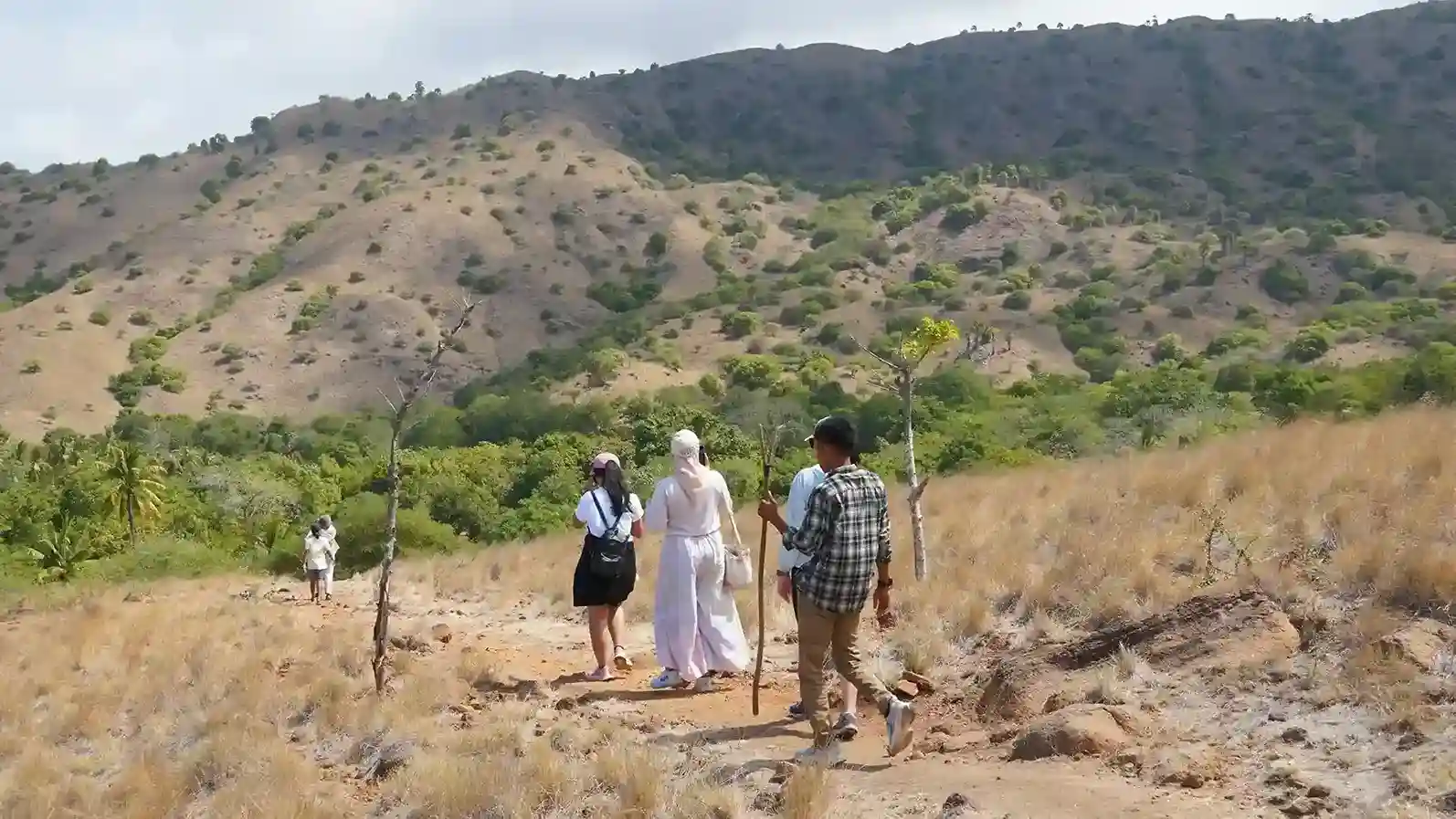
Walkers with trekking poles following a dry ranger trail on Rinca Island

Closed shoes with real grip, and nothing complicated beyond that. A low-cut hiking shoe or a robust trainer covers the trail entirely — it is short and not technical, so heavy high-ankle boots are unnecessarily hot. What matters is a sole with decent tread and uppers that breathe, plus protection for your toes against sharp rock around the jetty and loose gravel beside the steps. Break new shoes in before the trip rather than on the descent. Dedicated hiking shoes help most in the wetter months, when the steps turn slick.

03

Sun protection: what actually works on a shadeless trail

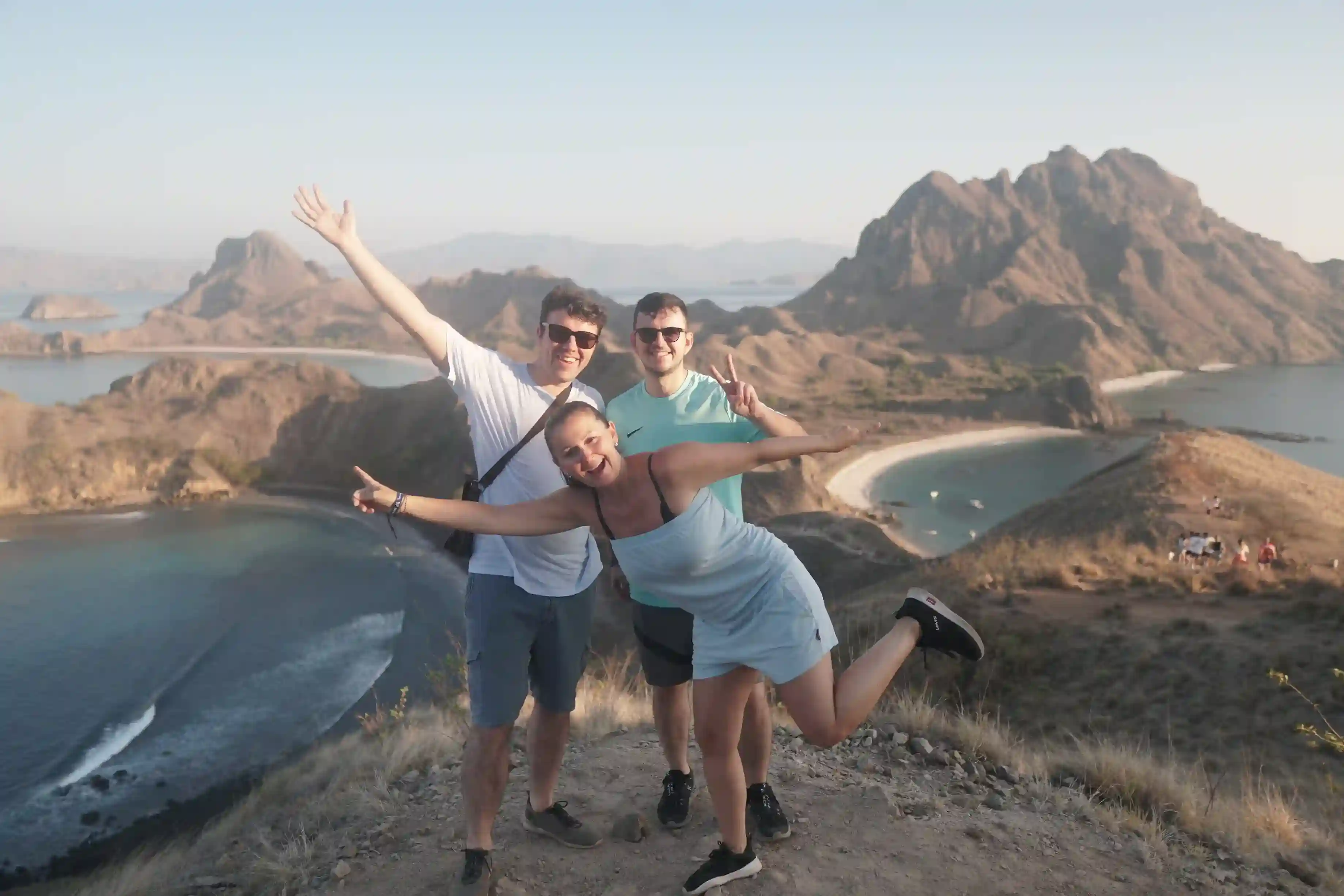
Three friends jumping for a photograph on the dry trail below the Padar Island viewpoint

Reef-safe sunscreen (avoiding oxybenzone and octinoxate, both restricted or discouraged in many Indonesian marine park areas because of coral impact) protects both you and the reefs you’ll likely snorkel later the same day. Apply it at least 15–20 minutes before you’re exposed to direct sun where possible, and reapply after any swimming stop. A wide-brim hat outperforms a cap for neck and ear coverage, and a light long-sleeve shirt or a shirt with UPF fabric can be more comfortable than repeated sunscreen reapplication for travellers with sensitive skin. Sunglasses with real UV protection matter more here than on an average beach day, given the combination of overhead tropical sun and glare reflecting off pale sand and water on both sides of the ridge.

04

Sun, shade and water, in that order

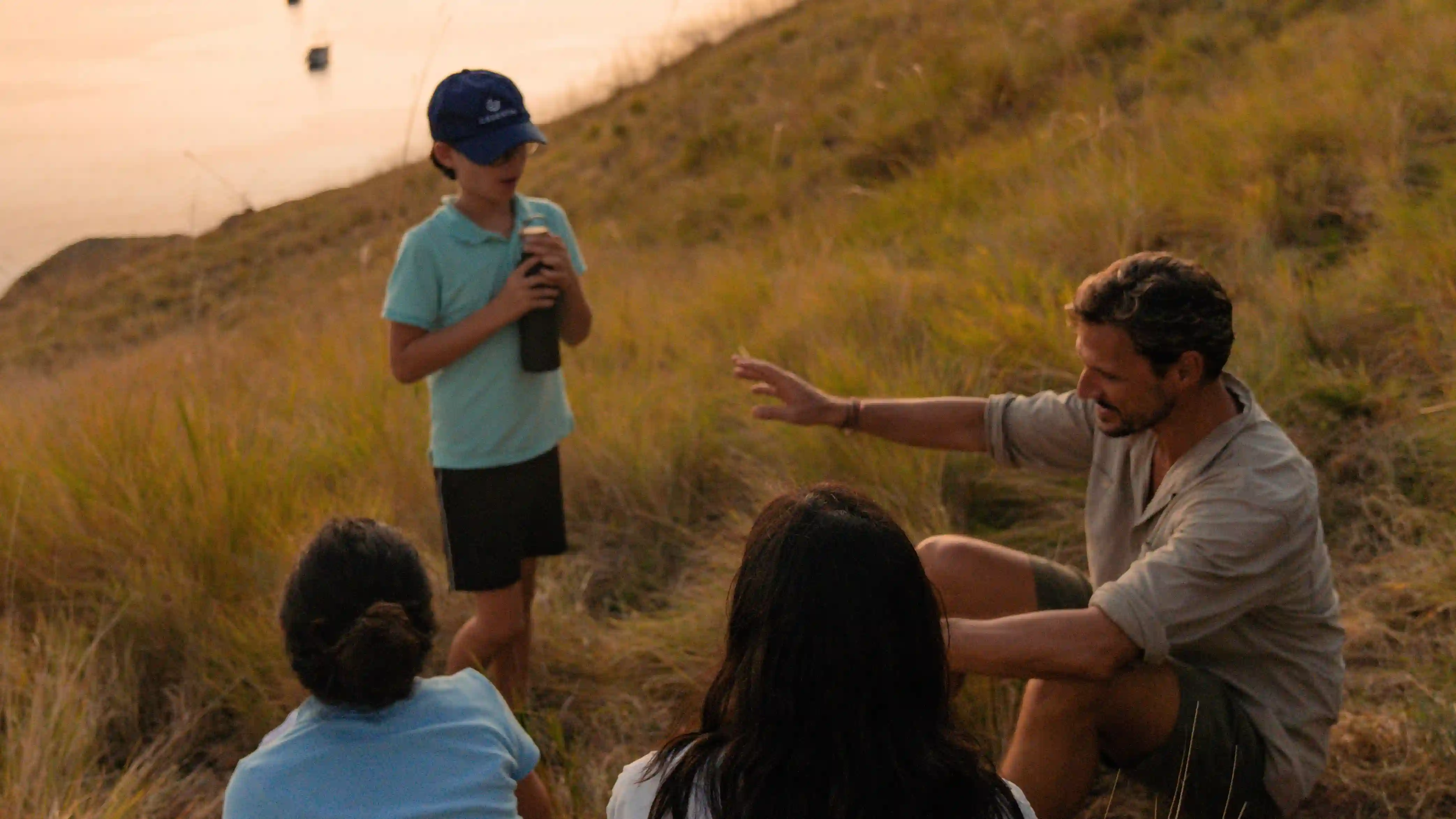
A guide talking with a small group of travellers sitting on the grass slope of Padar Island

Shade on Padar is close to nonexistent. There are small pockets near the base, at the ranger post and behind the occasional rocky outcrop, and once you are on the main staircase you are exposed to sun and wind for the rest of the climb. Sunrise hikers get some shelter from the ridge at first, but the trail heats quickly once the sun clears it. This makes a hat and sunscreen as important as the shoes, and a breathable long-sleeved top is often more comfortable than bare arms.

05

What you do NOT need to bring

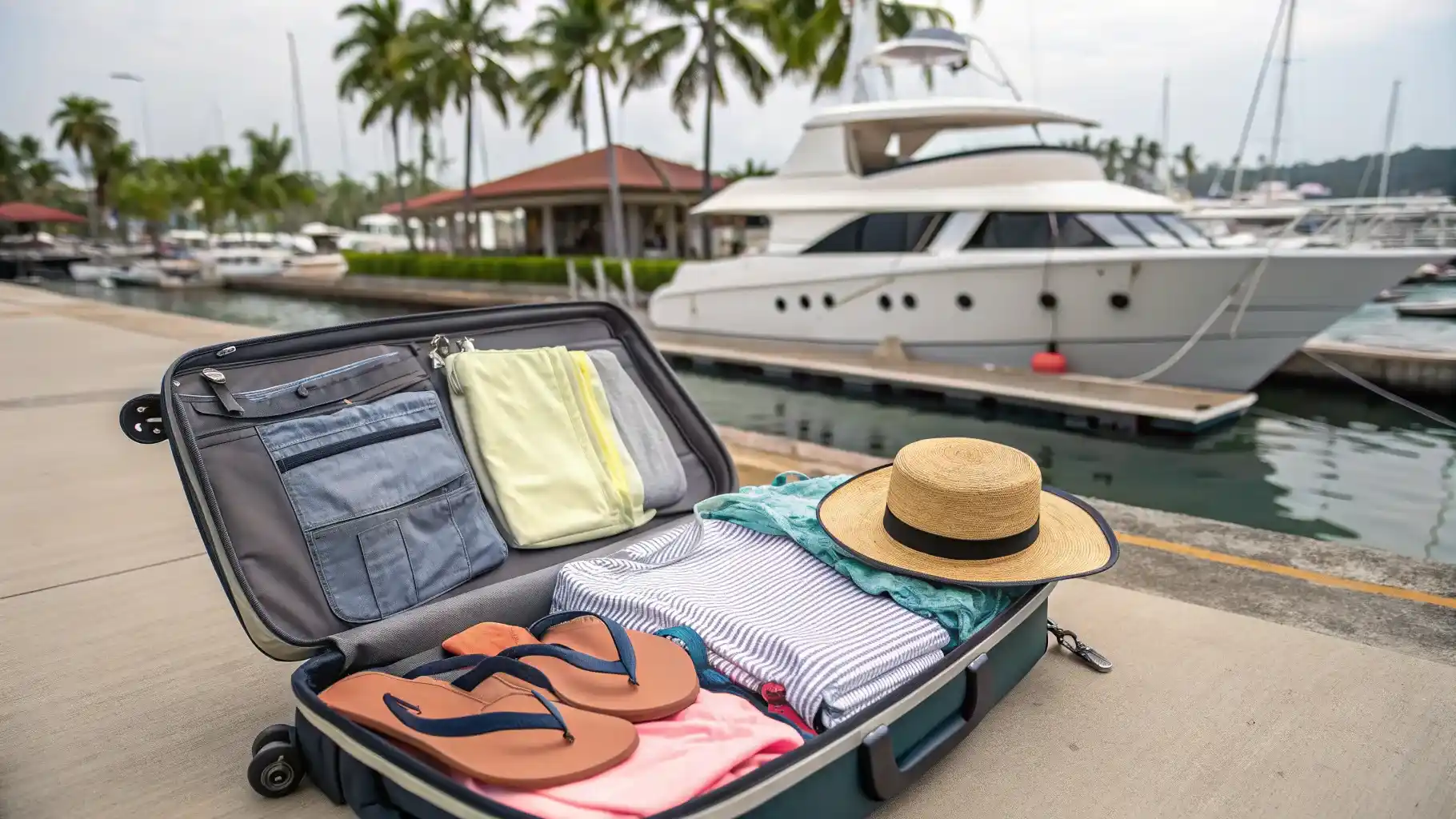
An open suitcase packed with clothes, a sun hat and sandals on a dock beside a boat

Skip heavy hiking boots — the climb is short (25–45 minutes for most people) and doesn’t require ankle-support boots designed for multi-day treks. A full-size backpack is unnecessary; a small daypack carries everything required. Trekking poles are not standard for this trail and most visitors manage fine without them, though anyone with balance concerns is welcome to bring one. Heavy DSLR camera bags with multiple lenses add weight for a climb that’s genuinely brief — many photographers do fine with a single versatile lens or even a phone camera, given how forgiving the view itself is.

06

Camera and drone gear: what’s realistic to bring

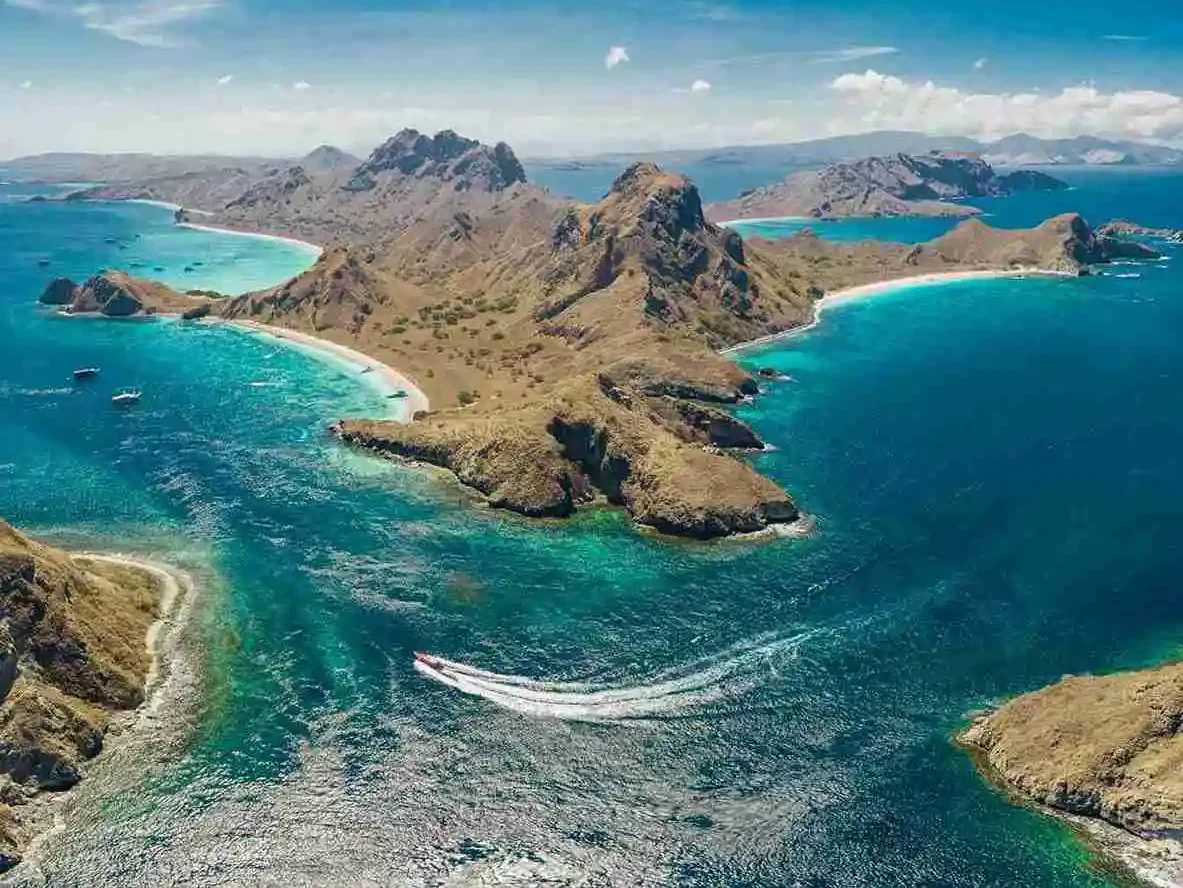
Aerial view of Padar Island’s headlands and turquoise water with a speedboat’s wake crossing the bay

A single camera body with one versatile zoom lens covers the vast majority of shots most visitors want from the summit — the panorama itself does most of the visual work, and a lighter kit is easier to manage on the steps. If you’re considering a drone, be aware that aerial photography inside Komodo National Park is subject to specific permit and registration requirements set by the park authority and Indonesian aviation regulations; check current rules and whether your operator can arrange the necessary permission before assuming you can simply fly one from the summit on the day.

07

Phones, cameras and being offline

Two people in formal dress photographed on Padar Island’s ridge in late golden light

Assume you are offline. Signal on Padar is patchy and depends on your Indonesian provider — some visitors find a usable connection at the higher viewpoints, others get nothing. Boats sometimes pick up reasonable data in open water closer to Labuan Bajo and lose it near the island. Treat any connection as a bonus, download maps and documents before you leave town, and do not schedule calls or uploads around the trip. Offline maps are a sensible backup rather than a necessity, since you will be with a ranger on a clearly defined trail; their real value is understanding the wider layout of the park and your boat route.

08

Packing differences for a day trip vs. a multi-day liveaboard

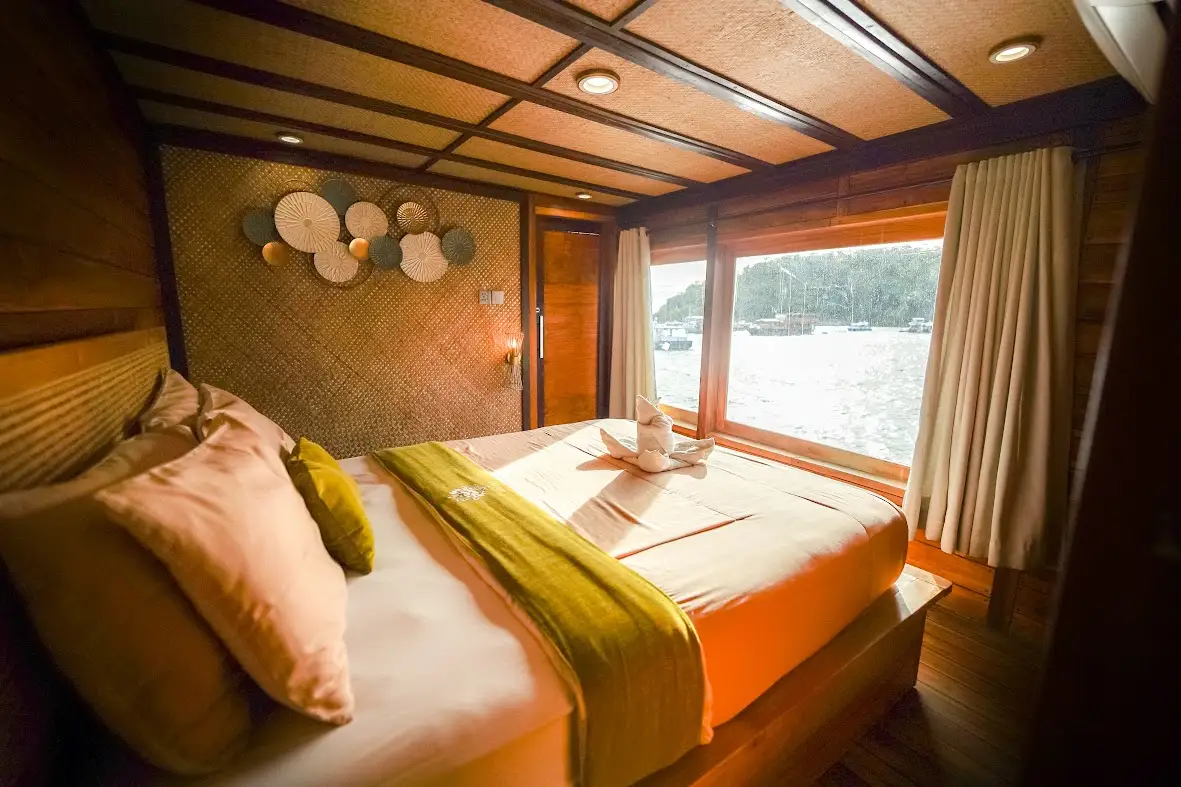
A boat cabin with a double bed and a window over the water

A single day trip needs only what’s listed above, packed in a small daypack you carry on and off the boat. A multi-day liveaboard (see our 7-day itinerary) adds seasickness medication, a change of clothes for each day, a reusable water bottle to cut down on single-use plastic aboard, and modest cover-ups for ranger-guided island treks on Komodo or Rinca, where shorts and closed shoes are generally expected over swimwear alone.

09

Money, timing and the rules that carry penalties

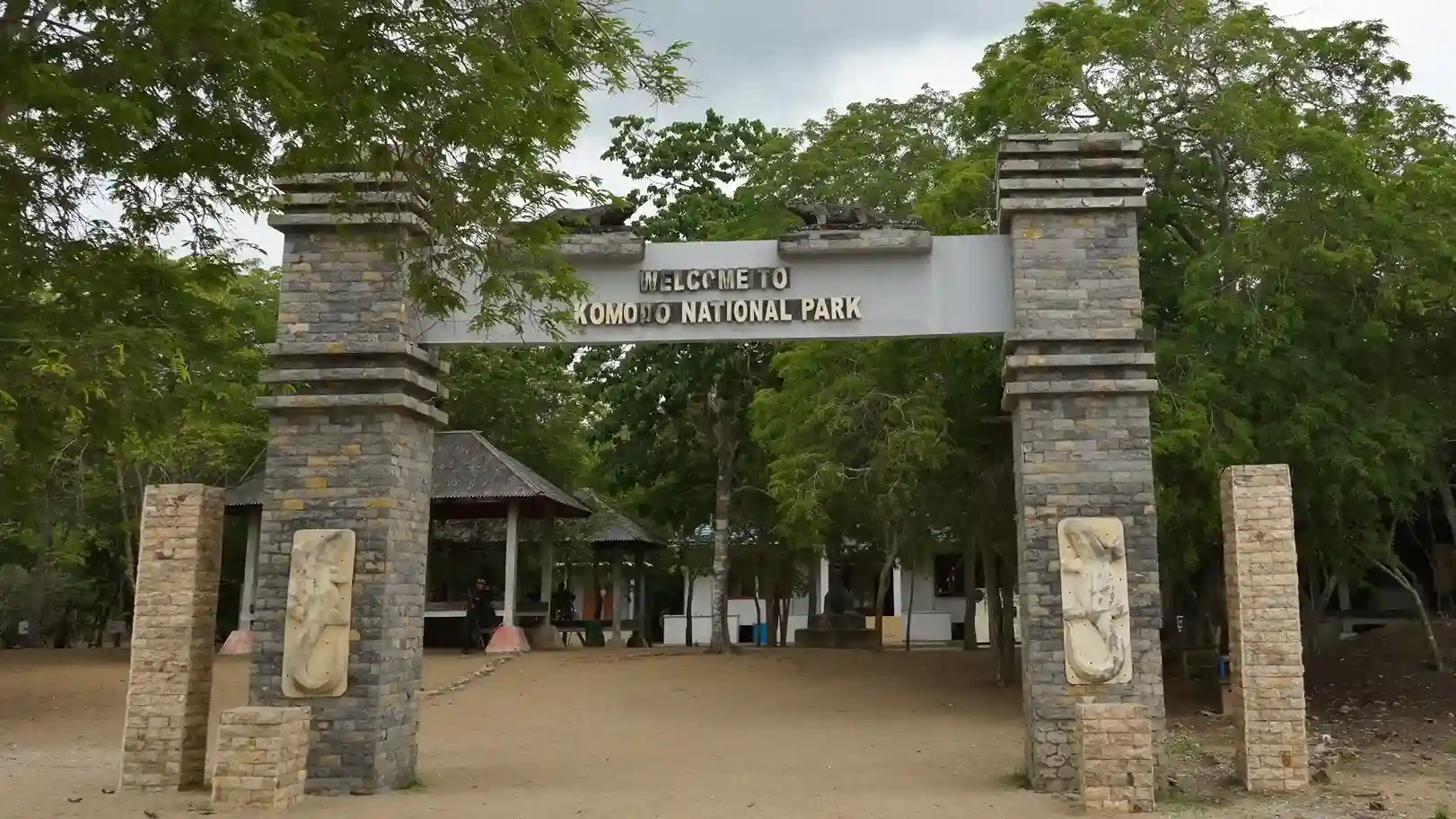
The stone entrance arch of Komodo National Park

Carry some cash. The ranger fee is charged per group and not every operator bundles it transparently; organised tours usually handle payment for guests, but an independent arrangement may mean settling it yourself at the jetty, where card terminals do not exist.

Answers

Frequently Asked Questions

Do I need hiking shoes for the Padar Island hike?

Proper hiking boots aren’t necessary for most visitors given the trail’s short length (25–45 minutes), but closed, sturdy shoes with decent grip are strongly recommended over sandals or flip-flops, which perform poorly on the trail’s mixed boardwalk, concrete, and natural-rock sections.

What should you bring when trekking on Padar Island?

Comfortable closed-toe hiking shoes, a hat, sunglasses, sunscreen and at least one litre of drinking water per person are essential — the trail has almost no shade, and there are no shops or water sources on the island.

Should I bring my own snorkeling gear or rent it?

Either works. Most day-trip and liveaboard operators provide mask, snorkel, and fins as part of the package, which saves luggage space if you’re travelling light. Frequent snorkelers who prefer a mask fitted to their own face, or who want a specific fin type, often bring their own rather than relying on shared rental gear — a personal preference rather than a strict requirement either way.

What’s the biggest packing mistake first-time visitors make?

Underestimating water and sun protection. The hike is short enough (25–45 minutes) that many travellers assume they can skip a hat or extra water “just for a quick climb,” then find the shadeless midday sun far more intense than expected once they’re actually on the steps with no way to buy more water or find shade partway up.

Is there a toilet on Padar Island?

Not reliably. Most boats keep toilets aboard the vessel rather than the island having its own proper facilities; use the boat’s toilet before disembarking rather than assuming one will be available on the island.

Can I buy water or snacks on Padar Island?

No. There is no shop or vendor on the island — bring all food and water with you before you land, and plan for at least one litre of water per person given the total lack of shade on the climb.

Is mobile phone signal reliable on Padar Island?

Treat it as unreliable. Once you’re away from Labuan Bajo town and out on the water or on the island, signal strength varies and can drop out entirely depending on your carrier and exact location — don’t plan on your phone as a safety lifeline during the hike. Download offline maps, tell someone your boat and rough schedule before departure, and rely on your boat crew and park ranger for on-site guidance rather than a data connection.

This guide does not operate boats. Bookings are fulfilled by Komodo Luxury, and this site may earn a referral commission.

Ready When You Are

Your kit list assumes a certain kind of boat

A day boat and a liveaboard call for noticeably different packing, so it is worth settling the vessel before finalising the bag.

This guide does not operate boats. Bookings are fulfilled by Komodo Luxury, and this site may earn a referral commission.