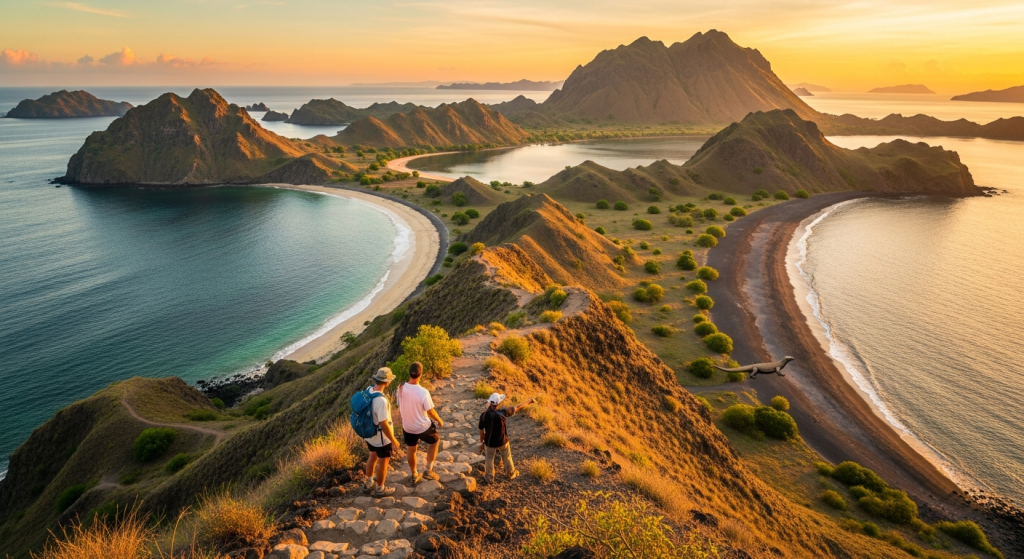
- Access to Padar Island typically involves a 3-4 hour phinisi journey from Labuan Bajo, Flores.
- The ascent to the primary viewpoint comprises approximately 800 steps, suitable for most fitness levels, particularly rewarding at sunrise or sunset.
- As part of the UNESCO-listed Komodo National Park, Padar Island operates under stringent conservation regulations, preserving its distinct ecosystem.
The morning light stretches across Padar Island, illuminating the dramatic ridges and valleys that define its silhouette. Below, the Indian Ocean’s currents sculpt a coastline where distinct sands meet, creating a visual mosaic unlike any other.
The Geological Canvas of Padar Island
Padar Island, an integral component of the Komodo National Park archipelago, presents a landscape forged by ancient volcanic activity and eons of erosion. Situated approximately 30 kilometers northwest of Rinca Island and 20 kilometers west of Flores, Padar represents a landmass of significant geological interest. The island’s terrain rises sharply from the sea, characterized by steep, grassy hillsides that culminate in a series of dramatic peaks. The park itself, established in 1980, spans a total area of 1,733 square kilometers, encompassing three major islands—Komodo, Rinca, and Padar—along with numerous smaller islets. In 1991, UNESCO recognized Komodo National Park as a World Heritage Site, acknowledging its outstanding universal value, particularly for its unique fauna including the Komodo dragon (Varanus komodoensis).
Padar’s unique topography creates multiple bays, each cradling a beach of a different hue. This phenomenon is a direct result of varied geological processes and marine life. The island covers an area of roughly 20 square kilometers, with its highest point reaching an elevation of approximately 180 meters above sea level. This elevation gain is precisely what allows for the island’s renowned panoramic viewpoint. The rugged coastline and deep inlets provide sheltered anchorages for phinisi boats, traditional Indonesian two-masted sailing vessels, which transport visitors from Labuan Bajo. The journey from Labuan Bajo’s Pelabuhan Laut harbor typically requires 3 to 4 hours, depending on sea conditions and the specific vessel. Visitors frequently combine a Padar Island visit with excursions to Komodo or Rinca for dragon sightings, or to renowned dive sites like Manta Point, located within the park’s marine protection area.
Ascending to the Iconic Padar Viewpoint
The trek to Padar Island’s iconic viewpoint is a defining experience for visitors, offering a moderate challenge with an reward. The trail, largely composed of well-maintained wooden and stone steps, begins directly from the beach landing point. Approximately 800 steps guide climbers upward, traversing the island’s grassy slopes. The ascent typically requires 30 to 45 minutes for individuals with average fitness levels, though pacing and hydration are key considerations, especially under the tropical sun. The total elevation gain from sea level to the primary viewpoint is around 150 meters, providing a steady climb that progressively reveals more of the island’s intricate geography.
For photographers and those seeking optimal light, timing the hike for sunrise or sunset is paramount. Sunrise treks commence in pre-dawn darkness, with visitors disembarking their phinisi boats around 05:00 AM. This early start allows for arrival at the summit as the first rays of light illuminate the horizon, painting the sky and the surrounding landscapes in vibrant hues. Sunset ascents, conversely, see visitors starting their climb around 04:30 PM, aiming to capture the golden hour and the dramatic descent of the sun over the archipelago. Recommended gear includes comfortable trekking shoes, a wide-brimmed hat, sunglasses, and a minimum of one liter of water per person. The path, while marked, can be uneven in places, and the tropical climate necessitates sun protection and adequate hydration. Park rangers are often present at the base of the trail to assist visitors and ensure adherence to park regulations. The panoramic vista from the summit encompasses the distinctive three-color beaches, numerous surrounding islands, and the expansive Komodo Sea.
A Study in Sands: Padar’s Tri-Color Beaches
Padar Island’s most visually striking feature, beyond its dramatic peaks, is the juxtaposition of its three distinctively colored beaches. This geological anomaly presents a rare spectacle, often visible simultaneously from the main viewpoint. Each beach possesses a unique origin, contributing to the island’s singular aesthetic. The most famous is the Pink Beach, or Pantai Merah, a name derived from the microscopic organisms known as Foraminifera. These single-celled marine creatures produce a red pigment on coral reefs. When fragments of red coral mix with the fine white sand, they create a soft, rosy hue, particularly noticeable at the water’s edge and under direct sunlight. This specific phenomenon is less common globally, making Padar’s Pink Beach a significant draw.
Adjacent to the pink sands, a stretch of pristine White Sand Beach unfurls. This brilliant white is characteristic of many tropical beaches, primarily formed from pulverized coral fragments and calcium carbonate deposits from marine organisms. The granular composition is typically finer, offering a stark contrast to the other two beaches. This white sand area provides an ideal spot for relaxation post-hike or for accessing the clear waters for snorkeling. On another side of the island, a Black Sand Beach reveals Padar’s volcanic heritage. This dark sand is composed of eroded volcanic minerals, rich in iron and other heavy elements, which give it its distinctive deep color. These fragments originate from the ancient volcanic activity that shaped the Komodo archipelago over millions of years.
The geological diversity of Padar, with its varied sand compositions, provides a natural laboratory for studying coastal geomorphology. The interplay of these three colors—pink, white, and black—against the turquoise and deep blue waters of the ocean, framed by the verdant hills, creates a compelling palette for photographers. The specific location and orientation of these beaches allow for their simultaneous observation from the viewpoint, a feature that distinguishes Padar from other islands within Komodo National Park.
Navigating Your Expedition to Padar Island
Planning an expedition to Padar Island requires understanding the logistical framework of Komodo National Park access. The primary gateway is Labuan Bajo (LBJ), a rapidly developing port town on the western tip of Flores Island, East Nusa Tenggara. Labuan Bajo is serviced by daily flights from major Indonesian cities like Denpasar (Bali) and Jakarta. From Labuan Bajo, visitors charter a boat, typically a phinisi, for the 3 to 4-hour journey to Padar. Phinisi charters range from basic open-deck vessels for day trips to luxurious, air-conditioned liveaboards for multi-day excursions across the park. A standard day trip to Padar often includes stops at Komodo Island or Rinca for dragon sightings, and a snorkeling session at Manta Point.
All visitors to Komodo National Park are required to pay entrance fees and obtain permits. These fees are structured to support conservation efforts and park management. As of 2023, foreign visitor fees typically range from IDR 300,000 to IDR 500,000 per person for weekdays, increasing on weekends and national holidays. Additional charges apply for specific activities such as trekking (IDR 50,000 per person), snorkeling (IDR 25,000 per person), and ranger services (IDR 100,000 per group). These fees are collected by park authorities upon entry. Responsible tourism practices are strictly enforced; visitors must carry out all waste, avoid disturbing wildlife, and adhere to designated trails. The park operates under the management of the Ministry of Environment and Forestry of Indonesia, with local ranger teams ensuring compliance and visitor safety. Choosing a reputable tour operator registered with the park authorities ensures a smooth and compliant visit. For detailed information on regulations and conservation initiatives, resources such as UNESCO’s Komodo National Park page offer comprehensive insights.
Capturing Padar: Photography and Drone Perspectives
Padar Island presents an extraordinary canvas for photographers, from amateur enthusiasts to professional drone operators. The primary viewpoint provides a sweeping vista that necessitates a wide-angle lens, typically in the 16-35mm range (full-frame equivalent), to capture the entirety of the three-color beaches and the surrounding archipelago. For closer details of the dramatic rock formations or distant islands, a telephoto lens (70-200mm) offers versatility. Golden hour, the period shortly after sunrise or before sunset, delivers the softest, most flattering light, enhancing the contours of the landscape and saturating the colors of the ocean and beaches. During midday, the harsh overhead sun can create strong shadows and overexposed highlights, making photography more challenging unless specifically aiming for high-contrast shots. A sturdy tripod is indispensable for low-light conditions during sunrise and sunset, ensuring sharp images and facilitating long exposures to smooth out water movement.
Drone photography elevates the perspective on Padar Island, offering aerial views that reveal the intricate patterns of the coastline and the scale of its geological features. However, operating drones within Komodo National Park is subject to strict regulations. Visitors must obtain a specific drone permit from the Komodo National Park authority well in advance of their visit. This process involves submitting flight plans, drone specifications, and a valid pilot license. The park’s primary concern is wildlife disturbance, particularly the Komodo dragons and marine life, as well as maintaining the pristine natural environment. Unauthorized drone operation can result in significant fines and confiscation of equipment. Ideal drone shots often capture the converging beaches, the winding trails, and the phinisi boats anchored in the bays. The highest point of Padar Island, at approximately 180 meters, is a popular take-off point for approved drone flights. For specific guidelines on drone regulations and permit applications, consulting the official Komodo National Park website or a certified local tour operator is essential.
Padar Island within the Komodo National Park Ecosystem
Padar Island is not merely a scenic viewpoint; it is an integral part of the Komodo National Park’s delicate ecosystem, recognized globally for its biodiversity. The park, a designated UNESCO World Heritage Site since 1991 and a Man and Biosphere Reserve since 1977, was originally established to protect the Komodo dragon. However, its scope expanded to include the protection of its entire terrestrial and marine environment. While Padar Island itself does not host significant Komodo dragon populations due to a scarcity of prey animals, its surrounding waters are teeming with marine life, forming a critical part of the Coral Triangle, a global center of marine biodiversity. Over 1,000 species of fish, 260 species of reef-building coral, and marine mammals such as dugongs, manta rays, and various whale and dolphin species inhabit these protected waters.
The dry savannah landscape of Padar Island supports a unique flora adapted to arid conditions, contrasting sharply with the rich marine habitats offshore. Conservation efforts within the park are multifaceted, focusing on anti-poaching initiatives, community engagement, and sustainable tourism management. The presence of park rangers and dedicated conservation bodies, including collaborations with organizations like WWF Indonesia, underscores the commitment to preserving this unique natural heritage. Visitors contribute directly to these efforts through their park entrance fees. Understanding Padar’s role within this larger ecosystem enhances the visitor experience, shifting the focus from purely aesthetic appreciation to a deeper understanding of its ecological significance. The island’s geological features, particularly the nutrient-rich waters surrounding it, contribute to the thriving marine ecosystem, making it a critical link in the park’s biodiversity chain. For further information on the park’s ecological importance, refer to resources like Komodo National Park on Wikipedia.
Crafting Your Padar Island Journey: A How-To-Choose Guide
Selecting the ideal Padar Island experience depends significantly on individual priorities, budget, and travel style. For UHNW (Ultra High Net Worth) Komodo travelers, a private luxury phinisi charter offers an level of comfort and customization. These vessels, often exceeding 30 meters in length, feature multiple cabins with ensuite bathrooms, gourmet chefs, dedicated dive masters, and personalized itineraries. Daily charter rates for such luxury phinisi can range from $1,500 to $10,000+ per day, accommodating groups of 4 to 14 guests. This option allows for flexible scheduling, including specific sunrise or sunset hikes on Padar, and exclusive access to remote snorkeling or diving locations within the park.
Photographers seeking specific light conditions or drone opportunities should prioritize a private charter that allows for flexible timing. Opting for a vessel that departs Labuan Bajo in the early hours (around 03:00 AM) enables arrival at Padar before dawn, securing prime positions for sunrise shots. Conversely, a late afternoon departure from other park locations ensures arrival for sunset. Confirming drone permit requirements and operator experience with drone regulations is crucial. Families traveling with children often benefit from a mid-range private charter or a small group tour that balances the Padar hike with less strenuous activities. A typical family-friendly itinerary might include a morning hike on Padar, followed by a visit to a calmer beach for swimming and a brief Komodo dragon viewing on Rinca, minimizing travel time between stops.
Dive groups combining Padar with underwater excursions typically choose multi-day liveaboard charters. These itineraries strategically place the Padar Island hike either at the beginning or end of the trip, integrating it seamlessly with dives at renowned sites like Manta Point, Batu Bolong, and Cauldron. Dive-focused phinisi are equipped with dedicated compressor rooms, dive tenders, and experienced dive guides. The choice between a private charter and a shared group tour boils down to budget, desire for exclusivity, and itinerary flexibility. Shared tours generally offer a more economical option, with fixed schedules and larger group sizes, while private charters provide the ultimate bespoke journey through the Komodo archipelago. For general tourism information on Indonesia, the official tourism board website Indonesia.travel provides further context.
Your journey to Padar Island represents an exploration of nature’s artistry and a commitment to responsible travel. Discover the ideal itinerary for your Komodo adventure and begin planning your visit by exploring the comprehensive offerings at PadarIsland.com. From luxury charters to guided treks, your definitive Padar experience awaits.